Crystal Gifts for Men: What to Buy Someone Who'd Never Buy One Themselves

This article contains affiliate links. If you purchase through our links, we may earn a small commission at no extra cost to you.
The strongest crystal gifts for skeptical men are stones that pass as everyday objects: a black tourmaline chunk that looks like a desk sculpture, a tiger's eye bracelet that reads as jewelry, or a tight two-stone set with a clear functional pitch. Skip anything requiring charging rituals or chakra knowledge. The form factor and how you present the gift matter more than which specific stone you choose.
Best Carry Stones: Pocket Gifts That Disappear Into Daily Life
A pocket stone weighing 20–40 grams sits in a front pocket without printing through fabric or clinking against keys—making it a highly practical option for anyone exploring crystals for men. That makes it the safest crystal gift for men who would never walk into a crystal shop themselves: nobody sees it, nobody asks about it, and the recipient can decide privately whether it means anything to him.
Most options in this category run under $15, which keeps the stakes low for both buyer and recipient.
Black Tourmaline Raw Chunk
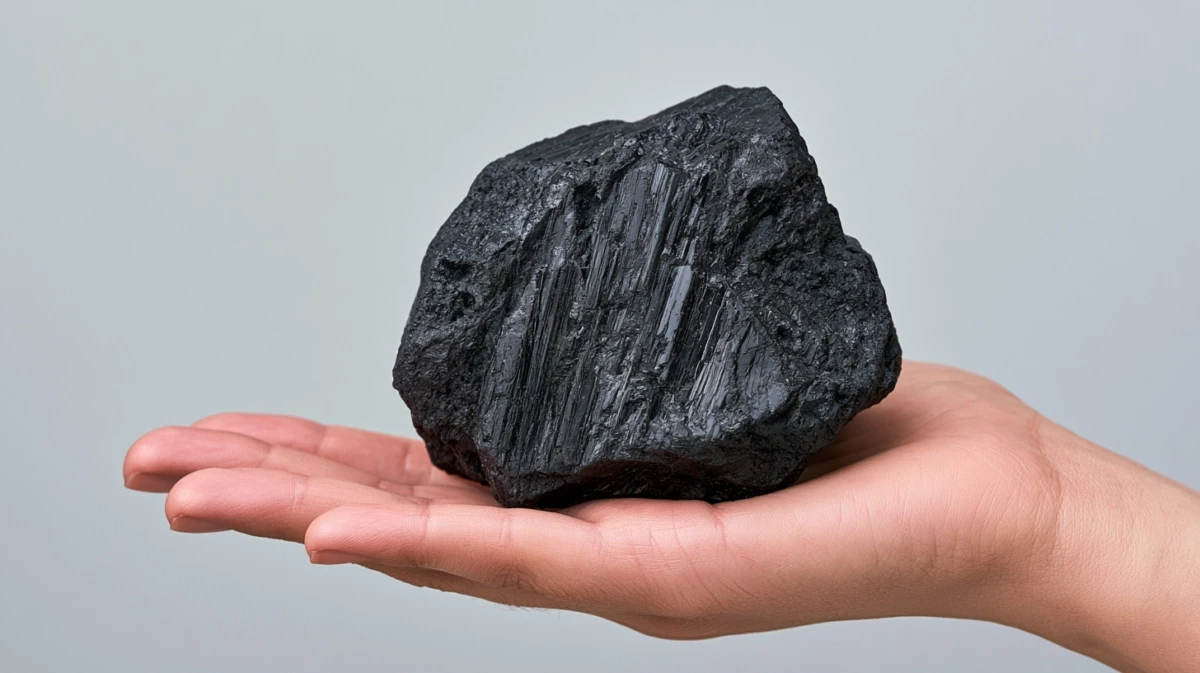
Raw tourmaline looks nothing like the polished pastel stones people associate with wellness culture. A raw black tourmaline chunk in the 30–50g range is the right size for pocket carry. It's matte black, rough-textured, and feels closer to a piece of volcanic rock than a healing accessory. The irregular surface gives it a fidget quality that smooth stones lack. Pieces sold as pocket stones typically measure 3–5 cm and weigh enough to register in a hand without dragging down a jacket. When you hand it over, "it's a grounding stone, supposed to absorb stress" lands better than any chakra explanation.
Hematite Tumble Stone
Hematite's dense iron oxide composition gives it a metallic gunmetal finish and unusual weight for its size. A tumbled piece this size weighs noticeably more than it looks like it should, which is half the appeal as a tactile object. The cool-to-the-touch surface warms slowly in the palm. Downside: hematite scratches if tossed in with coins or keys, so it works best in a dedicated pocket or a small pouch.
Tiger's Eye Palm Stone
A palm stone is flat, oval, and shaped to sit in a closed hand. Tiger's Eye catches light in gold-brown bands that shift when you tilt it, giving it a visual quality that reads as "interesting rock" rather than "spiritual tool." It's the most durable of the three picks here and the easiest to frame as a desk object if he never puts it in his pocket at all.
If the recipient already carries a pocket stone or you suspect he won't use one, a bracelet removes the "what do I do with this rock" question entirely.
Best Crystal Bracelets: Gifts That Look Like Jewelry, Not Healing Tools
A bracelet sidesteps the biggest obstacle with crystal gifts for men: the moment of explanation. Nobody asks why you're wearing a black beaded bracelet. They might ask where you got it. That shift, from "what is this" to "where's that from," is exactly why the wristband format works for skeptical recipients.
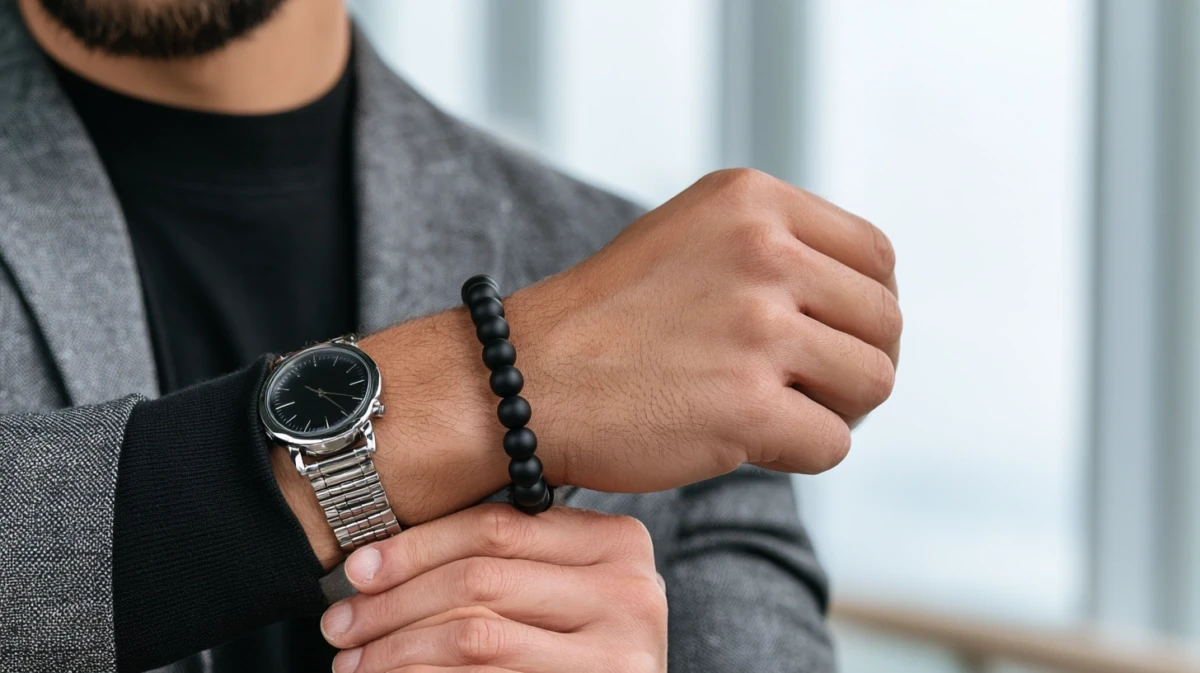
Expect to pay –40 for most men's crystal bracelets, which typically use 8mm or 10mm beads. Stick with 8mm if he wears a watch on the same wrist. Larger beads compete visually and slide under the watch crown.
Pay attention to the inner circumference when ordering, as standard 7-inch bracelets will pinch or snap on larger wrists. Look for sellers offering 7.5 to 8-inch options or adjustable macrame closures if you don't know his exact wrist size.
Black Onyx Bracelet
Matte Black Onyx reads like any minimalist men's accessory. No shimmer, no color variation, nothing that signals "crystal." It pairs with a steel watch or a leather strap without clashing, and the uniform dark tone means it works with a suit jacket as easily as a t-shirt. The matte finish also hides minor scuffs better than polished stone, which matters for daily wear. Polished onyx looks sharper out of the box but shows every scratch within weeks.
Tiger's Eye Bracelet
The warm brown-gold banding makes tiger's eye the most visually distinctive option here, and that's a strength if he already wears accessories. It catches light without looking flashy. Polished beads work better for tiger's eye than matte because the chatoyancy (that shifting stripe of light) disappears on unpolished surfaces. Durability is strong at 7 on the Mohs scale, so it handles daily contact with desks, doorframes, and gym equipment without chipping.
Tourmaline Bead Bracelet
Black tourmaline beads tend toward a slightly rougher texture than onyx, even when polished. That gives them a more rugged, less jewelry-store feel. The trade-off: tourmaline sits lower on the hardness scale (around 7–7.5, but bead-grade material can be more brittle), so elastic cord bracelets with tourmaline beads occasionally lose a bead to a hard impact. For someone who works with his hands, a double-strung cord version lasts longer.
Desk Stones That Earn Their Spot Without Explanation
For a stone to stay on a desk, it needs to look like it belongs there. These three do that through geometry, color, or metallic weight rather than any spiritual association.
Pyrite Cluster
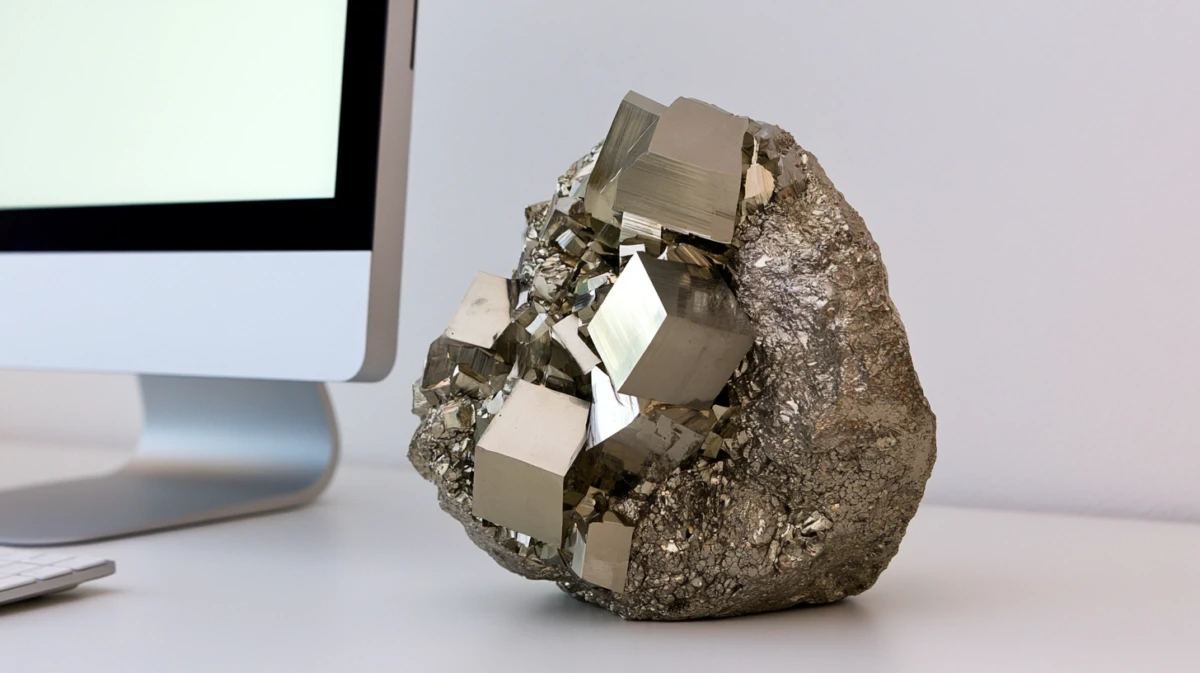
A pyrite cluster like this one fits the bill perfectly. These are cubic, brass-gold formations that most people mistake for a mineral specimen or an art object. A fist-sized cluster catches light from a monitor and reads as deliberately decorative. Smaller thumbnail pieces tuck next to a monitor stand without crowding the surface. The metallic sheen tarnishes over months in humid rooms, turning slightly darker, which some people prefer and others don't. Worth knowing before gifting to someone meticulous about desk aesthetics.
Smoky Quartz Point
A natural or polished smoky quartz point in translucent grey-brown stands upright on its base and looks architectural. Four-to-six-inch points are available on Amazon depending on clarity. The geometric shape does the heavy lifting here: nobody asks why there's a pointed crystal on a shelf the way they'd question a tumbled pink stone. Pairs well next to books or on a windowsill where light passes through the translucent sections.
Lapis Lazuli Sphere
This stone features a deep blue base with gold pyrite flecks, polished into a smooth sphere. A two-inch sphere works as a conversation piece because the color is striking enough to draw a comment without requiring explanation. Spheres roll, so a small acrylic or wooden ring stand (a few dollars) keeps it in place. If the recipient keeps a minimal, clutter-free desk, skip the cluster and go with a single sphere or a smaller tumbled piece that doubles as a paperweight.
Gift Sets vs. Bulk Crystal Kits: Why Less Wins
A curated set of two or three stones with a clear theme lands differently than a bag of twenty random minerals. The difference isn't price. It's whether the recipient opens the box and knows what to do next.
Curated 2–3 Stone Set
The sets that actually get used share three traits: each stone has a stated purpose, the stones relate to each other thematically, and the whole thing fits in one hand. A grounding-themed set might pair hematite with smoky quartz and black tourmaline, covering calm, clarity, and boundary-setting without overlap. The Inner Kingdom Grounding Ritual Kit takes this further by pairing a stone with a structured practice, which removes the "now what?" moment entirely. When shopping elsewhere, look for sets where the seller names a specific use per stone rather than just listing mineral names. A quality two- or three-stone set with decent packaging is usually well-priced.
Generic 20-Stone Kit
These kits look generous. The problem: a skeptic opens a box of twenty unlabeled tumbled stones and has zero entry point. Which one does what? Where do they go? Without clear uses, these collections often end up forgotten. Bulk kits are built for collectors who already know their minerals, not for someone receiving their first crystal as a gift. If the recipient has to Google each stone individually, you've given them homework, not a gift.
How to Hand Him a Crystal Without Making It Weird
"Saw this and thought it looked cool" works better than any explanation you could prepare. The moment you start describing energy, vibrations, or what the stone "does for your spirit," you've turned a gift into an enrollment pitch.
Say less. Three phrases that land well depending on your relationship:
Casual: "It's a desk thing. Looks good next to your monitor."
Direct: "It's a grounding stone. Some guys keep one in their pocket when work gets intense. Figured you'd like the weight of it."
Minimal: "It's volcanic glass" (or iron oxide, or whatever the stone actually is). Let the geology do the talking.
What kills the gift is spiritual vocabulary. Words like "healing," "chakra," "manifest," and "cleanse" trigger an immediate mental door-slam for most skeptical men. Same goes for framing it as a self-improvement project: "I thought this could help you with your stress" puts him on the defensive before he's even held the thing.
Position the object as what it physically is. A heavy iron-oxide stone. A chunk of volcanic glass. A brass-colored mineral cluster for his desk. If he asks what it's for, keep the answer functional: "People use them as focus anchors" or "It's just a nice rock, honestly." He'll Google it later if he's curious, and discovering the deeper use on his own terms is what actually keeps the stone in his daily rotation.
Methodology: How We Selected These Crystals
Every selected item passed a single filter first: would a man who has zero interest in crystals actually keep it? That ruled out anything sold with chakra charts, sage bundles, or pastel packaging. From there, five criteria shaped the final list.
The stone had to function as a normal object. A desk piece needs to look like a desk piece. A bracelet needs to pass as jewelry. A pocket stone needs to feel like something worth carrying, not something that needs explaining.
Form factor mattered more than mineral rarity. A gorgeous amethyst cluster fails this audience if it screams "wellness altar." A plain hematite tumble wins because it reads as a weighted fidget stone.
Price stayed within gifting range, roughly $15 to $45 for single pieces and curated sets. Anything above that asks too much commitment from a skeptical recipient.
Durability filtered out soft or fragile stones that chip in a pocket or scratch on a desk surface. Hardness ratings and fracture patterns matter when the owner won't treat it gently.
Sourcing stuck to sellers who photograph their actual inventory and ship stones that match the listing. Stock photos of museum-grade specimens at budget prices got cut immediately.
FAQ: Buying Crystal Gifts for Men
What crystals should I buy for a man?
Tiger's Eye, Hematite, Black Obsidian, and Smoky Quartz work best because they look like ordinary dark stones, survive rough handling, and don't trigger any wellness associations at first glance.
Are crystals good gifts for men?
They land well when the form factor matches something he'd already carry or place on a desk. A polished pocket stone or a matte bracelet reads as a thoughtful object, not a spiritual statement, which is the entire point for skeptical recipients.
How much should I spend on a crystal gift?
Most single stones and bracelets worth giving sit comfortably in the accessible gifting tier. Spending more rarely improves the stone itself and often just buys fancier packaging he'll throw away.
However, be cautious of very low prices on major marketplaces, as these are frequently dyed glass or synthetic resin. If a deal seems too good to be true for stones like Lapis Lazuli or Malachite, it is likely a counterfeit.
Do men actually use crystal gifts or do they just sit in a drawer?
Pocket stones and bracelets get used most because they attach to existing habits: keys in the pocket, watch on the wrist. Decorative clusters are the ones that end up forgotten. Pick a form factor tied to something he already does daily.
Crystals for Men: The No-Nonsense Field Guide
If you're buying a crystal gift and want to include something genuinely useful alongside it — the field guide covers all ten stones, how to use them, and a quiz that finds the right starting point.