Hematite Bracelet for Men: The Grounding Stone You'll Actually Wear
This article contains affiliate links. If you purchase through our links, we may earn a small commission at no extra cost to you.
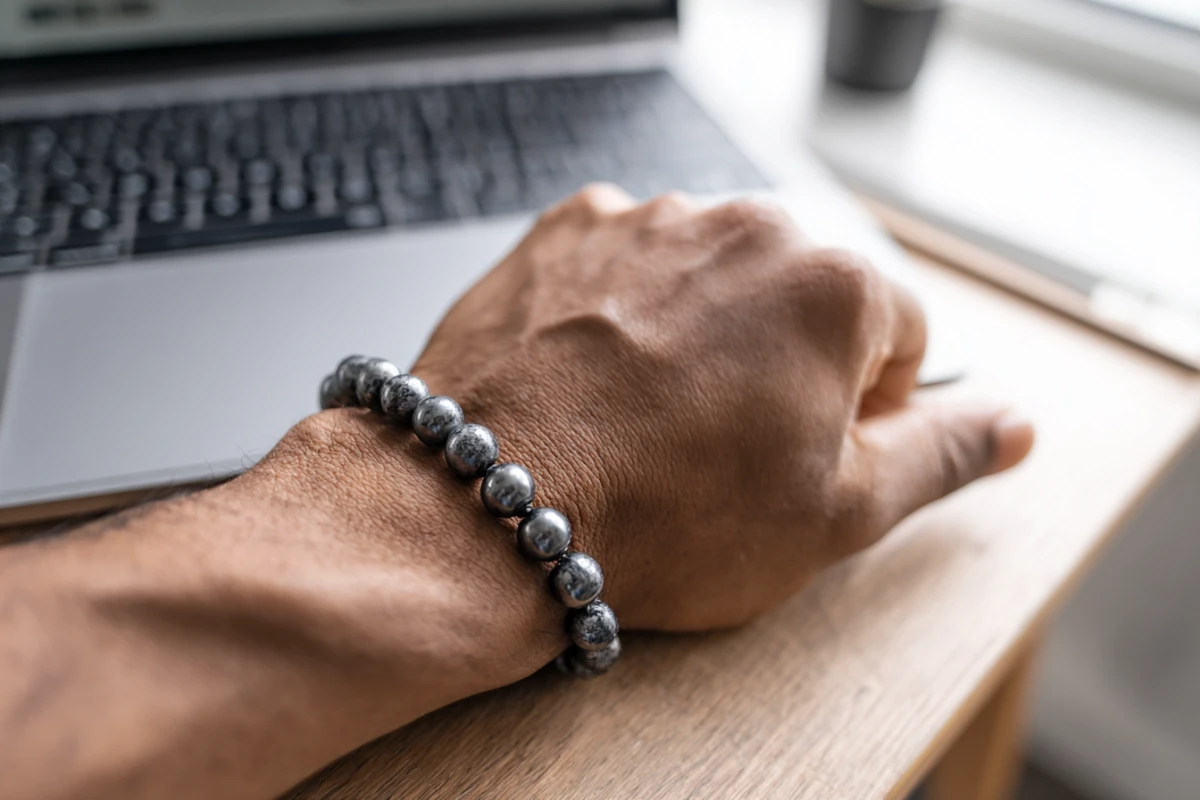
A hematite bracelet for men is iron oxide pressed into bead form, which makes it noticeably heavier and cooler against the skin than onyx, lava stone, or most other dark bracelet materials. That density, roughly 5 g/cm³, turns it into a tactile grounding anchor you actually register throughout the day. Stick with natural, non-magnetic hematite in 8 to 10mm beads on elastic cord, and skip synthetic magnetic versions (often sold as "hemalyke") that lack the weight and durability of the real stone.
Why Hematite Feels Different on Your Wrist
Pick up a lava stone bracelet and a hematite bracelet in the same hand. The hematite will feel almost twice as heavy. That weight comes from its high iron content, which gives it a density that most decorative stones can't match. Onyx sits around 2.6 g/cm³. Lava stone is even lighter because of its porous structure. Hematite at roughly 5 g/cm³ sits closer to a steel ball bearing than to a typical crystal bead.
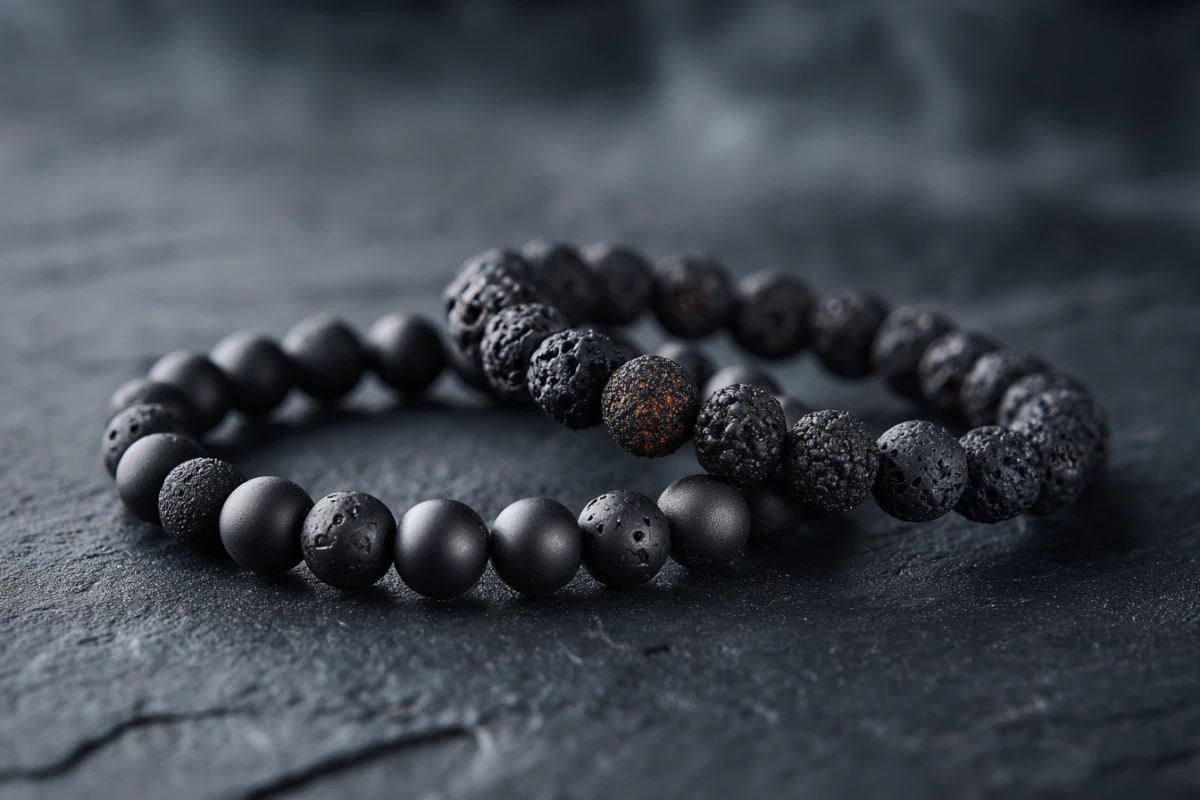
The second thing you notice is temperature. Hematite conducts heat faster than porous or organic stones, so it feels distinctly cool when you first put it on. That coolness fades as it absorbs body heat, but every time you shift it or take it off briefly, the reset is immediate. Lava stone, by contrast, insulates: it stays close to skin temperature and barely registers.
Then there's the surface. Polished hematite has a metallic, gunmetal sheen that reads as jewelry rather than "spiritual accessory." It pairs with a watch or a leather strap without looking out of place in a work setting.
These three properties create a bracelet you keep noticing, which is why hematite shows up consistently in guides to crystals for men who want something functional rather than decorative. The weight shifts when you move your wrist. The cool contact pulls your attention back. That's the practical mechanism behind hematite's reputation as a grounding stone: it's hard to forget you're wearing it.
Natural Hematite vs. Synthetic Magnetic Hematite
Most hematite bracelets sold under about online contain no actual hematite. The beads are a barium-strontium ferrite ceramic, sometimes labeled "hemalyke" or "hematine," pressed and polished to mimic the real stone's gunmetal finish. They look close enough in photos, but the material is lighter, more brittle, and strongly magnetic in a way natural hematite never is.
Real hematite shows almost no magnetic response. Hold a fridge magnet against a bead: if it snaps on and sticks firmly, you're holding ceramic. Genuine hematite might produce a faint tug at most, nothing that locks the magnet in place. That single test eliminates the majority of fakes.
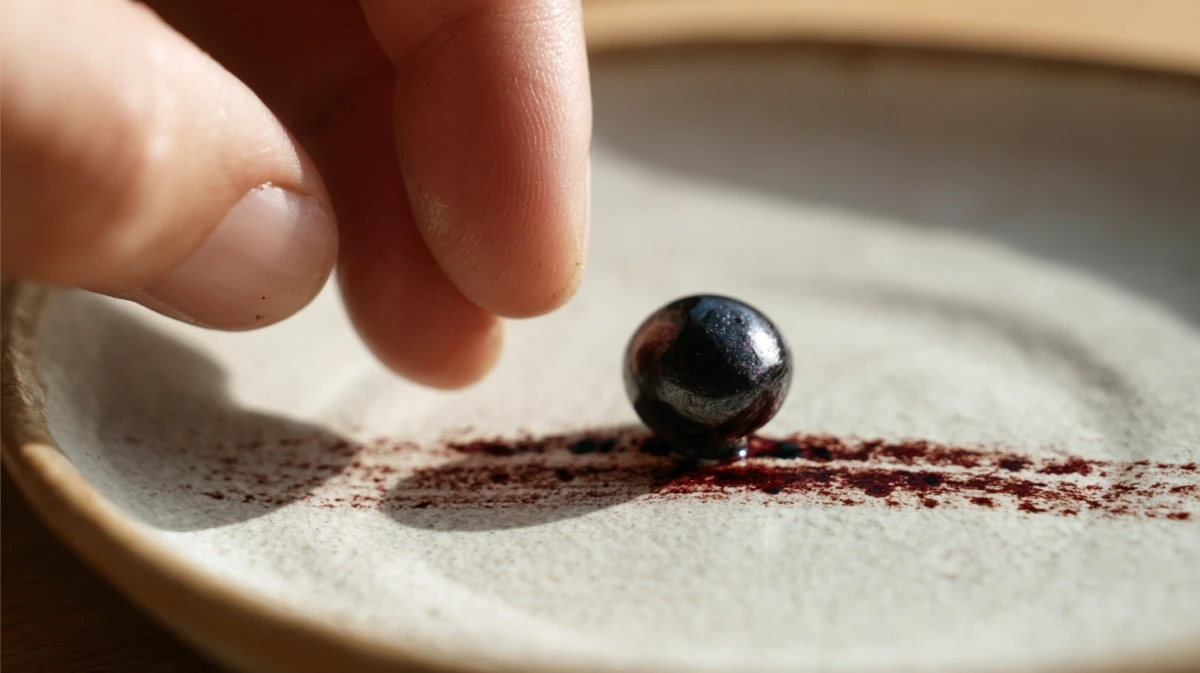
A second check works when you have access to unglazed porcelain (the underside of a bathroom tile or a streak plate). Drag the bead across the surface. Natural hematite leaves a reddish-brown streak, a direct result of its iron oxide composition. Synthetic ceramic leaves a gray or dark line, or no mark at all.
Choosing the wrong material affects more than just authenticity. Ceramic hemalyke shatters on hard surfaces where real hematite chips but survives. The weight difference matters too: a genuine 8mm hematite bead bracelet sits noticeably heavier on your wrist, which is the whole point of choosing this stone for grounding. A ceramic version feels closer to any standard bead bracelet, removing the tactile quality that makes hematite distinct.
Stick with sellers who specify "natural hematite" and skip any listing that advertises strong magnetism as a feature. Strong magnetism is the giveaway, not the selling point.
What to Check Before You Buy a Hematite Bracelet
Bead diameter determines how much weight sits against your skin. At 6mm, a hematite bracelet feels barely heavier than wood or glass. Eight-millimeter beads cross the threshold where the density becomes noticeable throughout the day, and 10mm beads deliver a genuine anchoring sensation. Most hematite bracelets land in the 8mm range as a practical sweet spot: heavy enough to register, slim enough to slide under a shirt cuff.
Because of the stone's high density, getting the right fit is more critical than with lighter materials. A loose hematite bracelet will constantly slide down and bang against your keyboard or desk, while a tight one will press the heavy beads uncomfortably into your skin. Aim for a fit that allows exactly one finger to slide between the beads and your wrist.
Cord material is another important factor for durability. Elastic cord is the default and works fine for daily wear, but cheap elastic frays within a few months, especially if you shower with the bracelet on. Look for double-stranded elastic or braided stretch cord. A stainless steel lobster clasp version adds durability, though it also adds weight and a closure point that can dig into the wrist during physical work. Plain string or leather cord looks good initially but stretches unevenly and makes resizing impossible.
Polished hematite has the signature metallic mirror finish and shows fingerprints within minutes. Matte or tumbled beads hide wear better and develop a subtle patina over time. Polished looks sharper with a watch or metal accessories. Matte pairs more naturally with other stone bracelets. Neither finish affects the stone's weight or density.
Clasp bracelets sit more securely but introduce a failure point, and most clasps on sub-$20 bracelets are the first thing to break. Elastic slip-on designs are simpler and easier to stack. If you want a clasp, expect to pay more for one that holds up.
Realistic pricing: Bracelets with genuine natural hematite in 8mm or 10mm beads vary in price depending on bead count, cord quality, and brand. Anything under $15 almost always signals synthetic material or poor construction.
How to Wear a Hematite Bracelet Without Overthinking It
Most men wear their hematite bracelet on the non-dominant wrist for practical reasons: it interferes less when writing, using a mouse, or shaking hands. Wearing it on your dominant hand, however, puts the weight where you notice it most throughout the day. If the whole point is a tactile grounding reminder, the dominant wrist wins. If you want something that stays out of the way and just sits there quietly, go non-dominant. Both placements work well. Try both for a day each and keep whichever placement you stop thinking about.
Stacking with Other Stones
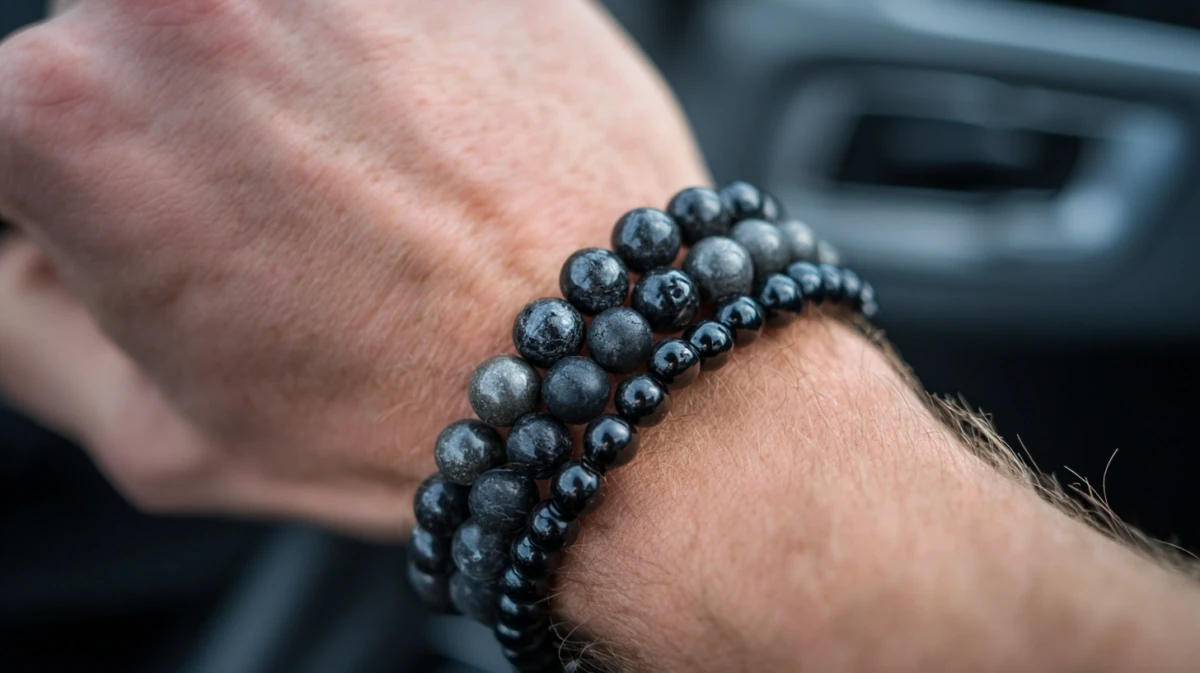
Hematite sits heavier than most stone bracelets at the same bead size, so it naturally drops to the lowest point on your wrist in a stack. Pairing it with black tourmaline or onyx works visually because the color palette stays cohesive, dark and understated. Two bracelets is the practical limit before a stack starts sliding around and clacking during meetings. If you want a deeper look at how these grounding stones compare, crystals for grounding covers the differences in detail.
Professional vs. Casual Settings
A single hematite bracelet in 8mm beads reads like a watch alternative in most office environments. The metallic gray tone blends with steel watch bands and cufflinks without drawing attention. Stack two or three, and it shifts toward a weekend look. In casual settings, nobody notices or cares. The only context where hematite stands out is formal black-tie, where any wrist jewelry beyond a watch tends to look out of place.
Hematite Care: The One Rule That Prevents Damage
Hematite is iron oxide, which means moisture is its enemy. Remove your hematite bracelet before showers, swimming, dishwashing, or any activity where water sits on the beads. Prolonged contact with moisture triggers surface oxidation, leaving rust-colored discoloration that won't buff out.
Cleaning is simple: wipe the beads with a dry cloth after wearing. If something sticky gets on them, a barely damp cloth works, but dry the beads immediately afterward. Soaking or rinsing under a faucet defeats the purpose.
Minor surface scratches will appear after a few months of daily wear. That's normal and doesn't compromise the stone. If you chose a matte finish, those scratches blend in and stay nearly invisible. Polished beads show wear faster, though some people prefer the lived-in look.
The elastic cord degrades faster than the stone itself, especially if it absorbs sweat regularly. Pulling the bracelet off before intense workouts extends cord life noticeably. When the cord starts feeling loose or frayed, restringing costs a few dollars and takes minutes.
Frequently Asked Questions
Does a hematite bracelet really work?
Hematite has no scientifically proven health effects. Many wearers notice that the unusual weight on the wrist acts as a physical anchor, a tactile cue that pulls attention back to the present moment. That grounding effect is real, even if it's psychological rather than metaphysical.
Which wrist should I wear a hematite bracelet on?
Wear it on whichever wrist feels comfortable and stays out of your way during work. There's no energetic rule that holds up to scrutiny. Most right-handed men default to the left wrist simply because it interferes less with writing and mouse use.
Can I wear a hematite bracelet every day?
Daily wear is fine as long as you remove it before showering, swimming, or heavy lifting. The iron oxide surface reacts to prolonged moisture, and impact against hard surfaces can chip polished beads. Wiping it down at the end of the day keeps the finish intact longer.
Is magnetic hematite the same as real hematite?
Natural hematite is only very weakly magnetic. Bracelets sold as "magnetic hematite" are almost always hemalyke, a ceramic composite engineered for strong magnetism. The weight, color depth, and surface feel differ noticeably from genuine stone, and the two should not be treated as interchangeable.
Crystals for Men: The No-Nonsense Field Guide
If you want the full breakdown — the science, all ten stones, a daily carry practice, and a quiz that tells you exactly which stone to start with — the field guide has everything in one place.