Crystals for Men: The No-Nonsense Guide to Stones That Actually Work
This article contains affiliate links. If you purchase through our links, we may earn a small commission at no extra cost to you.
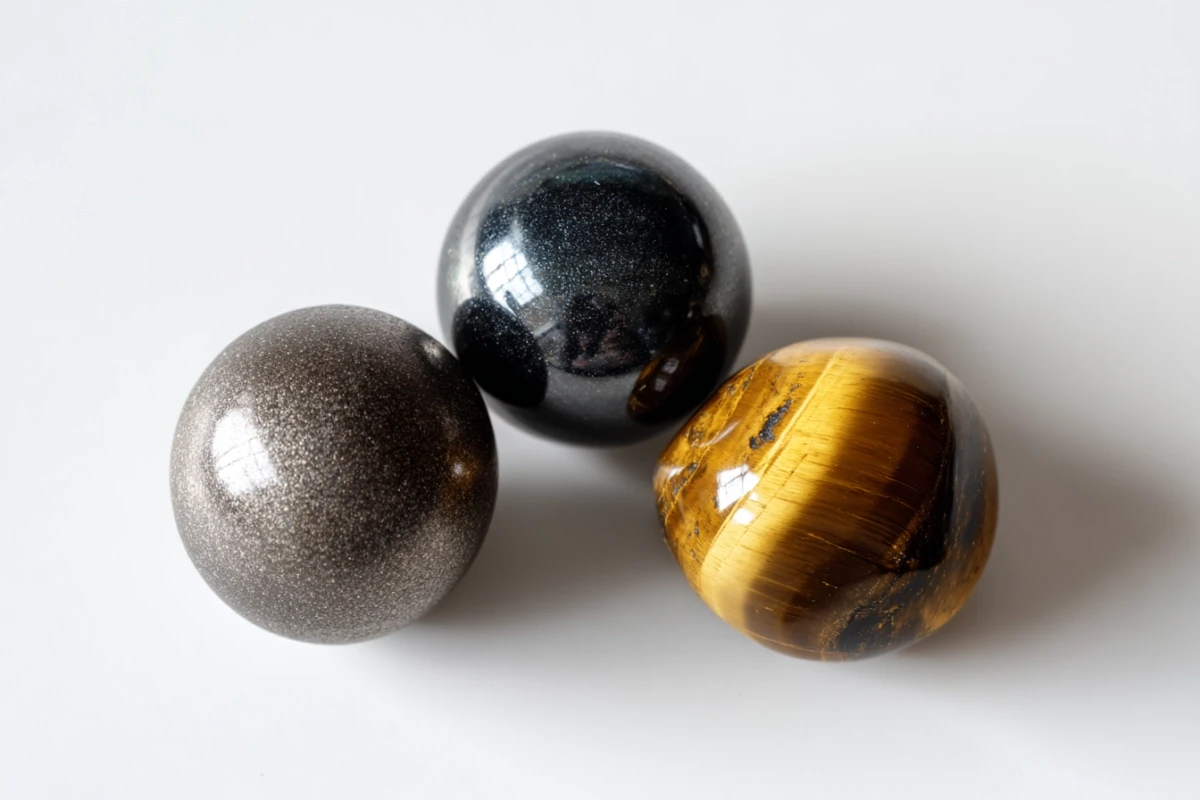
Tiger's Eye, Black Obsidian, and Hematite are the three stones beginners reach for most often, and each one targets a different need. Tiger's Eye suits moments that demand confidence under pressure. Black Obsidian cuts through mental fog when you need clarity. Hematite, dense and cold in the palm, works as a grounding anchor during scattered or high-stress days. Pick based on what you actually need right now.
What Men Actually Use Crystals For (and Why It Has Nothing to Do With Magic)
Most crystal content online reads like it was written for a yoga retreat brochure. Strip away the chakra language and manifestation framing, and what you're left with is a simple concept: a heavy, cold, textured object in your hand or pocket creates a physical interrupt. That interrupt is the entire point.
There are four practical ways to use them.
The first is focus during deep work. A dense stone on your desk or in your non-dominant hand gives your restless fingers something to do without pulling you out of concentration. The weight registers just enough to keep your body anchored while your mind stays on the task. Hematite and Black Obsidian are common picks here because they're heavy for their size.
The second is composure under pressure. Reaching into your pocket and gripping something cold and smooth triggers a sensory shift. Your nervous system registers the temperature change and the pressure against your palm, which can pull attention away from spiraling thoughts. This is a tactile anchor, not a spiritual ritual.
Third, stress regulation through repetitive contact. For a deeper look at which stones work best for different types of stress, see the crystals for stress relief guide. Rolling a polished stone between your fingers works on the same principle as a stress ball, but without looking like you raided an office supply drawer. The texture matters: rough stones like raw Black Tourmaline create more sensory feedback than polished ones.
The fourth use case is boundary-setting, which sounds abstract until you make it physical. Placing a stone in your pocket before a difficult conversation or a draining meeting gives you a tangible reminder of the internal line you've drawn. It acts as a physical cue.
None of this requires belief in energy fields. These are objects with real physical properties: density, thermal conductivity, surface texture. That's what makes them useful.
The Best Grounding Stones: Hematite, Smoky Quartz, and Black Tourmaline
Grounding is the use case most men start with, and these three stones each solve it differently.
Hematite
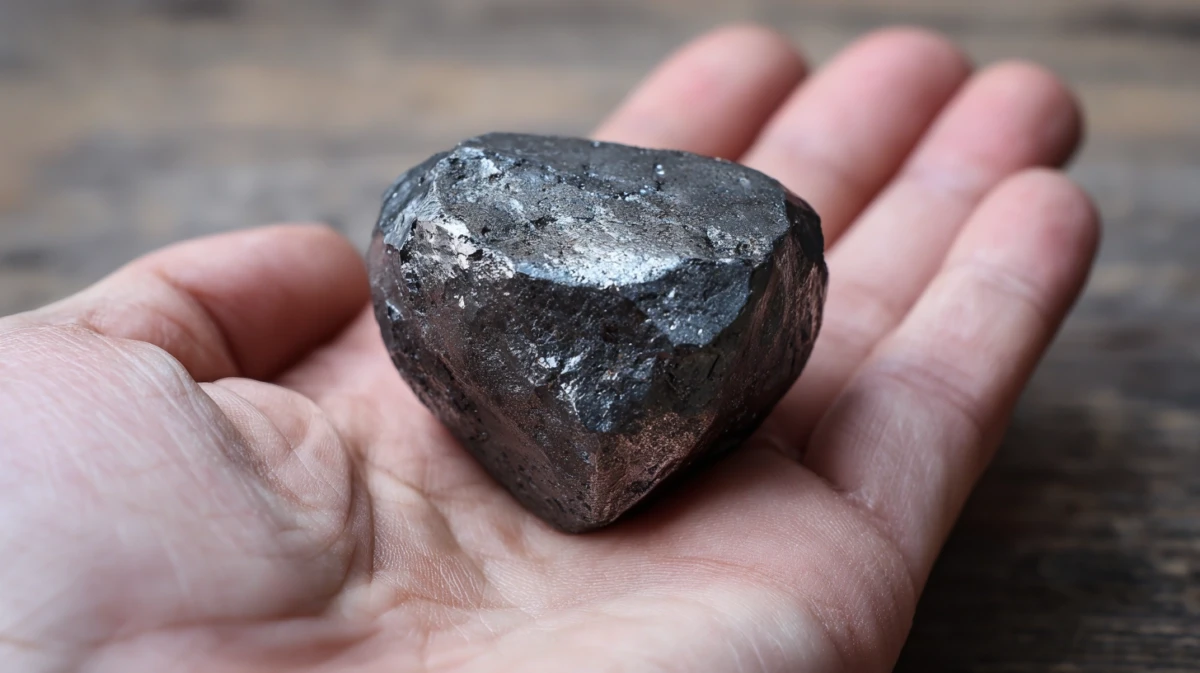
Hematite is iron oxide in mineral form. Pick one up and the weight catches you off guard: it's noticeably heavier than stones twice its size, with a cool, metallic surface that feels closer to a ball bearing than a rock. The heavy weight is what makes it effective. When your mind is jumping between twelve tabs and your body feels like it's running on caffeine fumes, rolling a hematite stone between your fingers pulls attention back into your hand. It works as a physical reset. For men new to crystals, hematite is the most intuitive starting point because the sensation is immediate and impossible to ignore. A hematite bracelet is the easiest way to keep the stone in constant contact throughout the day.
Smoky Quartz
Where hematite suits acute restlessness, smoky quartz fits a different pattern: the low-grade background hum of tension you've been carrying so long you stopped noticing it. It's a translucent brown quartz, hard enough to pocket without worrying about chips, and lighter in hand than hematite. Men who don't feel "stressed" but notice they're clenching their jaw at 2 PM tend to respond to this one. It won't snap you out of a spiral the way a heavy iron-oxide stone does, but as a daily carry it quietly counterbalances that ambient tightness.
Black Tourmaline
Black tourmaline has a ridged, striated texture you can feel with your thumb. It's also piezoelectric, meaning it generates a small electrical charge under mechanical pressure. That is a verified physical property. Men who struggle with boundary situations (saying no in meetings, holding ground in confrontations) often keep one in a pocket as a tactile cue. The rough surface gives your fingers something to grip during moments when you need composure without retreating. A black tourmaline bracelet keeps the stone in contact throughout the day, which suits its use as a boundary-setting anchor.
The Best Stones for Focus and Mental Clarity
Black Obsidian
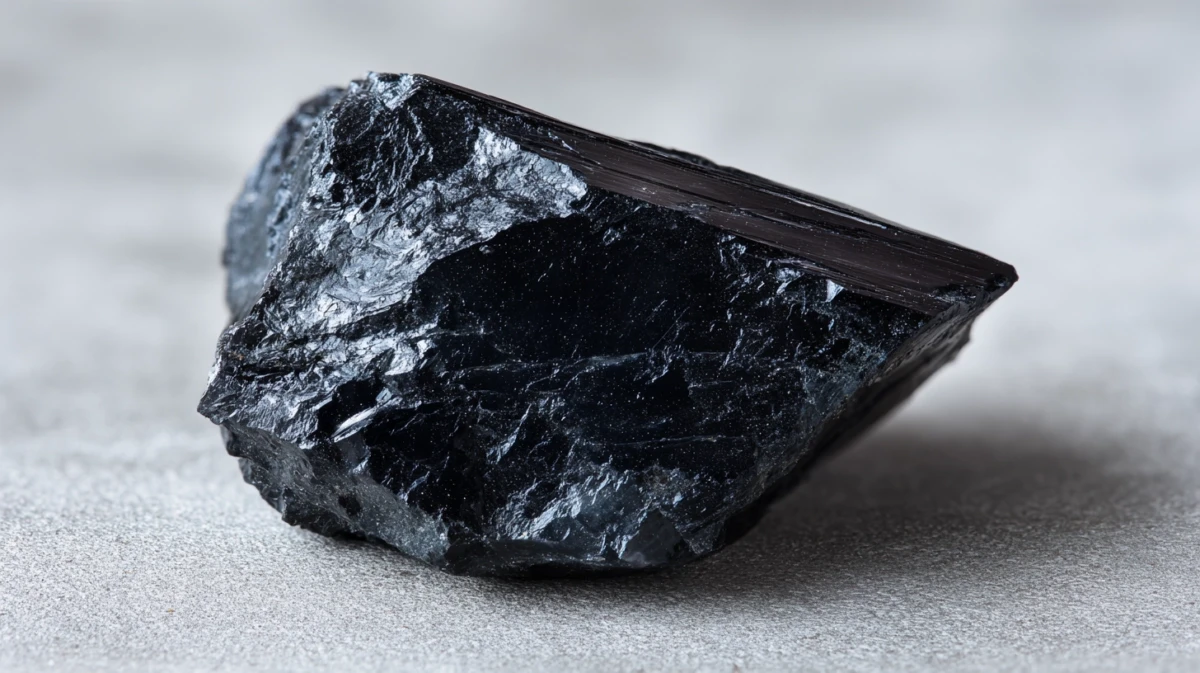
Black obsidian is volcanic glass: literal cooled lava with a smooth, razor-sharp fracture surface called conchoidal fracture. Pick one up and you'll notice it feels almost unnaturally slick, like a piece of polished technology rather than a rock. That surface quality is what makes it useful when your head is full of competing thoughts and you need to land on a decision. The sharpness of the edge and the weight in your palm create a sensory contrast that pulls attention out of the loop and into the hand. Men tend to reach for obsidian before difficult conversations or when staring at a screen without making progress. It cuts through indecision the way a cold shower cuts through grogginess. One thing to know: obsidian is glass, and it can chip or scratch if you toss it in a bag with keys and coins. Wrap it in cloth or keep it in a separate pocket.
Tiger's Eye
Tiger's eye has a visible light-band effect called chatoyancy, a golden stripe that shifts across the stone's surface as you turn it. The banding runs in warm browns and ambers, and the stone itself is noticeably dense for its size. Where obsidian works as a sharp interrupt, tiger's eye rewards slower, sustained contact. Rolling it between your fingers during a long work session or holding it during a negotiation gives your hands something purposeful to do, which tends to quiet the fidgeting that fragments concentration. For men new to crystals, tiger's eye is often the easiest sell because it looks and feels like something you'd actually want on a desk. The limitation: its warm tones and polished look make it one of the more commonly faked stones on the market. If the banding looks perfectly uniform or the price seems too low, it's probably dyed glass.
Stones for Confidence, Boundaries, and Emotional Steadiness
Carnelian
Warm orange-red chalcedony, often translucent at the edges, with a waxy surface that holds heat from your hand longer than most stones. Carnelian sits in the pocket before a job interview, a difficult phone call, or a morning when getting out the door feels like the hardest part. It won't make you fearless. What it does is cut through the freeze response that keeps you rehearsing instead of acting. If you tend to over-prepare and under-execute, this is the stone that nudges you toward motion.
Black Onyx
Dense, opaque, and so uniformly black it almost looks synthetic. It scores a 7 on the Mohs scale, harder than most pocket stones, and that solidity is the point. Black onyx suits the man who absorbs everyone else's tension: the friend people call at 2 a.m., the manager who carries the team's stress home. Carrying onyx works as a tactile reminder that other people's chaos is not your weight to hold. Where it falls short: onyx won't teach you how to set verbal boundaries. It just keeps the physical cue close enough that you remember to try. For daily wear, a black onyx bracelet in a simple bead format keeps the stone close without drawing attention.
Labradorite
A feldspar mineral with an iridescent flash called labradorescence, shifting between blue, gold, and green depending on the angle. Labradorite is the pick for men doing internal work: recognizing repeated patterns, sitting with discomfort instead of numbing it, questioning why the same conflict keeps surfacing. The flash only appears when you tilt the stone, which is a decent metaphor for the kind of honesty shadow work demands. You won't see anything useful if you only look from one angle. For men already journaling or doing structured self-examination, labradorite pairs well as a physical anchor during that process. If you aren't ready for introspection, start with carnelian or one of the grounding stones instead.
How to Actually Use a Crystal as a Man
Pocket carry is the most common starting point, and the reason is blunt: nobody sees it, and you can reach for it whenever pressure builds. Before a difficult meeting, during a stalled commute, or when your jaw tightens at your desk, closing your hand around a cool, heavy stone pulls attention out of your head and into your body. That physical weight against your palm acts as a tactile interrupt. You notice the texture, the temperature shift, and for a second your nervous system has something concrete to register instead of looping on whatever triggered the tension. Keep the stone in a front pocket where your hand naturally falls.
Size matters here: a stone smaller than a quarter gets lost in your pocket, while anything larger than a golf ball feels like you're carrying a roll of quarters. Aim for a "palm stone" or "tumbled stone" roughly one to two inches in diameter for the best balance of weight and comfort.
A desk stone works differently. Place it within your line of sight while you work, not hidden in a drawer. When your focus drifts, your eyes land on the stone, and it becomes a visual cue to return your attention. No ritual required. Just set it where you can see it. A piece of hematite or smoky quartz sitting next to your monitor does the same job a sticky note does, except it doesn't lose its effect after three days because you stop reading it.
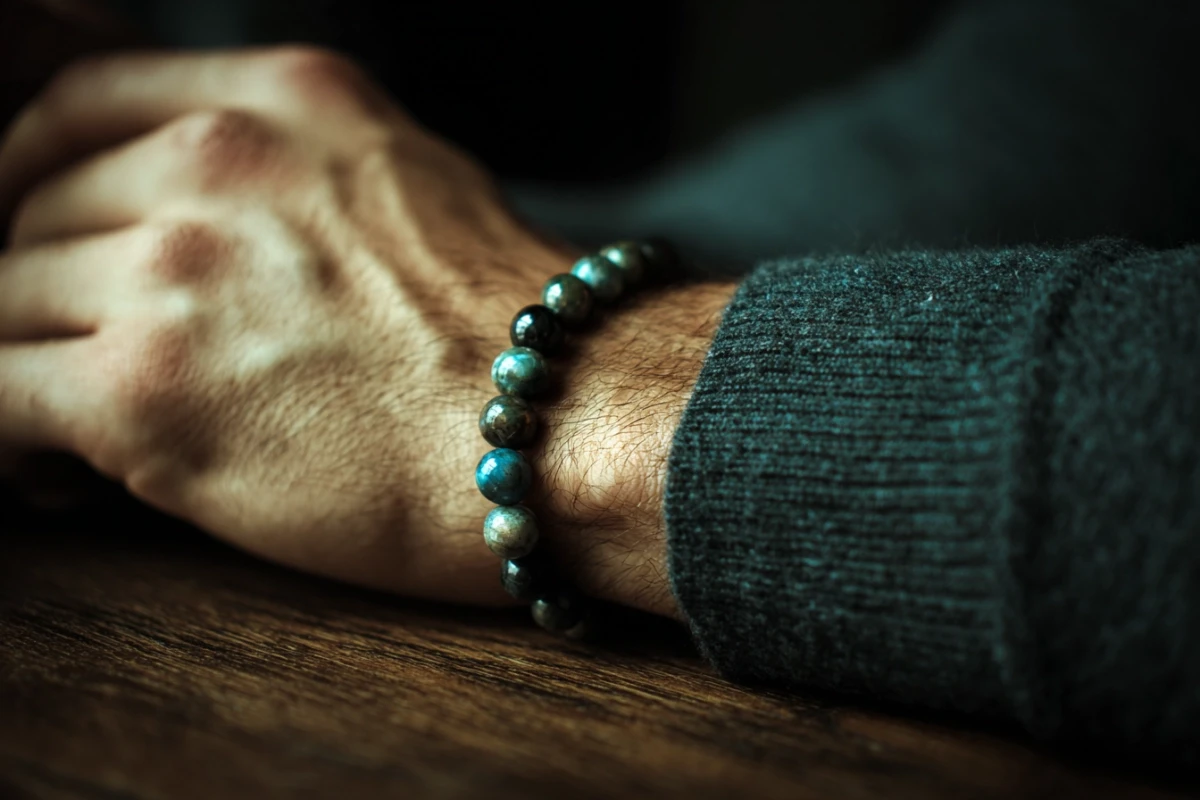
Bead bracelets are the easiest entry point if you want constant, low-grade contact. The skin-touch element is what separates a bracelet from the other two methods. You don't reach for it or glance at it. It's just there, pressing lightly against your wrist all day. Tiger's eye bracelets are the most widely sold option in this category, and the sustained contact suits that stone well.
You don't need to cleanse or charge it. Pick it up and use it.
Where to Buy Crystals Without Getting Ripped Off
A local rock or mineral shop is the safest starting point. You can hold the stone, feel its weight, and check for color consistency before paying. Most mid-sized cities have at least one, often tucked into a strip mall or near a university geology department. If the staff can tell you where the stone was mined, that's a good sign. If you're buying for someone else, the crystal gifts for men guide covers what actually works as a gift for a skeptical man.
Online retailers work fine once you know what you're looking for. Stick to shops that photograph each individual stone rather than using stock images, and that list the stone's origin. Etsy sellers with hundreds of reviews and close-up photos tend to be more reliable than polished crystal "wellness" brands charging triple for identical material.
Gem and mineral shows, which run in most regions a few times a year, give you wholesale-adjacent pricing and a huge selection. Worth a trip if you want to compare stones side by side, though impulse buying is easy when everything is spread across tables.
Three red flags that save you money: stones with unnaturally uniform or electric color (likely dyed), listings that promise health benefits like "cures anxiety," and prices that seem suspiciously low for the size. A palm-sized tumbled stone from a reputable source is affordable, rarely more than a casual lunch. If someone is charging dramatically less, the stone is probably synthetic or treated.
When making your first purchase, specifically ask for "tumbled" rather than "raw" stones. Raw minerals look impressive on a shelf, but their jagged edges make them completely impractical for pocket carry or rolling in your hand during a stressful meeting.
How to Choose Your First Crystal Based on What You Need Right Now
Pick one stone based on whatever feels most pressing today. Buying three or four at once dilutes the point. These stones work best when you carry a single piece with clear intention for a few weeks before adding anything else.
What you're dealing with | Start with |
|---|---|
Racing thoughts, can't settle down | Hematite |
Lack of direction or motivation | Tiger's Eye |
Overthinking, mental fog | Obsidian |
Difficulty holding boundaries | Black Tourmaline |
Stress that sits in your chest or jaw | Smoky Quartz |
Need sharper focus at work | Black Onyx |
If two rows feel equally urgent, go with the physical sensation. Tension in the body points toward Smoky Quartz or Hematite. Mental noise points toward Obsidian or Sodalite. Any single stone from this list is a legitimate starting point, and none of them cost more than a decent lunch. For a full breakdown of focus stones, see crystals for mental clarity.
Common Questions About Crystals for Men
Do crystals actually work for anything?
No peer-reviewed science backs the metaphysical claims. What consistent users report is that a physical object tied to a specific intention acts as a focus anchor, similar to how a wedding ring reminds you of a commitment. The stone itself isn't doing the work; your attention is.
Are crystals just for women?
Crystals have no gender. The wellness-influencer aesthetic skews female, but the stones themselves have been carried by soldiers, monks, and tradesmen across cultures for thousands of years. What matters is why you carry one, not who marketing departments have been targeting.
What is the best first crystal for a man?
Black tourmaline or hematite if you feel scattered and need grounding. Tiger's eye if low confidence or indecision is the bigger issue. Pick based on your most pressing friction point right now rather than trying to cover multiple needs at once.
How do men wear crystals without it looking weird?
A dark, unpolished stone on a simple leather cord reads no different from any other minimal accessory. Pocket carry is even simpler: a palm-sized tumbled stone stays invisible. Skip anything with wire wrapping or rainbow colors if subtlety matters to you.
By Jonatan Rajala, Founder of Inner Kingdom. About the author →
Crystals for Men: The No-Nonsense Field Guide
If you want the full breakdown — the science, all ten stones, a daily carry practice, and a quiz that tells you exactly which stone to start with — the field guide has everything in one place.
Want a free grounding practice to go alongside your crystals
The free 5-Day Breathwork Challenge gives you five short sessions to settle your nervous system — the perfect companion to carry alongside the stones.