Black Onyx Meaning: The Stone of Discipline and Quiet Strength
This article contains affiliate links. If you purchase through our links, we may earn a small commission at no extra cost to you.
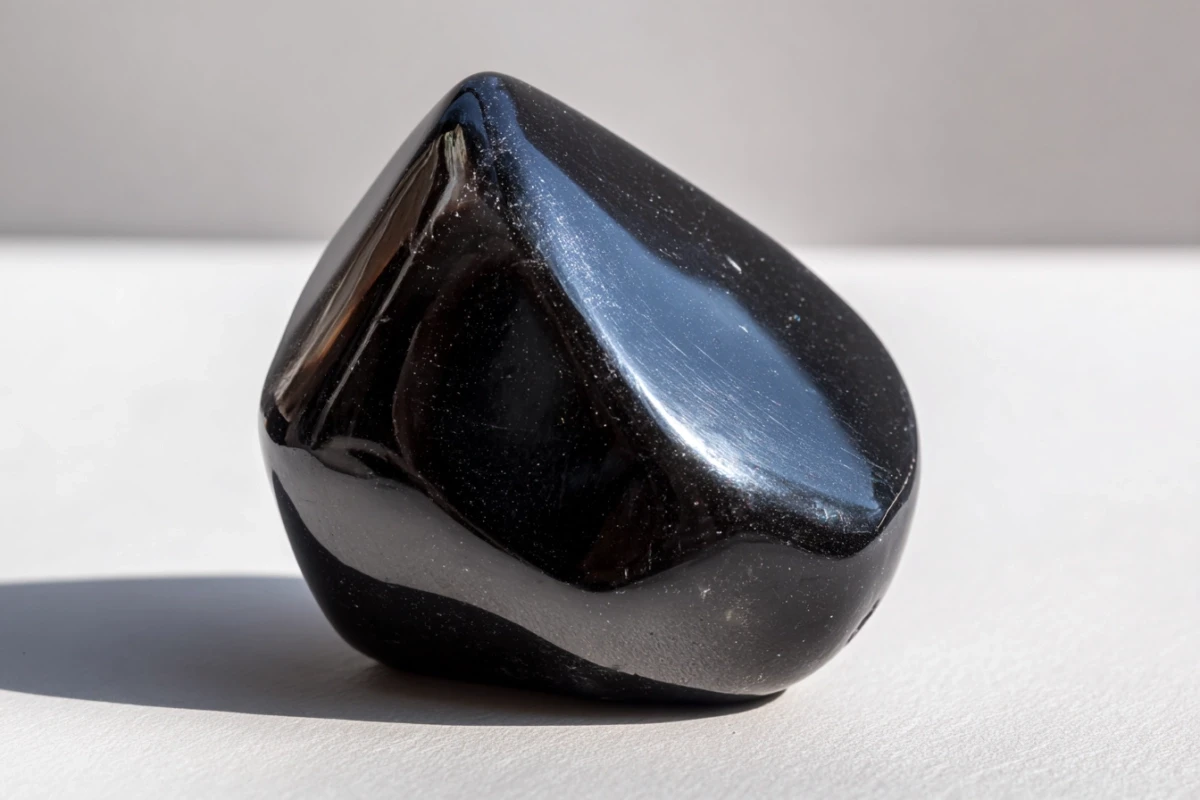
Black onyx meaning centers on sustained composure, not sudden force. It's a banded chalcedony (microcrystalline quartz) rated 6.5 to 7 on the Mohs scale, hard enough for rings, bracelets, and pocket carry without scratching easily. Men who work with crystals tend to reach for black onyx during prolonged stress: holding steady in conflict, staying focused through drawn-out difficulty, processing frustration without acting on it. Most pieces sold today are dyed gray chalcedony rather than naturally black, which matters less than you'd think.
What Black Onyx Actually Is (and Why Most of It Is Dyed)
Black onyx forms inside gas cavities left behind by cooling lava. Silica-rich fluids seep through these voids over thousands of years, depositing chalcedony in thin, banded layers. The process is the same one that creates agate. The difference is mostly about color uniformity: onyx tends toward parallel, even bands rather than the wild swirling patterns agate is known for.
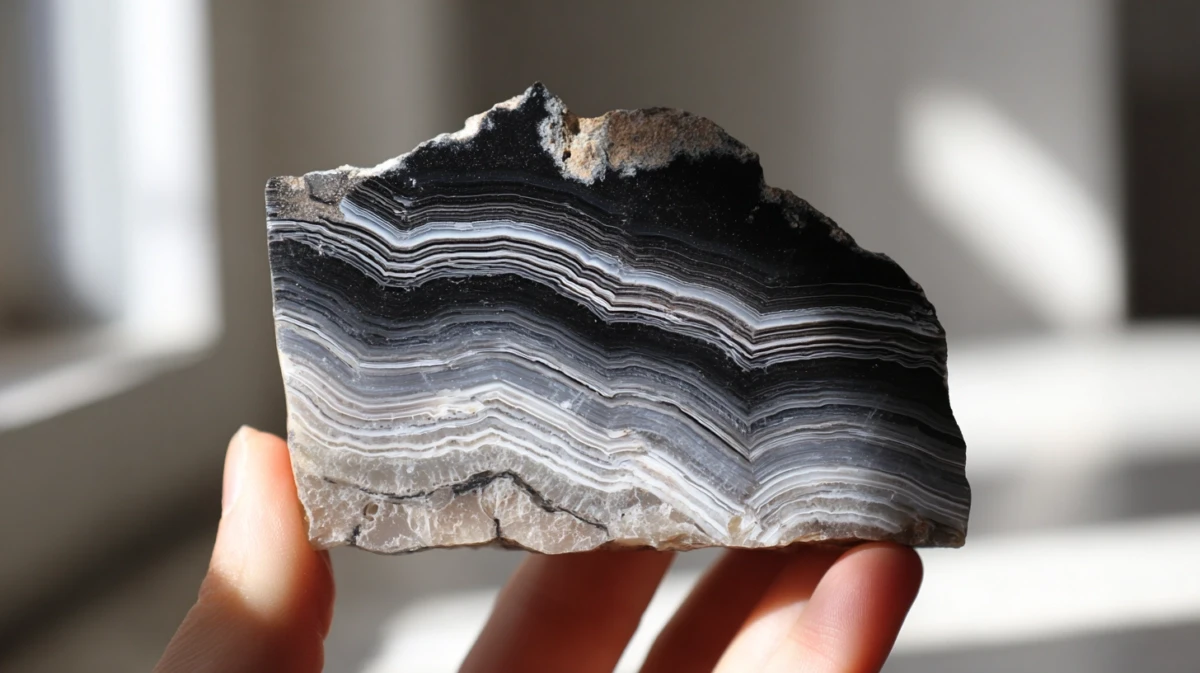
A Mohs rating of 6.5 to 7 puts it comfortably above glass and most metals. A bracelet worn daily through workouts, desk work, and weather will hold up fine. Rings take more impact, so a bezel setting protects the stone better than prongs. As a pocket stone it's nearly ideal: dense, smooth, and resistant to the keys and coins rattling around beside it.
Black onyx is one of several stones that men consistently reach for when building a practical crystal toolkit, particularly when the goal is sustained composure rather than dramatic shifts. For a broader look at which stones work best in different situations, see our guide to crystals for men.
Naturally jet-black onyx is genuinely rare. The deep, uniform black pieces filling online storefronts started as pale gray chalcedony, then were soaked in a sugar solution and treated with sulfuric acid or heat to carbonize the sugar inside the stone's pores. This practice dates back centuries and doesn't weaken the stone or change its mineral structure. Dyed onyx isn't fake onyx. It's treated onyx, and at this point it's the industry standard. If a seller claims "100% natural untreated black onyx" at a low price, that's the claim worth questioning, not the dyed piece.
Black Onyx Meaning: Emotional Discipline, Not Explosive Power
Most stones associated with strength get talked about like they deliver a jolt: sudden clarity, instant confidence, a burst of willpower. Black onyx doesn't work that way in practice, and the men who gravitate toward it usually aren't looking for a spark. They're looking for something that keeps them from unraveling during the slow, grinding stretches where discipline matters more than intensity.
The meaning most consistently attributed to black onyx centers on composure under sustained pressure. It is not about a single dramatic moment, but the kind of emotional regulation that plays out over weeks or months. That distinction matters because it shapes how the stone actually gets used.
Holding Ground During Prolonged Workplace Conflict
A disagreement that resolves in a single meeting rarely tests anyone's emotional limits. The real damage comes from conflicts that drag on: a difficult manager, a restructuring that takes quarters to shake out, a project where the goalposts keep moving. Black onyx is often carried or worn during these stretches specifically because its attributed quality is absorption rather than deflection—similar to how labradorite supports men through periods of transformation, though onyx focuses on holding steady rather than embracing change. The idea isn't to block frustration but to keep it from dictating your responses day after day. Men who use it for this purpose typically describe it as a physical reminder to stay measured rather than reactive.
Processing Grief Without Collapsing or Shutting Down
Grief doesn't arrive as one wave. It cycles, and the hardest part for many men is the pressure to either perform normalcy or collapse entirely. Black onyx is traditionally associated with grounding during exactly this kind of prolonged emotional weight. It won't accelerate healing, but its attributed role is to create a floor beneath you so the cycling doesn't pull you into numbness or impulsive decisions.
Staying with a Boundary When Everyone Pushes Back
Setting a boundary takes a moment. Maintaining it when a family member, partner, or friend tests it repeatedly over weeks takes something different entirely. The stone's association with self-control maps directly here: not the initial "no," but the tenth repetition of it when social pressure makes folding feel easier. Black onyx is typically used as a grounding anchor during that sustained resistance.
Finishing What Costs You
This applies to long projects with no visible progress, certification programs that stretch across months, or recovery protocols that demand consistency without reward. Black onyx's attributed meaning of quiet resilience fits these situations better than stones associated with motivation or ambition. Motivation is a spike. What these scenarios demand is the willingness to keep showing up after the spike fades, and that's the specific emotional territory where black onyx sits among crystals for men.
None of these properties are clinically validated. They're experiential associations built over centuries of use. But the pattern is consistent: black onyx gets chosen not for breakthrough moments, but for the unglamorous discipline of staying intact when pressure doesn't let up.
Black Onyx vs Black Obsidian vs Black Tourmaline
All three stones are black, all three get sold as "protection stones," and all three end up in the same bracelet displays. The similarities stop there. They differ in composition, durability, and what people actually reach for them during.
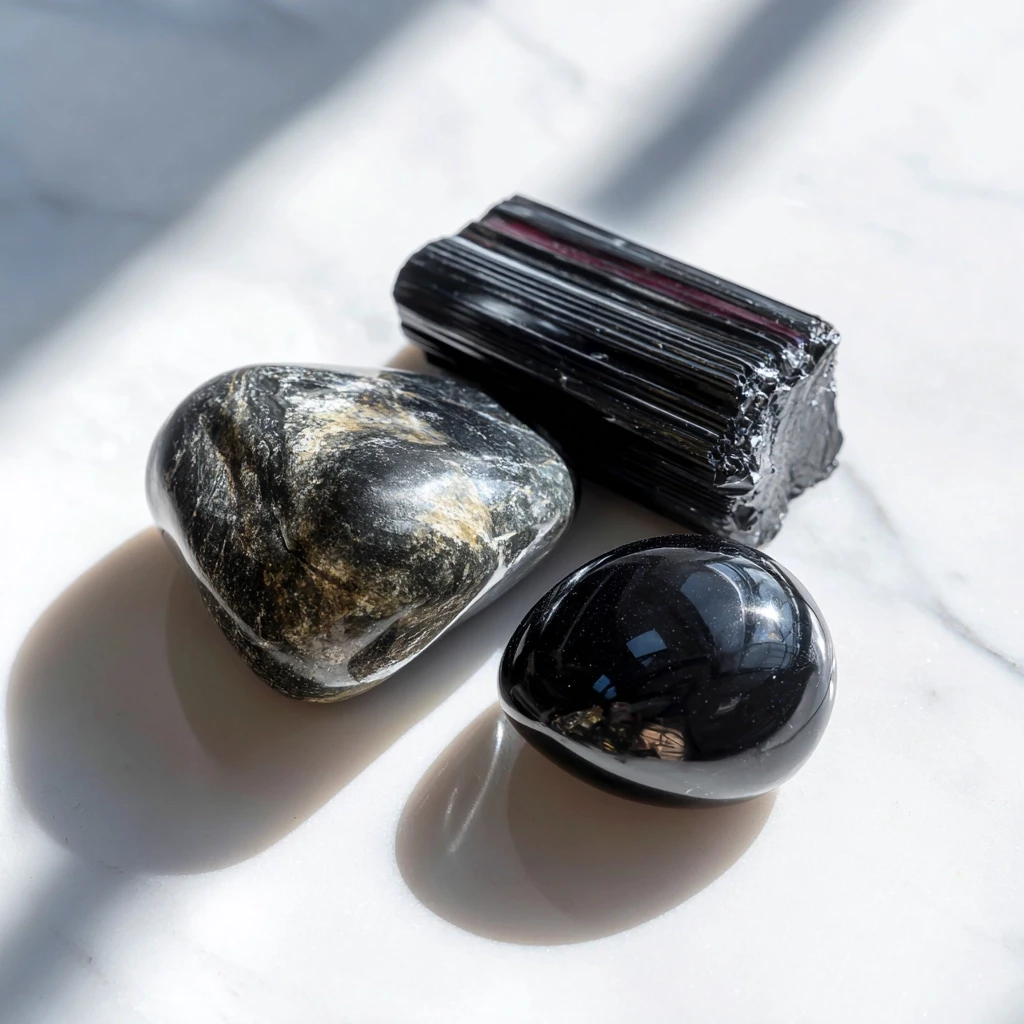
Black obsidian is volcanic glass, formed when lava cools too fast for crystals to develop. That gives it a glassy, sharp-edged quality and a hardness around 5 to 5.5 on the Mohs scale, which makes it noticeably more scratch-prone than onyx. Black tourmaline is a borosilicate mineral, typically found in rough, striated columns. It sits at 7 to 7.5 on the Mohs scale, making it the hardest of the three but also the most brittle when hit at the wrong angle. Black onyx is dense, smooth, and the most forgiving stone of the three for daily wear.
The real separation is in attributed function. Onyx carries associations with sustained emotional composure: holding steady through a long stretch of pressure without cracking. Obsidian's reputation runs in the opposite direction. People use it when they want to surface something buried, to confront a pattern or emotion they have been avoiding. That makes obsidian a poor daily-wear stone for most situations because the attributed effect is confrontational, not stabilizing. Tourmaline occupies a third lane entirely: energetic shielding. Its traditional role is absorbing environmental tension rather than processing internal weight, which is why it shows up frequently in discussions about crystals for protection.
Dimension | Black Onyx | Black Obsidian | Black Tourmaline |
|---|---|---|---|
Mineral type | Chalcedony (microcrystalline quartz) | Volcanic glass | Borosilicate mineral |
Mohs hardness | 6.5–7 | 5–5.5 | 7–7.5 |
Attributed role | Sustained composure under pressure | Surfacing buried emotions | Shielding from external energy |
Best use scenario | Ongoing stress, long projects, daily discipline | Processing grief, shadow work sessions, confrontation | Draining environments, crowds, emotional absorption from others |
Daily wear durability | High | Moderate (scratches easily) | High but can chip on impact |
If the pressure is internal and ongoing, onyx fits. If something specific needs to be faced and processed, obsidian is the sharper tool for that window of time. If the weight comes from outside, from people or environments that leave you drained, tourmaline addresses that pattern more directly.
How to Wear and Use Black Onyx Daily
A black onyx bracelet worn on your non-dominant wrist keeps the stone in constant skin contact without interfering with writing, typing, or handshakes. That passive contact is the point: you're not reaching for a tool in a crisis, you're wearing a quiet physical anchor that stays with you through the entire workday. The Forge & Foundry black onyx bracelet on Amazon holds up well to daily wear thanks to onyx sitting at 6.5 to 7 on the Mohs scale. It won't scratch from normal desk work or gym sessions the way softer stones would.
Pocket Stone for High-Stakes Moments
A tumbled onyx stone in your jacket or trouser pocket works differently than a bracelet. You reach for it deliberately before walking into a negotiation, a difficult conversation, or a presentation where composure matters more than charisma. The act of closing your hand around it becomes a micro-ritual: a physical cue to slow your breathing and drop your shoulders. Where it falls short is consistency. Pocket stones get forgotten on nightstands, left in yesterday's jeans, or skipped entirely when the morning is rushed. If you need something you can't accidentally leave behind, a bracelet wins.
Desk Placement During Focused Work
Placing a piece of onyx on your desk during deep work blocks turns it into a visual boundary marker. When your attention drifts or the urge to check your phone spikes, the stone sitting next to your keyboard serves as a wordless redirect. This format suits men who already use time-blocking or focused work intervals but want a physical object tied to the practice. A polished palm stone or a small sphere works better than a bracelet here because you can pick it up, hold it for a few seconds, then set it back down as a reset.
Pairing with Breathwork or Grounding Practice
Holding onyx during a breathwork session or a morning stillness practice adds a tactile layer that keeps wandering attention in the body rather than in thought. Even a five-minute breathing exercise shifts when you have weight and texture in your palm. This combination tends to deepen the grounding effect both practices share, though neither depends on the other to work.
How to Clean and Care for Black Onyx
Warm soapy water and a soft brush once a week is enough. Skip household cleaners and keep onyx away from prolonged direct heat. Store it separately from softer stones like moonstone or fluorite, because at its hardness level, onyx will scratch them.
You should also take it off before showering or swimming. While the water itself won't dissolve the stone, prolonged exposure to hot water, chlorine, and harsh body washes can degrade the elastic cord in bracelets and dull the stone's polish over time.
What to Check Before Buying Black Onyx
The standard dye treatment used on most commercial pieces is completely fine. The treatment is standard practice, stable over time, and doesn't affect how the stone wears or looks. If you specifically want natural black onyx, look for faint banding visible when you hold the stone up to strong light. Sellers who stock genuinely untreated material will usually say so explicitly and charge more for it. No banding claim and a suspiciously low price? It's dyed. Again, not a problem unless authenticity matters to you personally.
Surface and Polish
Run your thumb across the face. Quality black onyx feels glassy and consistent, with no cloudy patches, visible pits, or dull spots interrupting the surface. Chips along edges are a sign of rough handling during cutting or setting. A well-polished stone catches light evenly. If you're buying online, zoom into product photos and check for inconsistencies in the finish. Matte-finish onyx exists and looks good, but make sure it's intentional, not just poor polishing sold as a style choice.
Choosing the Right Form
A bracelet with 8mm to 10mm beads sits comfortably on most wrists and works for all-day wear without drawing attention. This is the most practical option if you want the stone on you constantly.
A loose palm stone or tumbled piece suits desk use or pocket carry during specific high-pressure moments, but you'll forget it more often than a bracelet.
Set pieces like rings or pendants look sharp but tend to take more impact. The stone handles daily contact well, though a ring setting exposed to constant knocking against hard surfaces will show wear faster than a bracelet tucked under a sleeve.
A simple beaded bracelet offers the most consistency, while a pocket stone serves as a deliberate tool for specific situations.
Frequently Asked Questions About Black Onyx
Can I wear black onyx every day?
The stone's natural density means it handles daily contact well. Bracelets hold up better than rings over time because they take less direct impact from surfaces.
That said, it is highly recommended to remove your onyx jewelry before sleeping. The stone's dense, grounding energy can sometimes make dreams feel overly heavy or disrupt light sleepers, plus rolling over on a beaded bracelet strains the elastic.
What chakra is black onyx connected to?
Black onyx is most commonly associated with the root chakra, which relates to stability, grounding, and a sense of physical security. That connection tracks with the stone's broader reputation for composure rather than activation.
Does dyed black onyx still work?
If you're drawn to the stone's role as a tactile anchor for focus or grounding, the standard dye process doesn't change the weight, texture, or feel in your hand.
Is black onyx only for men?
Nothing about the mineral itself is gendered. The association with masculine discipline comes from how certain traditions and modern platforms frame its use, not from any inherent property of the stone. Anyone drawn to steady, grounding energy can use it.
Crystals for Men: The No-Nonsense Field Guide
If you want the full breakdown — the science, all ten stones, a daily carry practice, and a quiz that tells you exactly which stone to start with — the field guide has everything in one place.
Want a free grounding practice to go alongside your crystals?
The free 5-Day Breathwork Challenge gives you five short sessions to settle your nervous system — the perfect daily anchor.