How to Cleanse Crystals: Practical Methods That Protect Your Stones

This article contains affiliate links. If you purchase through our links, we may earn a small commission at no extra cost to you.
Hard, polished crystals like clear quartz or amethyst cleanse under cool running water in about a minute. For raw or soft stones (selenite, pyrite, malachite), skip water entirely and use a dry brush or cloth instead. For passive overnight maintenance, a selenite plate handles any stone type without risk. Carry stones typically need weekly cleaning; desk pieces roughly once a month.
Essential Tools for Cleansing Crystals
Not every method calls for the same gear. Match your tools to your stone type and skip the rest.
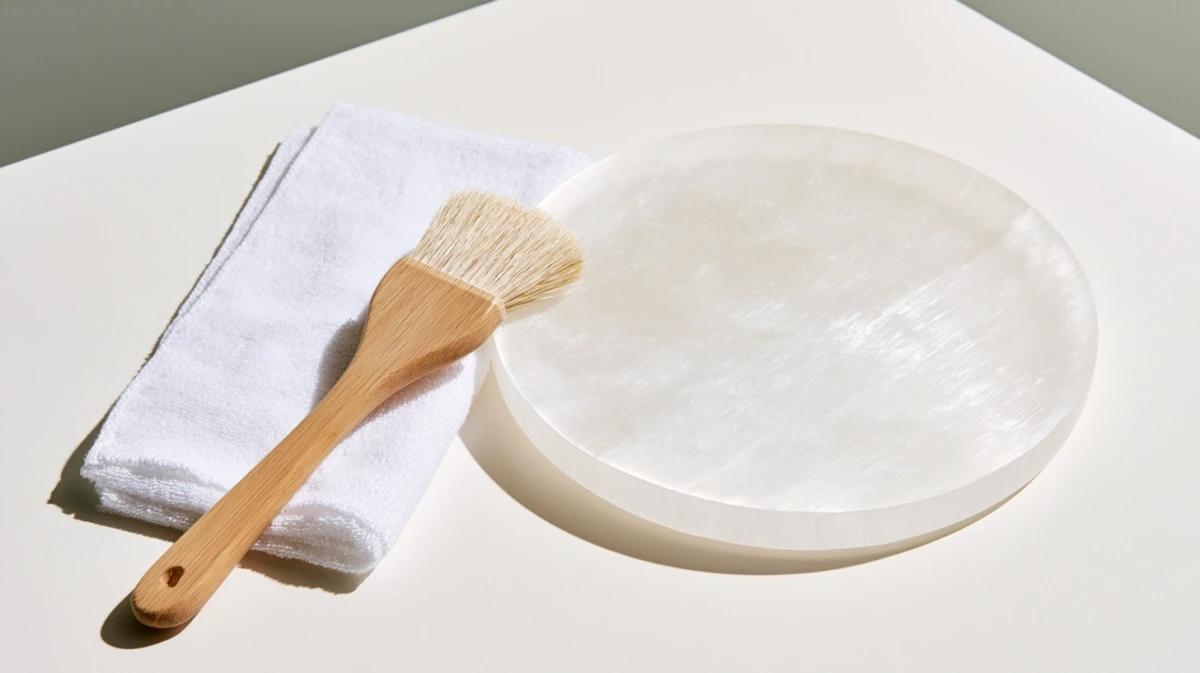
Cool running water source: a kitchen tap works fine. Used for rinsing hard, polished stones.
Soft-bristle dry brush: a clean toothbrush or small detail brush. Clears dust from raw stones with crevices, like pyrite clusters or rough tourmaline.
Lint-free cloth: microfiber or a glasses cloth. Wipes down polished pieces and jewelry without scratching.
Selenite charging plate: a flat selenite slab, roughly 15 cm long. Place any stone on it overnight for passive cleansing. This is the lowest-effort method available.
Small bowl or towel: catches water during rinsing and gives stones a clean surface to air-dry on.
You won't need all five. Polished quartz needs only tap water and a cloth. Raw specimens need the dry brush and selenite plate.
The tools you need depend on which stones you actually carry. If you're building a collection from scratch, the core stones most men start with tend to be polished quartz varieties and grounding stones that handle water well.
Step 1: Identify Whether Your Stone Can Get Wet
Stones with a Mohs hardness above roughly 5 are generally safe under water. Below that threshold, water seeps into softer mineral structures and causes dissolution, rust, or flaking that you can't reverse.
Water-Safe (Mohs 6+)
Clear quartz, amethyst, rose quartz, smoky quartz, agate, tiger's eye. These handle a quick rinse without issue.
Keep Dry (Mohs 5 or Below, or Iron-Bearing)
Selenite dissolves visibly within minutes. Pyrite contains iron and rusts. Hematite, despite feeling heavy and solid, corrodes fast when wet. Malachite and kyanite are porous enough that water degrades their surface over time.
When unsure, use a dry method. A selenite plate or soft cloth carries no risk. Water damage on a raw pyrite cluster or a polished malachite piece is permanent.
Step 2: Rinse Hard, Polished Stones Under Running Water
Hold the stone under cool tap water, not warm or hot. Heat shock can micro-fracture quartz varieties even when they score well on the Mohs scale.
Rotate the stone slowly for roughly 60 seconds. That's enough to lift skin oils and dust without soaking porous edges.
Pat dry immediately with a lint-free cloth. Air-drying leaves mineral spots on polished surfaces, especially in areas with hard water.
If your stone has natural pits, druzy cavities, or drilled holes for jewelry, use a quick burst of compressed air to expel trapped moisture. Leaving water sitting in these hidden crevices can rot elastic bracelet cords or cause localized rust over time.
Skip salt water entirely. It dulls the polish on tumbled stones and corrodes wire wrapping or cord on bracelets over time. Plain tap water does the job.
This method works for tumbled pocket stones, polished display pieces, and most bead bracelets with quartz, jasper, or agate. If the stone is hard enough to safely handle moisture, cool running water is the fastest way to cleanse crystals you handle daily.
Step 3: Dry-Brush Raw Stones and Wipe Polished Pieces
Raw clusters and rough-cut stones
A soft-bristle brush (a clean paintbrush or an unused toothbrush) gets dust and debris out of crevices without scratching. Brush away from the center of the cluster in short, light strokes. Pyrite and raw tourmaline trap dust between crystal faces where a cloth can't reach, so angle the bristles into each gap and flick outward. Never press hard enough to snap thin terminations.
Polished stones and jewelry
Use a dry, lint-free microfiber cloth. Fold it once, lay the stone flat in your palm, and wipe in one direction rather than circular motions. For pieces with metal settings, keep moisture and chemical cleaners away from the bezel. Wet wipes with alcohol or fragrance strip protective coatings and dull polished surfaces over time. A single pass with a clean microfiber is enough for weekly maintenance on carry stones.
Step 4: Place Stones on a Selenite Plate Overnight
A selenite plate is a flat slab of crystallized gypsum you set your stones on before bed. You pick them up in the morning. That's it.
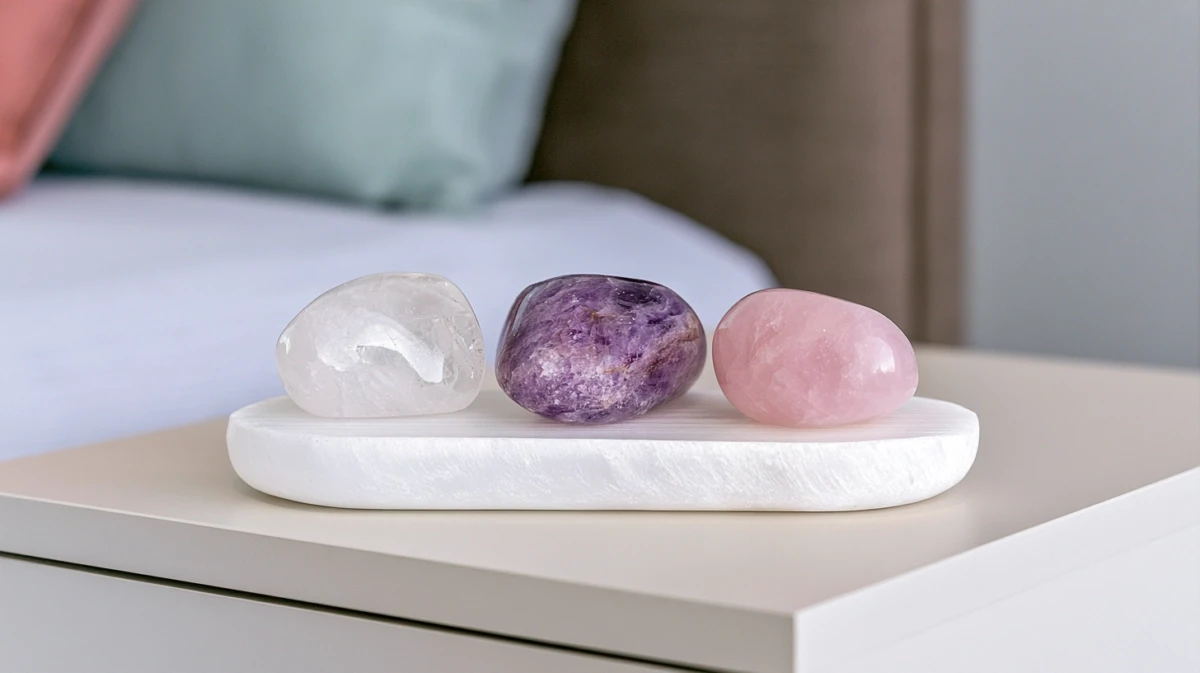
Choose a plate at least 15 cm long and 1.5 cm thick so it fits three to five carry stones without stacking.
Set it on your nightstand or desk, somewhere it won't get knocked off.
Place stones directly on the flat surface before you sleep, spacing them so they don't touch each other.
Leave them for at least six hours. Overnight is the simplest rhythm.
When buying a plate, look for uncoated, unpolished selenite with a genuinely flat top surface. Coated or resin-sealed plates defeat the purpose. Thinner slabs chip easily, so skip anything under a centimeter.
Selenite dissolves in water, so never rinse it. Wipe it down with a dry cloth if dust collects. The plate itself requires no separate cleansing routine.
Step 5: Know What Damages Stones: Sunlight, Moonlight, and Salt
Amethyst, rose quartz, citrine, fluorite, and kunzite all fade in direct sunlight. UV radiation breaks down the iron and manganese compounds that give these stones their color, and the damage is permanent. A few hours on a windowsill won't ruin them, but leaving a piece in direct sun for a full day, repeatedly, strips the saturation out over weeks. If you carry any of these stones and want to cleanse with light, skip sunlight entirely.
Moonlight
Moonlight won't damage anything. It also won't clean anything in a physical sense. Reflected sunlight at lunar intensity is too weak to affect mineral structure or surface dust. If placing stones under a full moon feels like a meaningful reset to you, go ahead. Just don't treat it as a substitute for active physical cleansing.
Salt
Direct salt contact dulls polished surfaces and corrodes metal settings, wire wraps, and cord. Sea salt is worse than table salt because of additional mineral content that accelerates pitting. If you still want to use salt, place your stones in a small glass bowl and nest that bowl inside a larger one filled with salt. The stones never touch the salt directly. Leave it for six to eight hours. This indirect method lowers the risk but still isn't ideal for anything with a high polish or metal components.
Common Questions About Crystal Cleansing
Can I cleanse crystals with tap water?
Tap water works fine for hard, polished stones rated 6 or above on the Mohs scale. Run it cool, not hot, and keep exposure under two minutes. Avoid tap water entirely for raw, porous, or soft stones like selenite, malachite, and kyanite.
Do crystals need to be cleansed before first use?
Cleansing a new stone before you work with it is standard practice. The stone has passed through miners, warehouses, and shipping, picking up handling residue and stagnant energy along the way. A single overnight session on a selenite plate covers it.
Can you cleanse multiple crystals at the same time?
You can cleanse several stones in one session as long as they don't physically touch each other on the plate. Crowding stones together risks scratches on softer pieces and, from an energetic standpoint, muddies the cleansing process for each individual stone.
Does cleansing a crystal reset its intention?
Cleansing clears accumulated energy but doesn't automatically erase a programmed intention. Most practitioners still re-state their intention after cleansing, though, because the boundary between residual energy and a set intention isn't something you can verify. Treat it as a fresh start.
Crystals for Men: The No-Nonsense Field Guide
If you want the full breakdown — the science, all ten stones, a daily carry practice, and a quiz that tells you exactly which stone to start with — the field guide has everything in one place.