Pyrite Stone Benefits: The Desk Stone for Mental Sharpness
This article contains affiliate links. If you purchase through our links, we may earn a small commission at no extra cost to you.
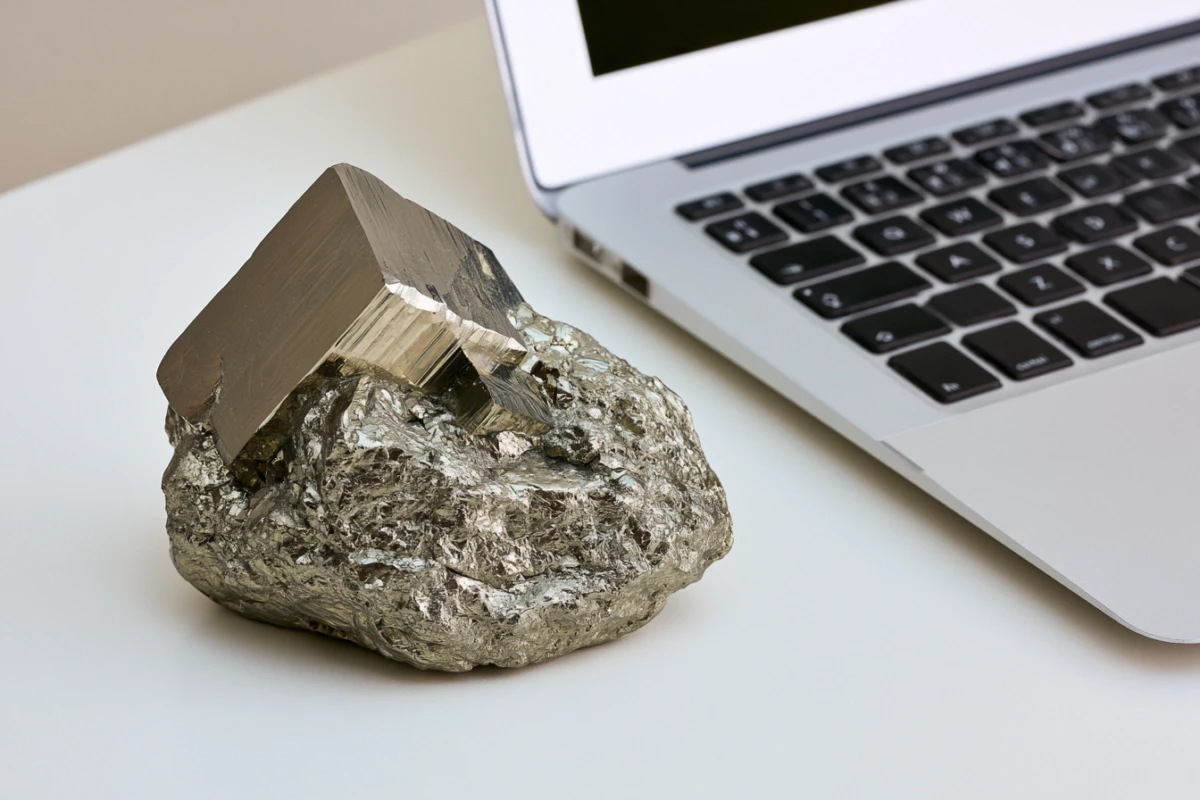
Pyrite is iron sulfide (FeS₂), a dense, metallic mineral that sits heavier in your hand than most desk objects its size. Among the pyrite stone benefits that matter for mental clarity, the most practical one is also the simplest: its weight and visual sharpness make it a tactile reset during analytical work. Raw cubic clusters suit desk use best because they're visually striking, heavy enough to pick up during a thinking break, and easy to inspect for sulfur smell before you buy.
What Pyrite Actually Is: and Why It Looks Like Gold
Pyrite crystallizes in a cubic system, which means it can form near-perfect cubes and sharp geometric faces without any cutting or polishing. That happens because the iron and sulfur atoms arrange themselves in a repeating cubic lattice at the molecular level. The result looks engineered, but it's entirely natural.
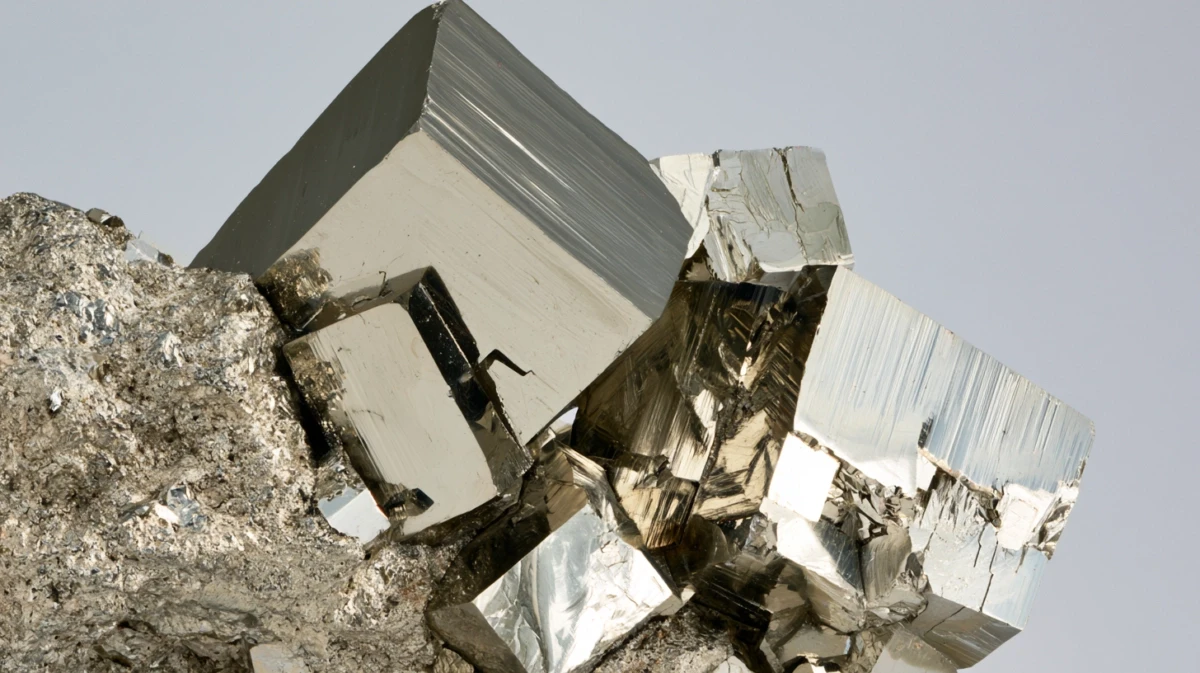
The name comes from the Greek word "pyr," meaning fire. Strike pyrite against steel or flint and it throws sparks, which made it genuinely useful before matches existed. That spark-producing quality is what first drew attention to the mineral.
The gold resemblance stops at the surface. Pyrite scores 6 to 6.5 on the Mohs hardness scale compared to gold's 2.5 to 3, so it's actually much harder but far more brittle. Scratch pyrite across unglazed porcelain and it leaves a greenish-black streak. Gold leaves a golden streak. Pyrite also fractures along flat planes rather than bending, which is why it chips easily if dropped.
What makes these properties relevant for desk use is density—one reason pyrite appears in most practical guides to stones that work for men seeking functional tools. A raw pyrite cluster the size of a fist carries real heft. That physical weight, combined with its angular geometry, is what turns it from a geological curiosity into something your hands reach for when your attention drifts.
How Pyrite Works as a Focus Anchor During Deep Work
A cubic pyrite cluster weighing 200 to 400 grams sits heavy enough on a desk to register when you pick it up mid-thought. That physical weight is the mechanism, providing a deliberate interruption to the default mode your brain slides into after 40 minutes of sustained analytical work.
Sustained analysis sessions
When you're deep in a spreadsheet, a legal brief, or code review, mental fatigue shows up as wandering attention before you consciously notice it. Reaching for a pyrite cluster and feeling its geometric edges against your palm creates a sensory reset. The sharp cubic faces give your fingers something distinct to map, pulling attention back to the physical present. Set the stone down, re-read the last paragraph you wrote, and the thread picks up faster than if you'd checked your phone.
Transitioning between tasks
Switching from a strategy call to a writing block often costs 10 to 15 minutes to residual mental chatter. Holding the cluster for 30 seconds while you close one context and name the next one out loud turns it into a boundary marker between work modes. A smaller tumbled pyrite piece works well for this if you find the cluster too bulky to pick up mid-thought.
When it stops working
A focus anchor often loses its pull once it blends into the background. If the pyrite has sat untouched on your desk for two weeks, it's furniture. Move it to a different spot, or put it in a drawer and bring it back out only when the work demands concentration. The pyrite stone benefits for mental clarity depend entirely on whether you actually use the object with intention, not on whether it's present in the room.
Why Pyrite Stays on the Desk (and What Happens If It Doesn't)
Pyrite rates 6 to 6.5 on the Mohs scale, which sounds hard until you realize it's also brittle. Drop a cubic cluster onto a tile floor or let it knock against keys in a pocket, and edges chip clean off. The geometric sharpness that makes it useful as a tactile reset disappears fast with casual handling.
Moisture does worse damage than impact. Pyrite is iron sulfide, and iron sulfide oxidizes when exposed to humidity, sweat, or skin oils over time. The first sign is a faint sulfur smell, like a struck match. After that, the surface darkens unevenly and develops a powdery, sometimes greenish residue. A stone you've been carrying against your body on warm days will degrade noticeably within a few months. Once oxidation sets in, it doesn't reverse.
Weight rules out pocket carry for most clusters worth using on a desk. A piece in the 200 to 400 gram range that sits well next to a monitor would feel absurd in a jacket pocket and uncomfortable in trousers.
If you want pyrite on your wrist regardless, this pyrite bracelet uses 8mm beads and works well — just remove it before exercise or anything that causes significant sweating, and wipe with a dry cloth at the end of the day.
These constraints make pyrite better suited as a fixed environmental cue. A stone that stays in one spot on your desk becomes part of the workspace itself. You sit down, it's there, and the association between that object and focused work strengthens each session. Carry it around and it becomes just another item competing for pocket space, losing both its physical integrity and its function as a consistent anchor point.
Pyrite vs Tiger's Eye vs Carnelian: Picking the Right Desk Stone
Pyrite, tiger's eye, and carnelian get recommended together so often that they blur into one category. They shouldn't. Each stone pulls in a different direction, and putting the wrong one on your desk during analytical work can feel like background noise rather than a signal.
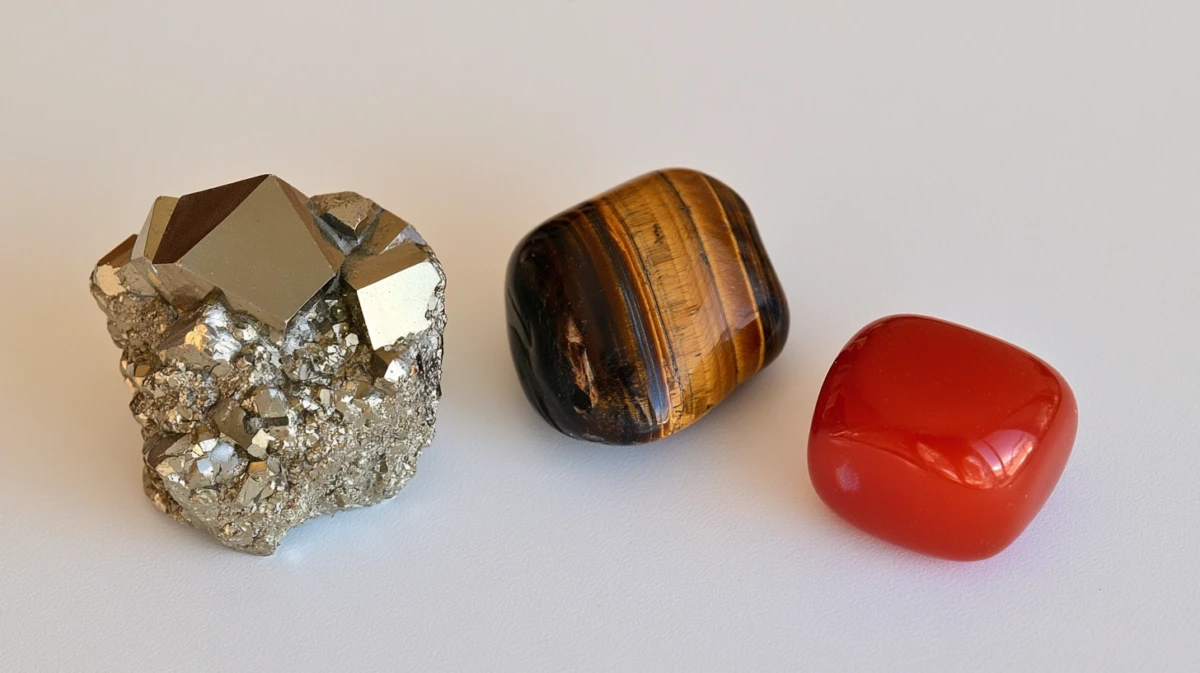
Pyrite suits sustained cognitive tasks: financial modeling, writing, code review, anything where you need to stay sharp without emotional interference. Tiger's eye leans toward social situations and interpersonal confidence, the kind of grounded composure you want before a negotiation or a difficult conversation. Carnelian is a momentum stone, useful when motivation or physical energy is the bottleneck rather than clarity.
Dimension | Pyrite | Tiger's Eye | Carnelian |
|---|---|---|---|
Primary use case | Analytical focus, strategic thinking | Social confidence, composure | Drive, physical energy, momentum |
Desk vs. carry | Desk only (brittle, oxidizes) | Either: durable enough for pocket | Either: smooth tumbled stones carry well |
Tactile character | Heavy, angular, metallic cool | Silky, banded, warm to touch | Smooth, warm, lightweight |
Best situation | Deep work blocks, complex decisions | Pre-meeting grounding, leadership moments | Low-energy mornings, creative starts |
Poor pairing | Tasks needing emotional warmth | Purely analytical, solitary work | Detail-heavy precision tasks |
If your work is primarily screen-based and cognitively demanding, pyrite is the clearer pick. Tiger's eye earns its place if your days involve people as much as problems. Carnelian works well for overcoming inertia. Keeping all three on the same desk dilutes the environmental cue each one creates.
What to Look for When Buying Desk Pyrite
Raw cubic clusters beat tumbled stones for desk use. The natural geometry catches light differently throughout the day, and the unpolished weight keeps the piece planted where you set it. Tumbled pyrite looks like a shiny pebble and tends to roll. A raw cluster with visible cubic faces reads as an intentional workspace tool.
Before buying, smell it. Pyrite that already gives off a strong sulfur odor has started oxidizing. That process only accelerates once the piece sits in a heated indoor environment. A faint mineral scent is normal, but if the smell hits you through packaging, skip it.
Surface and Size
Sharp metallic luster on the crystal faces signals a fresh specimen. Dull, powdery, or rainbow-tinted surfaces mean moisture or air exposure has already done damage, and no amount of cleaning reverses that. Hold the piece at an angle to check for mirror-like reflection off at least some faces.
For desk placement, aim for a piece large enough to notice at a glance but not so large it crowds your keyboard or monitor base. Something that fits comfortably in one hand works well. Anything smaller disappears behind a coffee mug, while overly large pieces compete for desk space.
A well-reviewed pyrite cluster on Amazon is a reasonable starting point if you can't inspect the piece in person. Check listing photos for that metallic sharpness rather than relying on the product title alone.
Keeping Pyrite Intact: Dry Storage and Minimal Handling
Pyrite contains iron, and iron rusts. Any contact with water, even a damp cloth, starts a slow oxidation process that turns golden faces dull brown and eventually crumbly. Wipe your cluster with a dry, soft-bristle brush instead.
Humidity does the same damage, just slower. If you live somewhere with consistently high indoor humidity, toss a silica gel packet next to the stone in whatever spot it sits. A small packet from a shoe box works fine. Without it, surface tarnish can creep in over months, and once that sulfur smell sharpens, the degradation is already underway.
Prolonged direct sunlight is less destructive than moisture but still costs you the sharp metallic luster that makes pyrite useful as a visual anchor. A few hours of indirect light through a window won't matter. Leaving it on a south-facing sill all summer will fade the reflective faces you picked the stone for in the first place.
Keep the stone dry, shaded, and clean it only with a dry brush.
Pyrite Stone Benefits: Common Questions
Why is pyrite called fool's gold?
Its metallic golden color closely mimics real gold, which led inexperienced prospectors to mistake it during gold rushes. Chemically it's iron sulfide, which is far harder and more brittle than actual gold, shattering when struck.
Can I carry pyrite in my pocket?
Pocket carry works, but pyrite chips easily against keys or coins. If you want it on you during the day, wrap it in a small cloth pouch. A desk placement typically keeps the stone in better condition over months of daily use.
Beyond physical chipping, the trapped humidity and body heat in a pocket accelerate oxidation. If you must carry it, choose a small tumbled piece rather than a raw cluster, and wipe it with a dry cloth at the end of the day.
Does pyrite need to be cleansed or charged?
Within crystal healing traditions, periodic cleansing is considered standard. Smudging with sage or placing the stone on a selenite slab are the most common dry methods. Skip anything involving water or salt solutions, since moisture degrades pyrite's surface over time.
Can you pair pyrite with other stones on your desk?
Placing pyrite alongside a grounding stone like black tourmaline or a clarity-oriented stone like clear quartz is a common setup. Keep each stone visible rather than stacked, so each one functions as its own visual anchor during focused work.
Crystals for Men: The No-Nonsense Field Guide
If you want the full breakdown — the science, all ten stones, a daily carry practice, and a quiz that tells you exactly which stone to start with — the field guide has everything in one place.