The Wounded Masculine: What It Is and How Men Carry It Forward

Wounded masculine energy runs in two directions under pressure: outward as proving, control and aggression, or inward as withdrawal, numbing and appeasement. Those defenses form where a boy's masculine identity was shamed, unsupported, or simply left to chance, long before anyone helped him work out what it actually means to be a man. Which direction you reach for when something goes wrong is the most useful thing to know about yourself before anything else.
Start here: three ways wounded masculine energy shows up
This is a descriptive working model used in men's work and coaching, not a diagnosis or an agreed clinical category. Read it as a sorting filter, nothing more.

The outward push
A partner raises a complaint and he argues the facts of it, or turns it into her tone rather than his behavior. A deadline slips and someone gets blamed inside the hour. Alone with no task, he finds one.
The inward collapse
The complaint gets agreed with immediately, then nothing changes. When the deadline slips, he goes quiet, works late alone, and mentions it to no one. Left unoccupied, he reaches for a screen, a drink, or sleep.
The version that switches by context
Composed and decisive at work, absent at home. Or the reverse: agreeable all day, then sharp with the people who can't leave. The switch usually tracks who has leverage over him.
Recognize yourself in more than one? Pick the one that appears under pressure, not the one you manage on a good day.
The overcompensating pattern: compulsive proving, control and aggression as armor
A partner says "you weren't really here this weekend" and the reply is a list of hours worked. That's the pattern in one exchange. The complaint was about presence; it got processed as a challenge to competence, and competence is the only currency the defense knows how to spend.

Proving and aggression aren't two separate types. They're the same outward push at different volumes. In conflict it shows up as winning replacing resolving: the point stops being the disagreement and becomes not being the one who yields. At work, the measure keeps moving. The promotion lands and resets within a week, because the achievement was never the goal, only proof that the older verdict was wrong.
The body keeps a record even when the story holds up. Jaw and shoulders locked, sleep that thins out around 4am, an inability to sit still without a task. Stillness removes the armor, so it gets avoided.
None of this means drive is the problem. Ambition, force, and the willingness to fight are useful, and they are part of what masculinity looks like when it works well. The wound sits in the measuring, and in the distance the armor buys, which is why the pattern almost never gets challenged. From the outside it reads as confidence. Colleagues promote it. The complaint usually arrives from whoever is close enough to feel the distance, and by then it's been running for years.
The first move here isn't insight. It's down-regulation. Breath, slowed exhale, ten minutes of nothing. Self-analysis attempted at full activation just becomes another performance.
Collapse, numbing and people-pleasing: how wounded masculinity hides as virtue
A partner who has to guess what you want is the clearest external signal here. Real steadiness and avoidance look identical from the outside: both are quiet, both stay level in an argument, both say "I'm fine with whatever." The difference sits in what happens afterwards.
Three tests separate them. Can you state a preference before scanning the room to see which answer costs least? When conflict starts, do you go silent and then stay resentful for days, replaying it? Can you say what you want without immediately attaching a justification for why it's reasonable?
The work version is a man who takes the low-stakes project, the safe role, the assignment nobody will scrutinize, and calls it contentment. Physically the signature is flatness rather than tension. Not clenched, just absent from the body, slightly numb, hard to locate any strong want at all.
That numbness is the erasure. Needs left unstated long enough stop being findable, and by then the man genuinely believes he doesn't have preferences.
This is where the first move reverses. More calming practice deepens the problem here, because the nervous system is already switched down; breathwork and stillness give avoidance a spiritual costume. The starting work is taking up space in small, unimpressive ways: name one preference a day without softening it, and let one disagreement stand for an hour without rushing in to smooth it over.
Where the masculine wound comes from (and why the father wound dominates)
Four routes come up again and again, and each teaches a boy a specific move rather than a general lesson.
The absent or emotionally unavailable father is the one that shapes the most. When nothing is transmitted directly, a boy builds his masculinity from stand-ins he can watch from a distance: the action hero, the stoic, the man who pays for everything. Copied templates have no interior, so he learns to imitate a surface and hope nobody checks underneath. That origin deserves more room than a paragraph, which is why the father wound and how it shapes a man's shadow is treated separately.
A present but shaming or competitive father teaches something different. The boy learns to win the exchange or say nothing, because showing effort invited mockery.
Peer groups that punished sensitivity teach speed, and that early training is where much of how men learn to handle emotions gets set. Notice what's safe, drop what isn't, do it before anyone comments.
And a culture that rewards output teaches a boy that approval is conditional and withdrawn silently, so he learns to keep producing rather than ask what's wrong.
Is it a wounded pattern, toxic behavior, or something clinical?
If someone in your house is currently afraid of you, the pattern discussion waits. Intimidation, coercion, monitoring a partner's phone or movements, or children who go quiet when you walk in are not material for journaling. They call for stopping the behavior, telling someone outside the household what's happening, and accepting accountability from a person who isn't invested in your comfort. Inner work done in that gap turns into a sophisticated excuse: the man explains his father wound to the same partner he frightened last week.
The second boundary is clinical. Look for signals that don't respond to insight: low mood on most days for weeks, sleep or appetite gone, work and relationships slipping, intrusive memories or nightmares from something you survived, drinking or using to change how you feel. Thoughts of ending your life warrant immediate professional or emergency help, not a practice. Self-examination can run alongside treatment. It doesn't substitute for it.
Third, a hard year isn't a wound. Redundancy, a new baby, a parent dying, all of it produces withdrawal, short temper, and numbness that ease as the pressure does. What marks a pattern is repetition across contexts: the same default with three different partners, at work and at home, in your twenties and again now, with no external event to explain it.
What healing the masculine wound actually involves
Two dead ends waste the most time. The first is getting tougher: more discipline, less talking, harder training. That's often the exact demand that built the pattern in the first place. The second is performance healing, where a man learns fluent therapeutic language, posts about his vulnerability, or uses spiritual framing to avoid a conversation he owes someone. Nothing in his behavior changes. He just describes it better.
The four realistic routes reach different things.
Breath and nervous system work is immediate and costs nothing to try. It suits the activated, overcompensating pattern best, because it interrupts the physical escalation before the story starts. It won't touch meaning or repair a damaged relationship.
Structured written work catches defaults between events and shows repetition over weeks. Shadow work exercises give that written work a structure beyond diary entries. Consistency is the whole variable here.
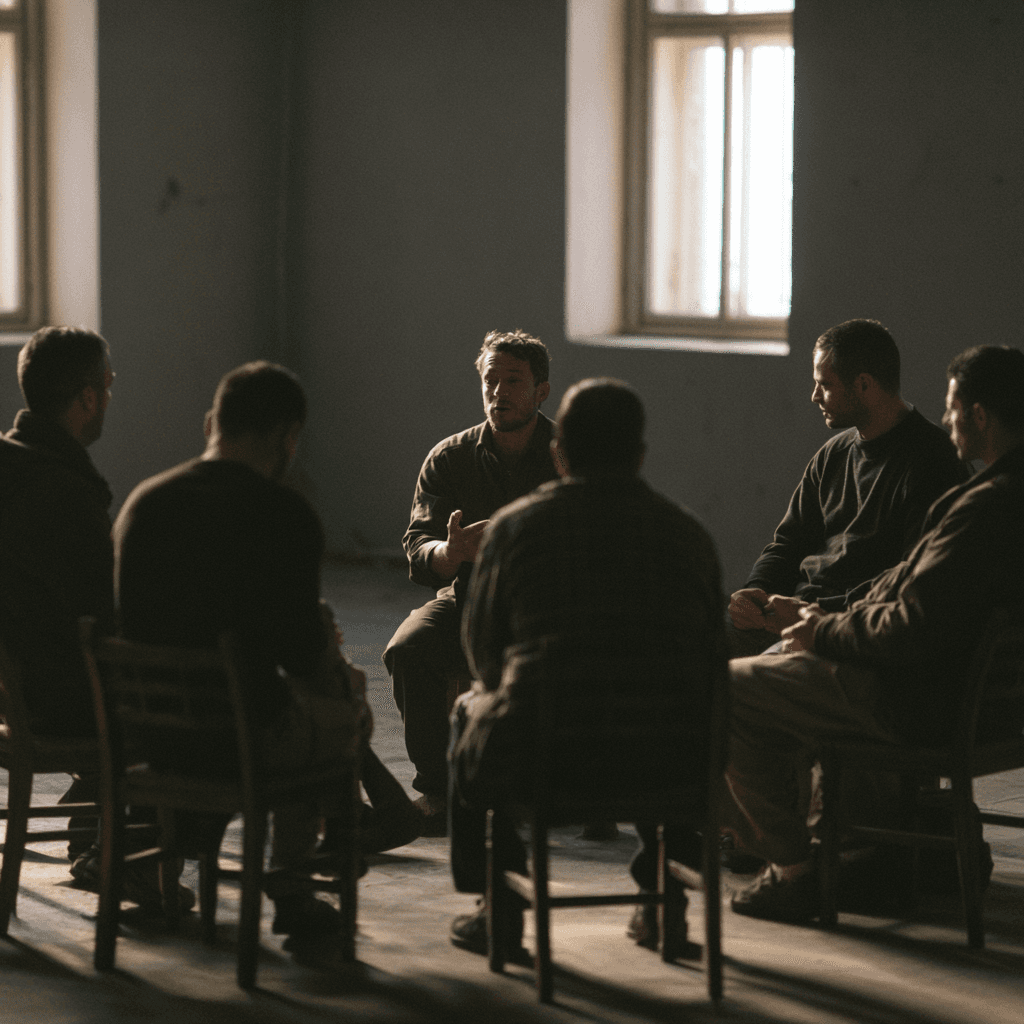
Men's groups supply what solo work cannot generate: witnesses, and correction from people who see the pattern live. Quality varies enormously, and some groups reward performance or ideology rather than honesty. This is the closest modern equivalent to what initiation rites actually provided, which was being seen and confirmed by other men.
Therapy comes first where trauma, depression, addiction, or harm to others is in the picture. Slower to start, more expensive, and the right sequence anyway.
Start with the route that matches your pattern's loudest expression, then add a second within a month. Under real pressure the default returns. The marker worth tracking is how quickly you notice it, not whether it stops appearing.
If your pattern switches by context, match the first move to the room rather than to yourself. Where you push and argue, the opening work is down-regulation before you speak: slowed exhale, a delayed reply, no decisions made at full activation. Where you disappear and agree, the opposite applies — state one preference early, before you have scanned the room, and let it stand. Running the same practice everywhere is what makes mixed patterns feel like nothing is working.
Common questions about wounded masculine energy
What is the difference between the wounded masculine and the father wound?
The father wound names a specific origin: what a father did, withheld, or modeled. The wounded masculine describes the adult pattern that follows, and it can also grow from coaches, older brothers, or a school culture that punished visible uncertainty.
Can men heal masculine wounds on their own?
Solo work handles the ordinary version well, since most of what needs changing is private behavior under pressure. What it can't reach is the blind spot others see and you don't, which is why some form of outside reflection eventually becomes necessary.
Do women have wounded masculine energy?
In the polarity model this framework comes from, yes, and it shows up as the same compulsive drive toward output, control, and results. That framing belongs to one school of coaching thought rather than any established clinical model, so treat it as a lens, not a diagnosis.
How long does it take to heal the masculine wound?
Nobody can give you a credible timeline, and anyone selling one in weeks is selling something else. Recovery time between reactions shortens first, often within a couple of months, while the reaction itself stops firing much later.
What does healthy masculine energy look like in practice?
Disagreeing once and letting it stand instead of escalating. Saying "I don't know" without needing to recover status afterward. Resting without earning it, and declining a request the moment you know the answer rather than three days later with resentment attached.
The Unspoken Man
The structured shadow work journal for men working with the patterns this article describes — tracking the default under pressure, where it came from, and what's underneath it.