Men and Emotions: Why Suppression Doesn't Work and What to Do Instead

Many men run emotion through action, withdrawal, or anger rather than words, and that pattern is learned rather than fixed. Suppression rarely removes the charge; it stores it as jaw tension, a shorter fuse, and a narrower range of feeling. Regulation works better: name it, find it in the body, read what it's signaling, then choose the response.
Five patterns that show up when men handle emotions
Before any explanation is useful, it helps to know which of these you're actually running. Check each one against your last seven days.
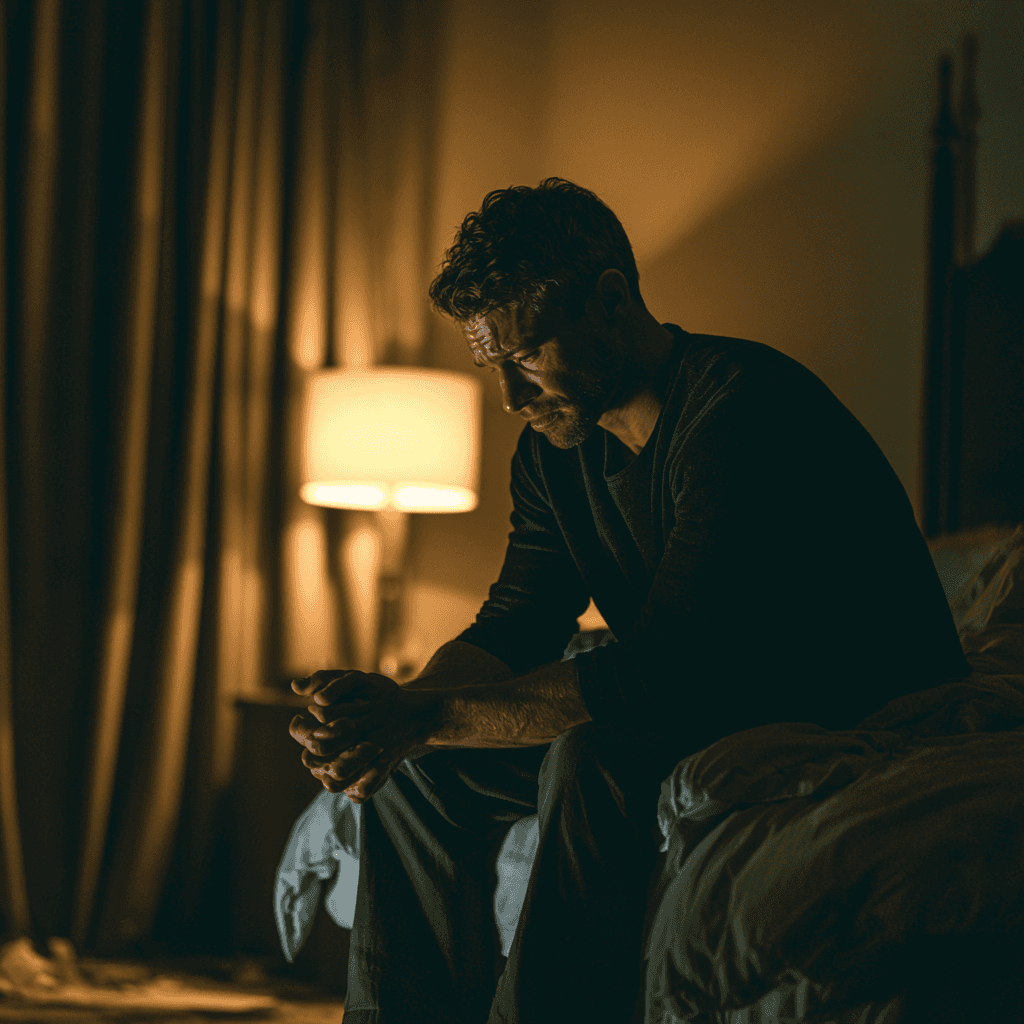
Flatness: someone asks how you are and the honest answer is nothing. Not sad, not fine, just no signal. Naming is the skill that starts moving this one.
Anger in place of fear or grief: you snap at traffic, the dishwasher, a colleague's tone, during a week when something much bigger is unresolved. The hard-situations section deals with what sits underneath.
Delayed processing: the conversation happens Tuesday, you feel it Thursday morning in the shower. Learning to sit with a feeling in real time is what closes that gap.
Intellectualizing: you can explain your marriage, your father, and your stress response with precision, and feel none of it. Locating the emotion physically is the counterweight.
Body-only expression: clenched jaw by mid-morning, tight chest, broken sleep at 3am, libido gone. Talking doesn't touch this one; breath and body work does.
Most men who think they're numb are actually running two of these at once, usually flatness plus body-only expression.
Why men suppress emotions (and what regulation does differently)
Suppression starts as a skill that worked. A boy who learns that fear draws mockery and grief draws impatience gets very good at cutting the signal before it shows on his face. That's an adaptation, not a defect. The American Psychological Association describes normative male alexithymia as a subclinical difficulty identifying and describing emotion, found in boys and men raised under traditional masculine norms that emphasize toughness. The problem isn't that the skill was learned. It's that the skill runs on autopilot decades later, in a marriage or a management meeting where the honest signal would actually help.
That makes the underlying norms worth examining directly, because most of the emotional rules men run on came bundled with an unexamined answer to what it actually means to be a man. Once the rule is visible, it stops operating as instinct.
What happens physically is simpler than it sounds. Emotion arrives as a body event first: heart rate shifts, jaw and shoulders tighten, breath moves higher into the chest. Suppression doesn't cancel that charge. It clamps around it, and the holding becomes chronic muscular tension you stop noticing because it's been there for years. Hold long enough and the system stops swinging between activation and shutdown with any nuance. You get either a spike of irritation or nothing much at all. The middle range, the useful part, thins out.
That thinning is why regulation isn't the same thing as talking more. Suppression stores the charge. Nervous system regulation moves it through: you register the state, let the physical activation crest, and act after rather than during. Terry Real, in I Don't Want to Talk About It, calls the masked version covert depression, which is one clinician's frame and worth knowing rather than treating as the field's verdict.
Emotional intelligence for a man is narrower and more useful than "being sensitive." Three things: reading your own state accurately in the moment, working out what it's signaling about what you need or value, and choosing a response instead of firing one. Nothing in that requires you to become more expressive. It requires you to become more accurate.
That accuracy is also what positive masculinity looks like in practice, once the term is stripped of slogans: honest signal, stated need, chosen response.
Men expressing emotions: what to actually do in five hard situations
She wants to talk now and you have nothing yet
The line that works: "I don't have words for this yet. Give me until after dinner and I'll come back to you with something real." Then actually come back. A deadline you name and keep reads as engagement; silence with no return time reads as stonewalling, and she'll be right to call it that. Between the two points, do something physical rather than rehearsing arguments in your head. Walk. Breathe long on the exhale. The point is to lower the charge enough that you can find the actual feeling under the defensiveness.

Grief, when it arrives on its own schedule
Grief doesn't process in conversation. It moves through the body, usually at inconvenient times, often months after the funeral when everyone assumes you're fine. What tends to help is scheduling a private container for it: twenty minutes alone, no phone, no task. Write the person's name at the top of a page and let whatever comes come. If nothing comes, sit anyway.
The mistake is waiting for a moment when you feel ready. Grief arrives sideways, in a song or a smell, and it stays half-processed if you always redirect back to work.
A meeting where you're suddenly angry
Hold it. This is one place short-term holding is the right call, not a failure. Say something narrow and true: "I need a minute on this. Can we come back to it at the end?" The charge doesn't disappear, so it needs a way to discharge stored stress from the body inside a few hours, not next week. Stairs, a heavy set, a fast walk, hard exhales in the car.

The weeks after a breakup
Isolation and rebound both work as anesthetic, which is why men reach for them. The alternative that actually shifts something is contact plus honesty: one friend who gets the unedited version, once a week, plus a written record for the days you can't say it out loud. Track what you miss specifically. "I miss being known" points somewhere different than "I miss not being alone."
When your kid asks what's wrong and you don't know
"Something's off in me today and I haven't figured out what. It's not about you." Children read tone regardless, so naming the uncertainty costs less than pretending it isn't there. Then locate it in your body before you try to explain it to yourself.
Name it, locate it, sit with it, use it: four processing skills
Run these in order. Each takes under two minutes, and each has a specific way it goes wrong.
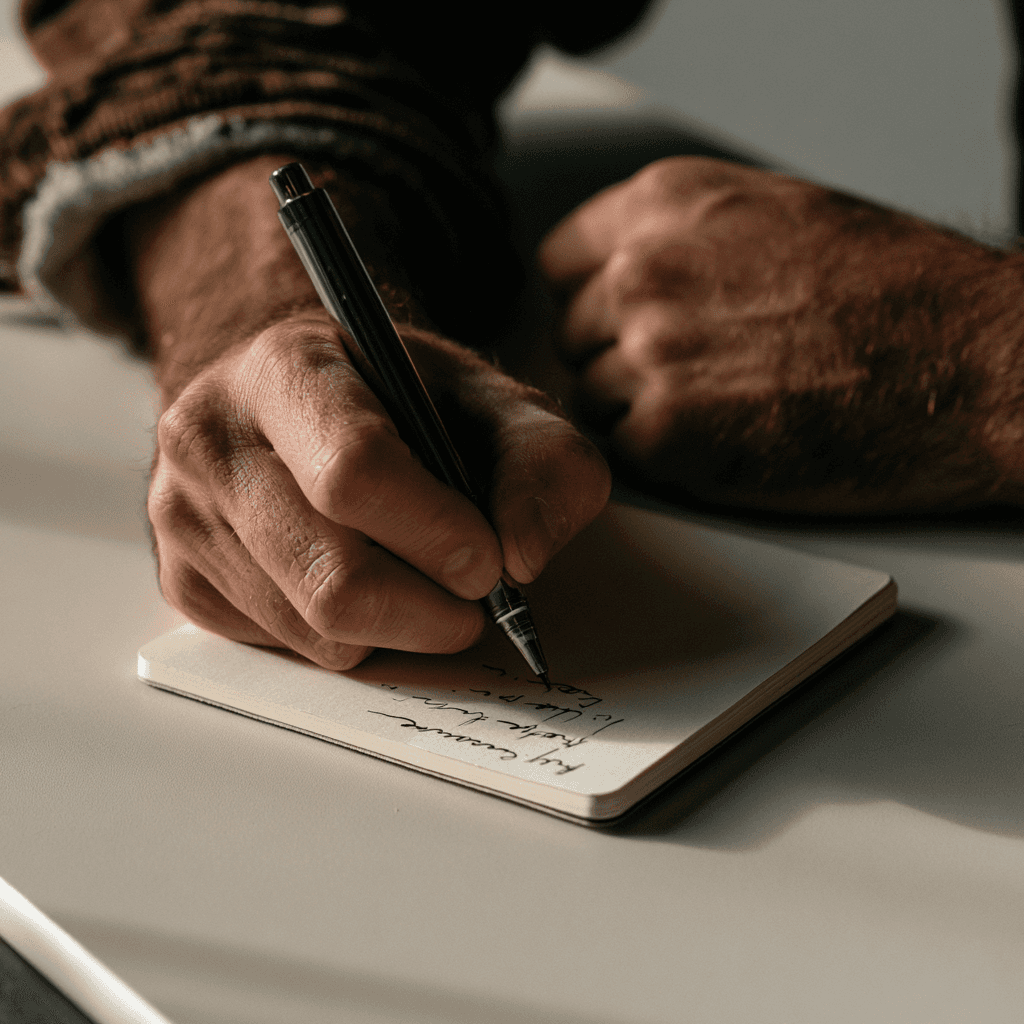
Name it. Swap "stressed" or "fine" for something with edges: sidelined, resentful, dreading, embarrassed, relieved. Research on affect labelling has consistently found that putting an accurate word on a state lowers reactivity, and the accuracy matters more than the vocabulary size. Say it silently, one sentence, then stop. Where this fails: naming slides into explaining. The moment you're building a case for why you feel resentful, you've left the feeling and gone into argument.
Locate it. Ask where it sits and what texture it has. Pressure behind the sternum, heat up the neck, hollowness under the ribs, a tightening jaw. Thirty seconds of scanning is enough. The failure here is anxious body-monitoring: checking every hour, hunting for symptoms, turning attention into surveillance. One pass, then leave the body alone.
Sit with it. Stay with the sensation without acting or clamping down. Breathe, feel the pressure, let it move. The edge of tolerance is where you start losing the thread: vision narrows, thoughts speed up, you want to leave the room. Past that edge, stop and do something physical. Walk outside, cold water on the face, ten push-ups. Sitting with it curdles into rumination when the sensation drops away and only the story about it is left running.
Use it. Ask what the feeling points to. Resentment usually flags a boundary you didn't state. Dread often marks a conversation you've been deferring. Turn it into one decision you can name today. When the answer is always "something is wrong with me," the skill has failed, and the reading is unreliable.
If anger is your default channel, the shadow work and repressed anger material handles that in more depth than these four steps can.
Journaling, breathwork, therapy or a men's group: pick the path that fits
A structured journal like Inner Kingdom's shadow work journal works on one narrow problem: you can't see your own patterns because you're inside them. Writing daily gives you a record to read back, which is how the third repetition of the same resentment finally becomes visible. Where it breaks: nobody is watching for the entries you skip. A man avoiding grief will write four pages about work stress and call it honesty.
Breath and somatic practice earns its place when the problem is physical rather than interpretive. If your jaw locks before you can find a word, no amount of naming helps until the charge drops. Inner Kingdom's five-day breathwork challenge is free, and the grounding ritual kit extends that into composure under pressure. Effects tend to show inside a week, but they're state-level. Breathwork calms you down; it won't tell you what the anger was about.
Individual therapy is priced per session and continues over months, which is the real cost. It's the route to choose when there's trauma, persistent low mood, or substance use in the picture, and the only one of the four with diagnostic capability. Self-directed practice does no diagnostic work and shouldn't stand in for clinical care.
Men's groups sit between solo practice and therapy. A free peer circle in your city or a paid facilitated program both give you the thing solo work can't: other men who notice when you're performing. Progress is slower and depends heavily on the facilitator. A badly run group turns into shared complaining.
Running two routes at once, a daily practice alongside therapy, is standard rather than a hedge. The practice gives the therapy something to work with.
When calm is actually shutdown: misreadings that stall progress
Regulated calm still has a signal in it. You can feel your feet, your breath moves, and the room registers as close. Shutdown feels flat and far away: no body signal available, voices slightly muffled, a sense of watching yourself from a few steps back. Both look composed from the outside. Only one of them leaves you able to answer the question "what am I feeling right now" with anything at all.
Expression can also move backwards. Retelling the same grievance to a friend for the fourth time rehearses the anger rather than draining it. A partner who becomes the only place you unload stops being a partner and becomes unpaid staff.
Change shows up over weeks, not days. Early markers are small: the spike passes in ten minutes instead of an hour, you catch the state before the reaction lands, you notice a feeling as it happens rather than two days later.
Persistent hopelessness, thoughts of suicide, drinking or drug use that keeps escalating, or trauma symptoms mean you involve a clinician now. Not more practice.
Common questions about men and emotions
What is normative male alexithymia?
It's a subclinical difficulty naming and describing feelings, defined by the American Psychological Association as a pattern in boys and men raised under traditional masculine norms that prize toughness. Unlike clinical alexithymia, it's learned rather than innate, which is why vocabulary and practice can shift it.
Do men and women actually process emotions differently?
The evidence here is weaker than most articles imply. One common framing holds that men more often regulate through action than through talking, but that claim rests on socialization patterns rather than proven biological difference, so treat it as a tendency to work with, not a fixed rule about yourself.
Does crying more mean I'm making progress emotionally?
Not on its own. Crying signals that suppression has loosened, but progress shows up as accuracy and choice: you can name what you feel, say it once clearly, and still decide what to do next.
What's the difference between being emotionally open and oversharing?
Openness is calibrated to the relationship and has a point: you state what you feel and what you need. Oversharing dumps unprocessed material on whoever is nearby, usually without a request, and often leaves you feeling more exposed than understood.
The Unspoken Man
The structured shadow work journal for men working through the patterns this article covers — where the emotion is going, what it's protecting, and what's underneath the default channel.