Trauma Release Exercises: The Body's Built-In Discharge Mechanism

Most men who try tremor work for the first time overshoot by staying down too long. Keep a first session to five to ten minutes of tremoring, run it two or three times a week, and stop while the tremor still feels easy. Trauma release exercises fatigue the legs, hips, and psoas until involuntary tremoring starts, which discharges held tension without talking through the event that put it there. Agitation, wired restlessness, or broken sleep the night after usually means the dose was too high rather than the practice being wrong for you.
Who Should Do Trauma Release Exercises Today (and Who Should Wait)
Wired and armoured is the clearest green light. Tight hips, a jaw that won't unclench, lying in bed with tension still humming at midnight: that's the state the tremor mechanism handles well. Run it today.
Tired but still functional, or new to this entirely, points to the same sequence at half the dose. Three or four minutes of tremoring and a deliberate stop teaches you your threshold before you find it by accident.
Flat, numb, moving through the day at half volume is different. Tremoring can deepen that shutdown instead of lifting it, so breath and grounding usually come first, then tremor work once you feel present again. If you're unsure which of those two states you're actually in, the state check in the nervous system regulation guide sorts it faster than guessing from a list.
Dissociation, active flashbacks, or an acute event in the past few weeks means facilitated only. Not solo, not tonight. For men doing shadow work who encounter dissociation during journaling, this applies equally: ground first, tremor work later.
Then the practical conditions for today:
20 undisturbed minutes, phone in another room
Nothing you have to drive to or lead afterwards
No acute back, hip, or knee injury
How Much TRE Is Enough: First Session Length and Weekly Frequency
Ten to fifteen minutes covers the whole thing, tremor phase included. That's the leg fatigue work, the floor position, the tremor itself, and a deliberate finish. Most of that window is setup. The tremor phase carries the load, and in a first session it runs five to ten minutes before you stop it on purpose.
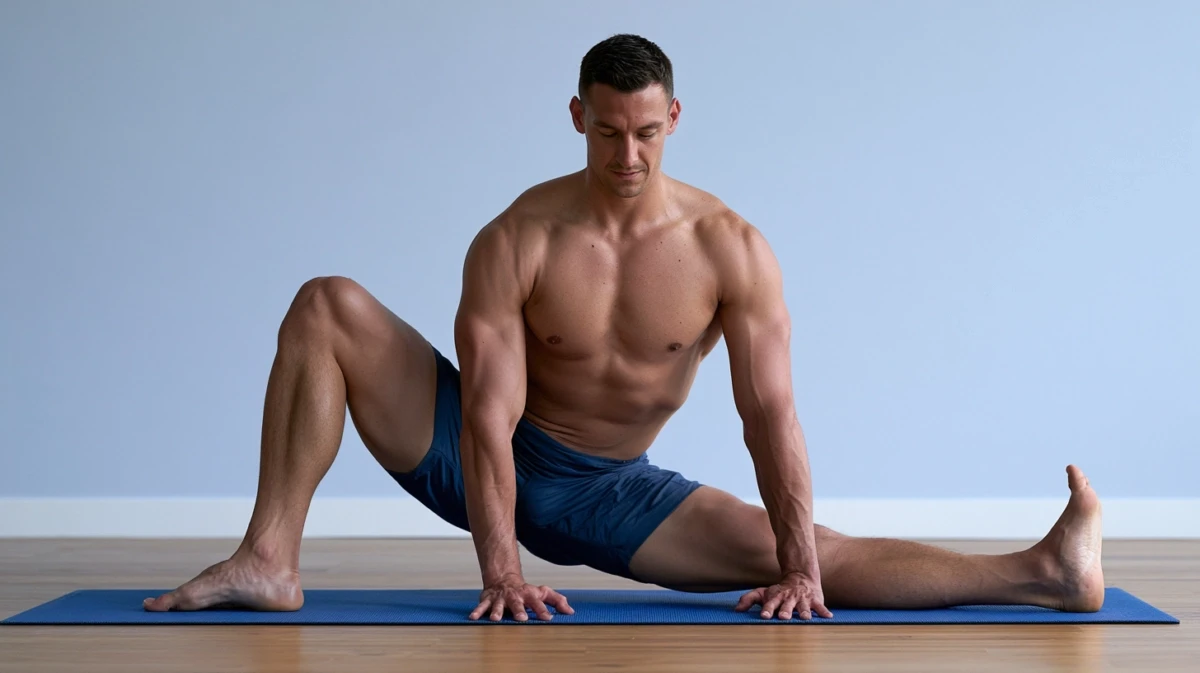
Two or three sessions a week is where this settles for most people. The reason isn't caution for its own sake. The nervous system keeps working on what you released for a day or two afterwards, and that continuation is where the actual change shows up. Stack sessions back to back and you interrupt the part that matters.
Training logic is what breaks this. If your instinct is to run twelve minutes today and fifteen tomorrow because progress means volume, the next 48 hours usually get worse instead of better. Wired sleep, a short fuse, tension somewhere new. Not injury, just an overshoot you didn't need.
So the bias runs toward stopping early: end while the tremor still feels fine. Not when it fades, not when you've had enough, not when something surfaces. You straighten the legs, put the feet flat on the floor, and let it go quiet while the tremor is still available. It feels like leaving something on the table. That's the correct feeling.
If you're unsure whether you did enough, you probably did.
The TRE Sequence Step by Step: Fatigue the Legs, Find the Tremor Threshold
David Berceli built this sequence around seven simple movements for people in conflict zones and disaster camps, which is why it needs no mat, no props, and no instructor watching you. Most people run a short floor version of it at home.
Wall sit, roughly 30 to 60 seconds. Slide down until your thighs work. You want burning and a faint quiver, not collapse. Stand up as soon as the quiver arrives.
Standing forward fold, a slow half minute. Let your head hang and your knees stay soft. The legs feel unloaded and slightly unstable. That instability is the point.
On the floor, on your back. Knees bent, soles of the feet together, knees dropped out wide toward the floor. Hips open, lower back relaxed into the ground.
Wait. The tremor usually begins in the inner thighs within a few minutes. Nothing to do here except stay unclenched and breathe through the nose.
Let it run. A fine flutter, sometimes moving up into the pelvis. It changes rhythm on its own.
Finish deliberately. Straighten both legs, feet flat on the floor, and lie still until the body goes quiet.
Real tremor or you shaking yourself?
Three tells separate them. A genuine neurogenic tremor starts without a decision, its rhythm shifts by itself rather than keeping a steady beat, and it stops within seconds when you straighten your legs. If you can speed it up or slow it down at will, you're driving it. Drop the effort and let the fatigue do the work instead.
If the tremor is too intense — or won't start at all
Too intense means turn it down, not stop: bring the knees closer together, straighten one leg along the floor, or rest a hand flat on your belly. Nothing happening at all usually means too little leg fatigue or too much floor tension. Add another wall sit, warm the room up, widen the knees, and unclench the jaw.
A hard stop is a different move from turning the dial down, and it has its own sequence: straighten both legs, press the soles flat into the floor, open your eyes, and name five things in the room out loud. Use it if a memory arrives with pictures attached, if the space around you starts feeling far away, or if you notice you have stopped breathing. The tremor switches off within seconds once the legs are straight, so there is no being stuck in it. One hard stop is information about dose, not a failed session.
One flat attempt proves nothing about whether these exercises work for you.
Reading Your Response: During the Session, That Night, and 48 Hours Later
A fine flutter through the front of the thighs is the most common first signal, sometimes with heat spreading into the hips and a wave-like rocking that moves up from the pelvis. Some men get a swallow reflex, a yawn, or an urge to laugh at nothing. Tears without a memory attached happen too. None of that means something went wrong; it usually means the fatigue reached deep enough.

The rest of the day tells you more than the session did. Heaviness in the legs, thirst, a pull toward sleep, or a flat, oddly quiet calm all sit in the normal range. Water, a walk, a warm shower, or lying under a heavy blanket handles most of it. The Grounding Ritual Kit covers the same aftercare ground in a structured form if you'd rather not improvise.
The 24 to 48 hour window is where overshoot shows up, and each marker points to a specific correction:
Broken sleep or 3 a.m. waking: cut the tremor phase roughly in half next time.
Next-day flatness or fog: stretch the gap to four or five days.
Short fuse with your partner or kids, emotions leaking into unrelated moments: take a full week off tremor work and run gentler body-based regulation practices only.
Agitation that builds across both days: stop self-guided somatic release work and get a facilitator involved.
Practically, keep sessions clear of driving, a work block, and the hour before bed. If tremoring felt like too much altogether, the free 5-day breathwork challenge is a gentler way back in, though neither that nor a ritual kit replaces facilitated work.
TRE vs Stretching, Shaking, Breathwork and Clinician-Led Somatic Work
Stretching lengthens tissue and calms the muscle spindle, which is why it's safe to do every day and why it rarely changes much. A hip opener can make the psoas feel less gripped for a few hours. It doesn't trigger the involuntary discharge that tremor work is built around, so treat mobility as maintenance rather than as a lighter version of TRE.
Shaking to music, dance-floor style, is voluntary movement you drive yourself. It lifts mood, warms a cold body, and breaks up a stagnant afternoon. Useful on its own terms. But you're steering it, and steering is precisely what the tremor mechanism bypasses.
Body-led breathwork shifts state faster than anything else here. In an acute spike, ten minutes of slow nasal exhale-lengthening beats a floor session, because tremoring during high activation tends to amplify what's already running. Overbreathing has its own failure mode, though: push a fast pattern too far and you land in tingling, lightheadedness, and a second wave of anxiety.
Clinician-led work, Somatic Experiencing in particular, moves at a pace another nervous system sets. Titration, pausing, coming back later. That outside read on your responses is the one thing no solo protocol replaces, and it's the sensible route with a significant trauma history.
Between those appointments, much of what a clinician guides can be approximated with body-based practices you can run without a therapist, as long as the dose stays conservative.
Formal research on tremor-based therapy is thin and mostly practice-derived, which is an argument for conservative doses and close self-observation.
When a Facilitator Is Non-Negotiable (and How to Find One)
A PTSD diagnosis, episodes of losing time, active flashbacks, a history of psychosis, or a seizure disorder all put tremor work outside solo territory. Same goes for an acute event in recent weeks, when the charge is still live. Physically, pregnancy and an unstable back or hip are reasons to have someone watching your positioning rather than guessing from a floor mat.
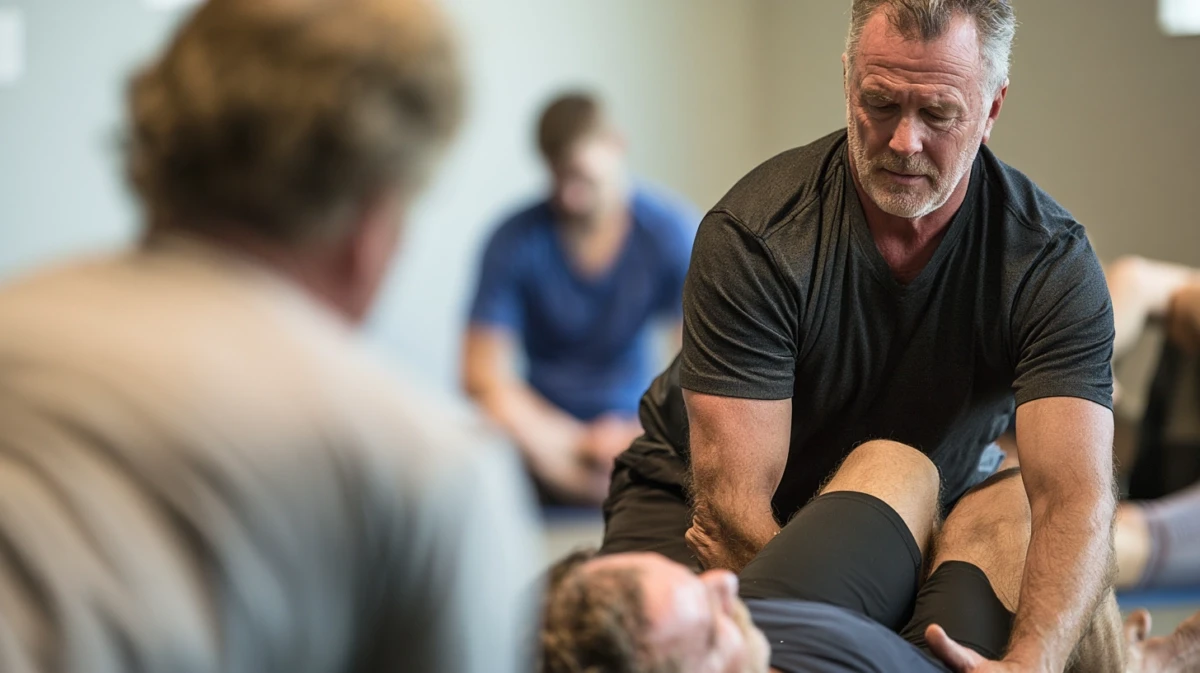
What a trained provider actually does is unglamorous. They cut the tremor off after a few minutes instead of letting it run until you're wrung out, they slow the fatigue phase when your breathing goes shallow, and they notice the glazed stare or the held breath that you cannot see from inside your own body. That third one is the real value, because self-assessment is the weakest link in solo practice.
Certified providers are listed in the TRE directory on Berceli's own site, traumaprevention.com. A first session usually runs an hour: intake questions about history, a shortened sequence, then time spent settling afterwards. Fees vary by region and by whether the provider is also a licensed therapist.
If any of those flags apply to you, journals, ritual kits, and self-guided sequences are what you use between facilitated sessions, not instead of them.
Common Questions About Trauma Release Exercises
How long does it take for trauma release exercises to work?
Most people notice something immediately after a session, usually warmth, heavy legs, or looser hips. Whether that turns into a durable shift in sleep or baseline tension tends to show over four to six weeks of consistent, low-dose practice rather than in the first week.
Is there scientific evidence that TRE works?
The published research is thin, small in scale, and mostly self-reported, so the tremor mechanism remains a hypothesis rather than a demonstrated pathway. That's a reason to keep doses conservative, not a reason to dismiss the practice outright.
What do you need to do TRE at home?
A floor with a bit of give, a wall for the fatigue positions, and something soft under the head. A folded towel or cushion under the lower back helps if the hips grip; nothing else is required, and equipment sold as TRE-specific adds no mechanical advantage.
Can you do TRE on the same day as a hard training session?
Legs already fatigued from squats or hill sprints will hit the tremor threshold much earlier, which makes the dose harder to judge. Separating them by a day, or doing tremor work on a rest day, keeps the response readable.
Should you eat before a TRE session?
A light meal an hour or two beforehand works better than practising fasted or immediately after a large one. Tremor work sometimes brings gut sensations or lightheadedness, and low blood sugar makes both harder to distinguish from an overshoot.
By Jonatan Rajala, Founder of Inner Kingdom. About the author →
The Grounding Ritual Kit
A 7-day structured nervous system practice — the settling and aftercare sequence that keeps the days between TRE sessions productive rather than unanchored.