What Does It Mean to Be a Man: The Question Worth Actually Answering

Being a man works as a set of chosen commitments that hold up under pressure, not a trait checklist or a badge you either qualify for or don't. The answer shows in four ordinary moments: conflict, failure, being needed, and saying no. So the useful version of the question is testable. Pick one commitment, watch what it does when pressed, and repair what breaks.
Start with the diagnosis: inherited script, performance mode, or suppression
Three patterns cover most of what men mean when they say something feels off about their masculinity. Read the signals, pick the one that stings, and skip the other two.

You're running a script you never read
You know exactly what a man does in a given situation, but you can't say where the rule came from or who it was written for. Money means safety, emotion means weakness, help means failure. When someone questions the rule, you defend it as obvious rather than as yours. The origin of that rulebook, and how to replace inherited code with your own, comes up further down.
You're performing hardness for an audience
The tell isn't in the argument; it's after the win nobody saw. If a real achievement feels flat without a witness, the standard you're meeting belongs to observers.
Other common signals:
You escalate in conflict when you're actually unsure
You'd rather look decisive than say you don't know
Rest feels like something you have to earn back
You suppress yourself to keep things smooth
Someone asks a favour you don't want to do and you hear yourself say yes before you've decided. Arguments end with you conceding fast, then rehearsing what you should have said for two days. Resentment arrives late, aimed at the wrong person.
Performance and suppression usually aren't separate men. Most swap between them, which is why the failure-modes section treats them as one loop rather than two personality types.
Where your definition of a man came from: inherited script, biology, or your own code
Ask a man who taught him that men don't complain and he can usually name the person. A father who went quiet for three days after losing a job. A coach. An uncle who stood through a funeral without moving his face.
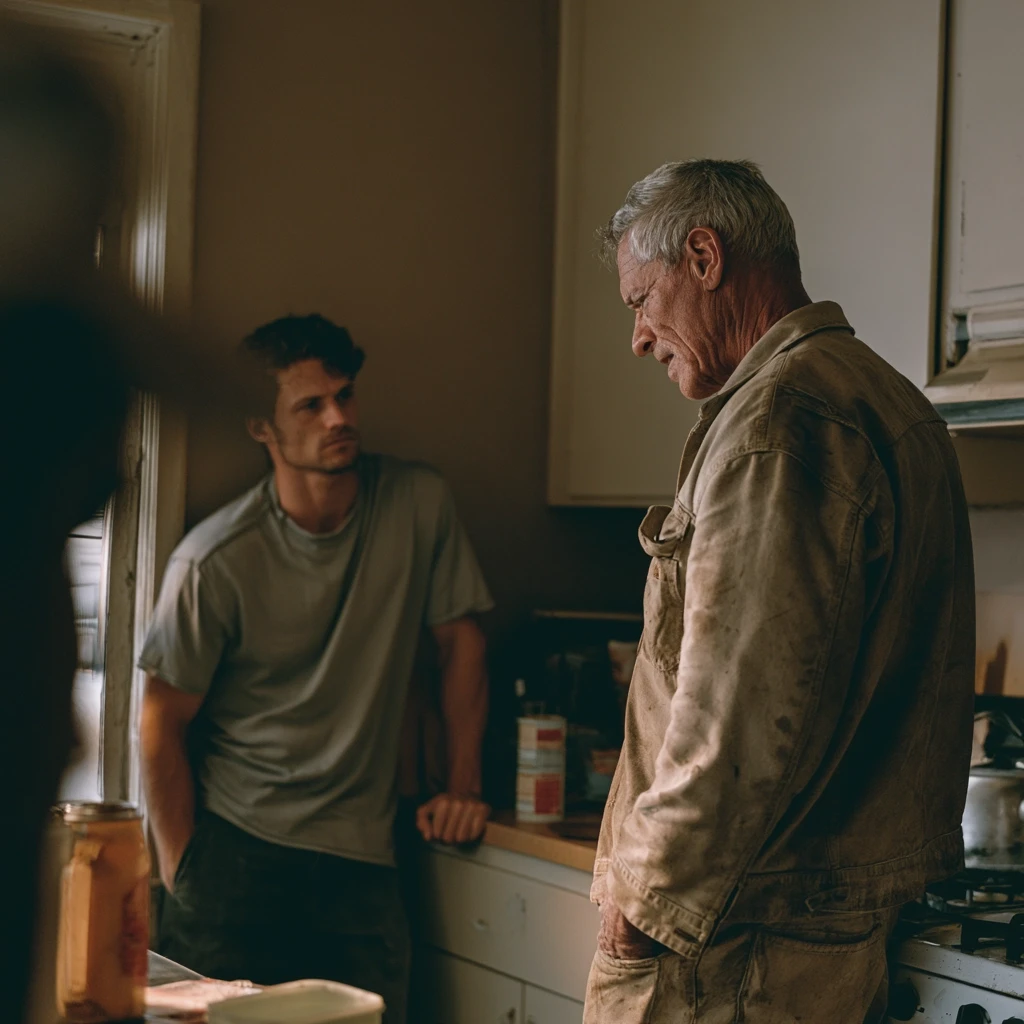
That's the inherited script, and it has a reliable tell: when you break it, you feel shame rather than regret, and you can picture the face doing the judging. Provider, protector, unbothered, in charge. Much of it also arrives dressed as stoicism, which in practice usually means not talking, not the older idea it borrowed the name from. Worth noting that the loud reaction against the script has the same problem. Apologising for being a man is also a position someone handed you, not a definition of a man you wrote.
Biology and life stage feel different from the inside because there's no audience. Drive, aggression, and raw energy shift with age, and they show up as restlessness or a shorter fuse, not guilt. The same code you ran easily at 24 costs more at 44, and men often read that as failing when it's just less fuel.
Your own code announces itself when you break it and nobody notices except you.
Most men keep far more of the inherited material than they throw out, which is fine. The test is whether you can say out loud, in your own words, what a value costs you and why you'll pay it. A kept value survives that question. A reflex only produces a flinch and the phrase "that's just what you do."
Why the meaning of being a man is harder to pin down than it was two generations ago
Apprenticeship indentures, military service, and church confirmation all did the same administrative work: each one put a date on the end of boyhood. Fixed household roles finished the job. A man knew what he was because a structure had told him already, and the answer arrived with witnesses attached.
Those containers thinned out. The expectation didn't. Nobody cancelled the demand that a man become something in particular; they cancelled the calendar, the ceremony, and the older men who used to confirm it had happened. That structural collapse is what the crisis of masculinity article unpacks in more detail. So he reaches 30 or 45 still waiting for a signal that was never scheduled for him.
That's why the confusion registers as a personal defect when it's structural. Your grandfather wasn't clearer than you are. He was handed a narrower question.
What's left is uncomfortable and useful at the same time. An inherited definition never really gets tested, because it was never yours to defend. It only gets performed. A code you write yourself gets audited weekly by the work you do, the person you live with, and the kid who asks you something at the worst possible moment. That shifts the meaning of being a man from something you recite to something you can check.
The Jungian view of masculinity: integration instead of performance
Jung treated masculinity as a set of energies to be integrated, not a standard of behaviour to be met correctly, the core insight of depth psychology applied to masculine development. That moves the goalpost. Progress stops looking like more discipline and starts looking like less reactivity: fewer moments where you're managing an impression instead of holding a position. The vocabulary below organises patterns you already run. It proves nothing on its own, which is why each of the three ideas below is worth checking against something you can notice in yourself this week.
The four energies and their shadow versions
King, Warrior, Magician, and Lover each appear twice, once mature and once distorted.
Energy | Mature expression | Shadow expression |
|---|---|---|
King | Holds order, backs other people | Tyrant, or the weakling who needs to be the centre |
Warrior | Acts, sets limits | Aggression without a cause, or paralysis |
Magician | Knows, teaches, sees clearly | Manipulates, withholds what he knows |
Lover | Feels, connects | Chases intensity, or goes numb |
The signal worth trusting is whichever shadow cell you recognised in about a second.
Why the anima surfaces mostly in intimate relationships
The anima rarely announces itself at work. It shows up when a man quietly outsources his emotional life to a partner, one of the quieter marks of men who are emotionally unavailable: she names the mood in the room, he handles logistics, and then he resents her for being "too emotional" about a weather system he refuses to read himself. Watch for the version where you only know what you feel after she reacts to it.
What you can't stand in other men
Disowned qualities run behaviour from underneath, and working with the shadow self usually starts with the loudest tell: irritation out of proportion to the offence. The man who is too needy, too openly ambitious, too pleased with himself is usually holding something you've forbidden in yourself. Contempt that arrives fast isn't information about him. Name the last man you dismissed within a minute of meeting him, then name what he was allowed to do that you aren't.
Five pressure situations where what it means to be a man becomes visible
Pick the one of these five you faced most recently and work backwards from your actual reaction, not your intention. Under pressure, what it means to be a man stops being an opinion and turns into observable behaviour.
1. Conflict you can't win by dominating
Someone with more leverage than you is wrong, and you both know it. The script shows up as volume or as silence. Steadier: state the disagreement once, plainly, and let it stand unresolved. Afterwards, check whether you needed him to agree before you could feel settled.
2. Failure that is genuinely yours
Missed deadline, lost money, damaged relationship. The two scripted moves are explaining before acknowledging, or collapsing so completely that someone else has to comfort you. The alternative is narrow: say what you did, say what changes, skip the commentary on how bad you feel. The real check comes a couple of days later. Are the people around you still managing your shame? One clean apology counts for little if the following week goes into collecting reassurance.
3. Being needed versus being wanted
Watch which invitations you accept. If your standing in a room depends on carrying something, an evening where nobody needs anything from you will feel oddly unsafe. Sit at that table anyway and notice how long before you start looking for a job to do.
4. Solitude with no task in it
An empty Saturday, no plan. Reaching for the phone in the first few minutes tells you the stillness is touching something. Nothing to interpret here. Just note how long you lasted.

5. Refusing someone you love
Someone close asks for what you can't give without resenting it. The familiar exits are yes now and withdrawal later, or a hard no dressed as principle. Harder: refuse the request and keep the person warm. Then check for the tax. Did you punish them with distance for making you say it? That tax is the clearest evidence the boundary came from the script and not from you.
Performance masculinity and nice-guy suppression: the two failure modes men swap between
A man who spends two years hard, unavailable, and privately contemptuous of colleagues who "can't handle pressure" often spends the next two apologising for taking up space. Same man, different audience. Exhaustion tips performance into suppression; accumulated resentment tips it back. That oscillation is the actual pattern, not two personality types.
Where it shows up | Performance mode | Suppression mode |
|---|---|---|
Disagreement | Escalates until he wins or withdraws coldly | Agrees in the room, complains afterward to someone safe |
Being wrong | Reframes it so the mistake belongs elsewhere | Over-apologises until the other person reassures him |
Softness in himself | Reads it as weakness and shuts it down fast | Performs it constantly, so it stops meaning anything |
Other men's vulnerability | Slight disgust, quick dismissal | Envy, then self-criticism for not being that open |
Both columns answer to someone outside the man. Performance asks whether that looked strong. Suppression asks whether anyone is annoyed with him. Neither question can be answered from inside, which is why swapping modes changes the symptoms and nothing else.
What actually shifts is range, which is also the practical line between healthy and toxic masculinity. A man with range, what positive masculinity actually looks like in practice, can hold irritation without discharging it and warmth without needing it returned, which sounds abstract until it hits an ordinary Tuesday.
Say your partner tells you she felt dismissed the night before. Performance mode argues the facts and wins the exchange. Suppression mode apologises within four seconds to end the discomfort. The third option is slower and less impressive: you say what you were actually feeling at the time, ask what she needed, and stay in the conversation while it stays uncomfortable. No victory, no collapse. That third option is what men and emotions actually means, not more expression but more range.
When the standard answer doesn't fit your situation
No father model, or a father whose version you actively refuse to copy, removes the reference point most of this work quietly assumes. The adjustment is to stop looking for one composite figure and instead collect behaviours: how a colleague held a room, how an uncle handled bad news. Traits are transferable even when the whole man isn't.
Where that absence still stings instead of merely registering as a gap, it usually behaves like the father wound and how it shapes a man's shadow, and naming it comes before any substitute model does much good.
Three other situations bend the frame:
Caregiving or lower-earning roles: the provider script has nothing useful to say here, so drop the scoreboard and keep the pressure situations. Reliability under strain still reads clearly whether or not it comes with a salary.
An existing religious or cultural code: the content is already settled, and there's no reason to reopen it. What's still worth examining is the distance between the code and your actual conduct.
Mid-life, after the first version stopped working: expect subtraction rather than a new set of qualities. Much of what feels like identity turns out to belong to a life stage that has ended, and naming those parts is most of the job.
None of these are deficits. They change which question is worth asking first.
How to develop healthy masculinity: matching the practice to your bottleneck
If you snap at your kids over noise and can't reconstruct why an hour later, start with breath and nervous system training rather than writing. Load lives in the body first. A short daily protocol, whether that's the free five-day breathwork challenge or the kind of compact ritual set sold as a grounding kit, exists to lower baseline arousal so the rest of the work becomes possible.
Different bottleneck: you can describe your patterns but keep repeating them, or there's a trait you refuse to own. That calls for structured shadow work on paper, using shadow work journal prompts for men rather than freeform diary entries. A guided field journal does the job, and so does a blank notebook if you have the discipline to ask yourself hard questions unprompted.
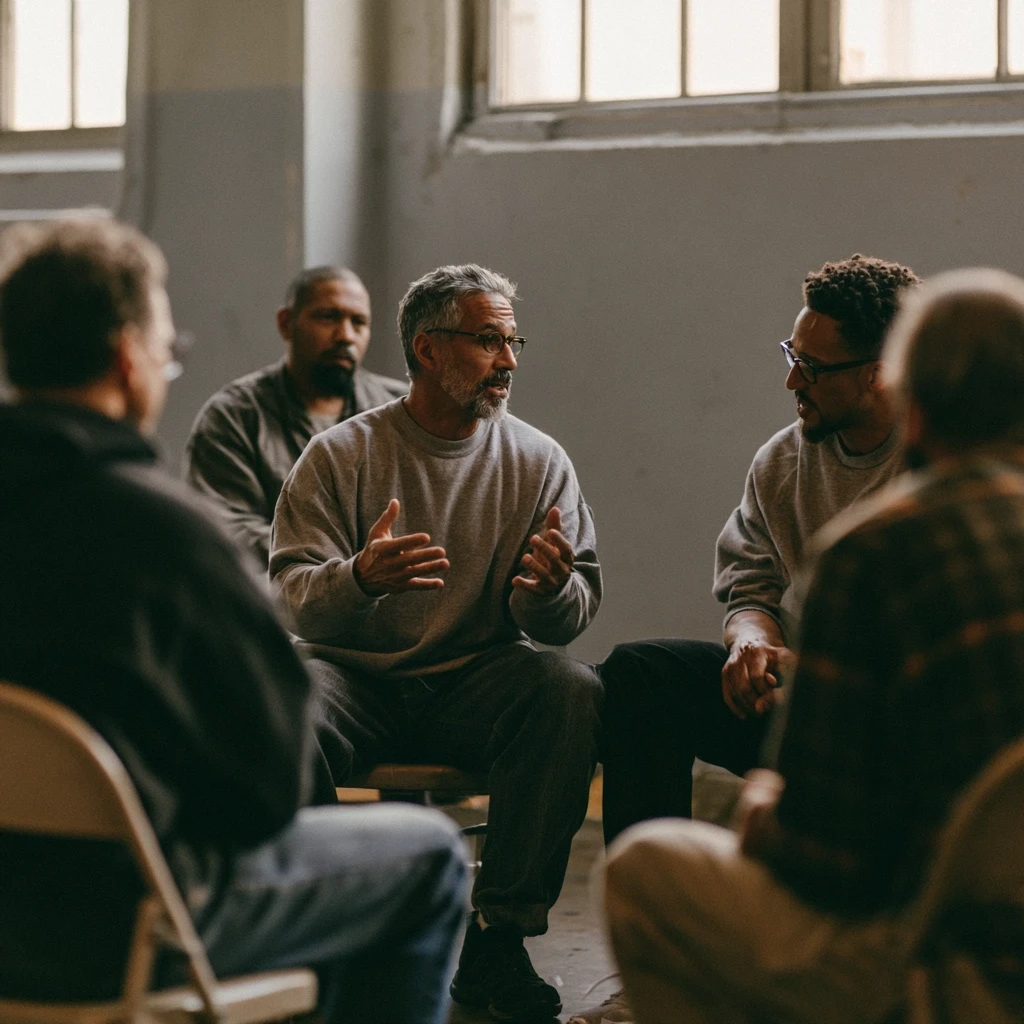
Isolation is the most common blockage and the one men are least likely to name. If nobody in your life will tell you when you're posturing, no practice will catch it, because you are the one grading the work. A weekly men's group, a standing call with two friends who've known you for years, or one older man who'll be blunt with you does something no journal can.
Clinical symptoms sit outside all of this. Panic, intrusive memories, drinking to sleep: that's therapy, and expect to try more than one therapist before the fit works.
And if you don't respect your own body, lift for a season before philosophising about it.
Route | What it won't fix |
|---|---|
Breathwork, grounding rituals | The relationship pattern underneath the reaction |
Shadow work journal | Trauma symptoms; it isn't treatment |
Men's group | Much, if it becomes another audience to perform for |
Therapy | Anything, without fit; it can take several attempts |
Strength training | Emotional range, which it can also mask |
Pick one. Give it somewhere between six and ten weeks before you judge it, and change nothing else in that window.
Run a 30-day test on your own definition
Pick one commitment, not a list. Choose it from the pressure situation that stung most when you read it, and write it as something a stranger could verify from the outside. "I'll be more honest" fails that test. "I say the uncomfortable thing in the room, same day, not by text" passes.
Then log it. A cheap notebook, one line a day: did the situation come up, and did the commitment hold. Where it didn't hold, write what you did instead and what it protected you from. That second half is the useful part, and it's the part most men skip.
Thirty days is short on purpose. It's long enough that the novelty wears off and the real cost shows up, short enough that you'll finish it.
At the end, one question decides the outcome: did it hold when it cost something. Holding on easy days proves nothing. If it collapsed every time there was social risk, money, or a woman's disapproval on the line, you've found your actual bottleneck, which is more valuable than a clean streak.
Keep the same commitment for the next month if it broke. Change it only when it held under pressure at least twice.
One side effect is worth planning for: the people around you are calibrated to the old version, so the first few times a new commitment actually holds it can read as coldness or a sudden change of character. Saying out loud what you're testing and for how long removes most of that friction, because a stated experiment is easier to live next to than an unexplained shift. And if someone escalates every time you hold the line, that's information about the relationship rather than proof the commitment was wrong.
Common questions about manhood and masculinity
At what age does a boy become a man?
No age does it on its own. Legal adulthood arrives at 18 in most countries, but the shift readers actually care about happens when a young man starts carrying consequences he could have avoided, which for some lands at 19 and for others never quite lands at all.
What's the difference between manhood and masculinity?
Manhood is the status of being an adult male, largely conferred by age and biology. Masculinity is the set of behaviours and qualities a culture attaches to it, which is why manhood is fixed and masculinity gets argued about.
How do you explain what it means to be a man to your son?
Give him one sentence he can repeat at eight and still use at 28, then let him watch you fail it and correct course. Boys copy what you do under pressure, not what you say at the dinner table.
Can you create your own rite of passage as an adult?
You can, and men in cultures without inherited initiation routinely do. It has to cost something real and be witnessed by someone who will name it if you quit halfway, otherwise it functions as a private story rather than a threshold.
Is it unmanly to need therapy or a men's group?
Needing outside input is standard for anything difficult, from language learning to a broken shoulder. The one honest caution is treating either as a place to talk about change indefinitely instead of a place that reports back on whether anything changed.
By Jonatan Rajala, Founder of Inner Kingdom. About the author →
The Unspoken Man
The structured shadow work journal for men doing this kind of examination — 40 pages of prompts and practices built around the Jungian framework this article covers.