Shadow Work Exercises for Men: 7 Practices Beyond Journaling

Shadow work exercises for men go beyond journaling to include trigger logging, mirror confrontation, parts dialogue, body scanning, unsent letter writing, and empty chair work. Each method reaches a different layer of repressed material. A man who shuts down verbally often responds better to body-based or visual exercises than writing prompts. Start with the exercise that matches your most recognizable pattern, then rotate weekly.
Why One Exercise Isn't Enough
Most men who try shadow work start with journaling, hit a wall after two weeks, and assume the whole process doesn't work. Method mismatch is usually the real problem behind this frustration. Different shadow work exercises for men bypass different defense mechanisms, and the pattern you carry determines which entry point actually reaches anything.
Understanding the broader landscape of shadow work for men helps clarify why different exercises target different layers of repressed material.
Three common patterns illustrate this. Anger suppression, where frustration gets swallowed and converted into tension or withdrawal, tends to respond to somatic methods like body scanning. The body stores what the mind refuses to articulate, so writing about anger often produces nothing while a focused scan of the jaw, chest, or fists surfaces it in seconds. Emotional numbness, that flat, detached feeling where nothing seems to land, usually needs confrontational exercises like mirror work or parts dialogue. These force contact with the self in ways that a blank page can't. People-pleasing, the habit of reshaping yourself around others' expectations, often cracks open fastest through unsent letters or empty chair work, where you finally say what you've been editing out of every conversation.
Sticking to one exercise is like stretching the same muscle every day while ignoring the one that's actually locked up. Matching the specific method to your personal pattern makes the process much more effective.
The Trigger Log: Tracking What Sets You Off
A trigger log works best when you write the entry within minutes, not hours. Three columns on a phone note or pocket notebook: what happened, how you reacted, and what you believed in that moment about yourself or the other person. "Colleague interrupted me in a meeting" goes in the first column. "Jaw clenched, went quiet, replayed it for two hours" in the second. "He doesn't respect me" in the third.

The belief column is where the real pattern lives. It is common to fill in the first two columns easily but rush past the third. Sit with it. The belief often sounds childish or absolute when you write it out, and that discomfort is the point.
After seven to ten entries, read through only the third column. You'll typically notice two or three beliefs repeating across unrelated situations: "I'm not taken seriously," "I have to earn my place," "Showing need makes me weak." Those recurring beliefs point directly to the shadow material worth working with.
Once you spot a pattern, the trigger log serves as a compass for deeper work. A belief like "I'm not taken seriously" pairs well with mirror confrontation or parts dialogue, where you can actually address the part of you holding that story. A pattern around suppressed anger points toward body scanning, where the tension shows up physically before you've consciously registered the emotion.
Where the trigger log falls short: it only captures what you notice. Reactions you've normalized, the ones that feel like "just how I am," slip past the log entirely. Rotating in other shadow work exercises for men catches what the log misses.
Mirror Confrontation: Speaking to the Man You Avoid
Two minutes of sustained eye contact with your own reflection will surface more discomfort than most men expect. That reaction is the point.
Find a private room, lock the door, and stand or sit so your face fills the mirror at arm's length. Set a timer for three minutes the first time, five minutes once the exercise feels less foreign. Look at your own eyes without breaking gaze. After about thirty seconds of silence, ask one question out loud: "What are you afraid of right now?" Then wait. Don't answer intellectually. Let whatever surfaces sit in the room.
The resistance pattern is predictable. It is common to feel an urge to laugh, look away, or narrate the exercise internally as if watching from outside. That deflection is shadow material showing up in real time. Humor and detachment are the same shields that operate in relationships and conflict. When you notice them during mirror work, you're watching your defense system activate without a threat, which makes the mechanism visible in a way that writing about it rarely does.
If emotion comes up (tightness in the throat, heat behind the eyes, sudden anger) stay with it for at least three full breaths before you move or speak again. The goal is simply to build tolerance for seeing yourself without editing the image.
Where this exercise falls short: it won't give you narrative clarity about why a pattern exists. It works on a visceral, pre-verbal level, which makes it a strong complement to the trigger log but a poor substitute for it. If you tend to intellectualize emotions and stay in your head, mirror confrontation forces presence precisely because there's nothing to analyze. You just have to stay.
Parts Dialogue: Giving a Voice to What You've Silenced
It is easy to carry on multiple internal arguments a day without realizing it. The angry part wants to confront a colleague; the controlled part shuts it down before the sentence forms. Parts dialogue turns that invisible tug-of-war into an actual conversation you can hear.
Pick one part that showed up recently. The withdrawn part after a conflict, the resentful part during a family dinner, whatever felt loudest. Sit in a chair and speak as that part out loud, starting with "I am the part of you that..." and letting it say what it wants without editing. Two or three sentences is enough. Then physically shift your posture, sit straighter or lean back, and respond from your everyday self. Do this not to fix or argue, but just to acknowledge what was said.
This differs from journaling in a way that matters: writing lets you curate. Speaking out loud, switching positions, and hearing your own voice say "I am the part of you that wants to quit everything" catches you off guard. The body responds differently when words hit the air instead of staying on a page.
Where it falls short is predictable. The first attempt usually feels ridiculous, and men who process everything through logic will try to turn it into a debate rather than a dialogue. If you notice yourself building counterarguments instead of listening to the part, you've slipped back into control mode. Pause, return to the part's voice, and let it finish before you respond. The material that surfaces in the second or third round tends to be what you didn't know you were carrying.
Body Scanning, Unsent Letters, and Empty Chair Work
Body Scanning
Lie flat on your back, close your eyes, and move your attention slowly from the crown of your head down to your feet. Spend roughly ten seconds on each area: jaw, throat, chest, solar plexus, hips, thighs. You are looking for density, numbness, or heat that doesn't match what's happening physically. A locked jaw often stores unexpressed anger. A tight chest can point to grief you stopped mid-breath. When you find a charged spot, stay with it and breathe into it without trying to release it. The impulse to "fix" the sensation is itself worth noticing.
If the physical intensity spikes and you feel your heart rate accelerating, open your eyes and name three objects in the room to ground yourself. Somatic shadow work can occasionally trigger a trauma response, so it is crucial to build tolerance slowly rather than forcing your way through severe discomfort.
Unsent Letters
Pick one person: a father who was absent, a friend who betrayed you, or a younger version of yourself. Write the letter by hand. Focus entirely on what you actually felt in the moment. Include the ugly parts, the petty resentment, the confusion. The letter never gets sent, which is precisely what makes honesty possible. Burning or shredding it afterward can mark a clear endpoint, though some men prefer to keep the letter sealed and revisit it months later to see what's shifted. If you want structured prompts to guide what you write, shadow work journal prompts designed for men can sharpen the focus considerably.
Empty Chair Work
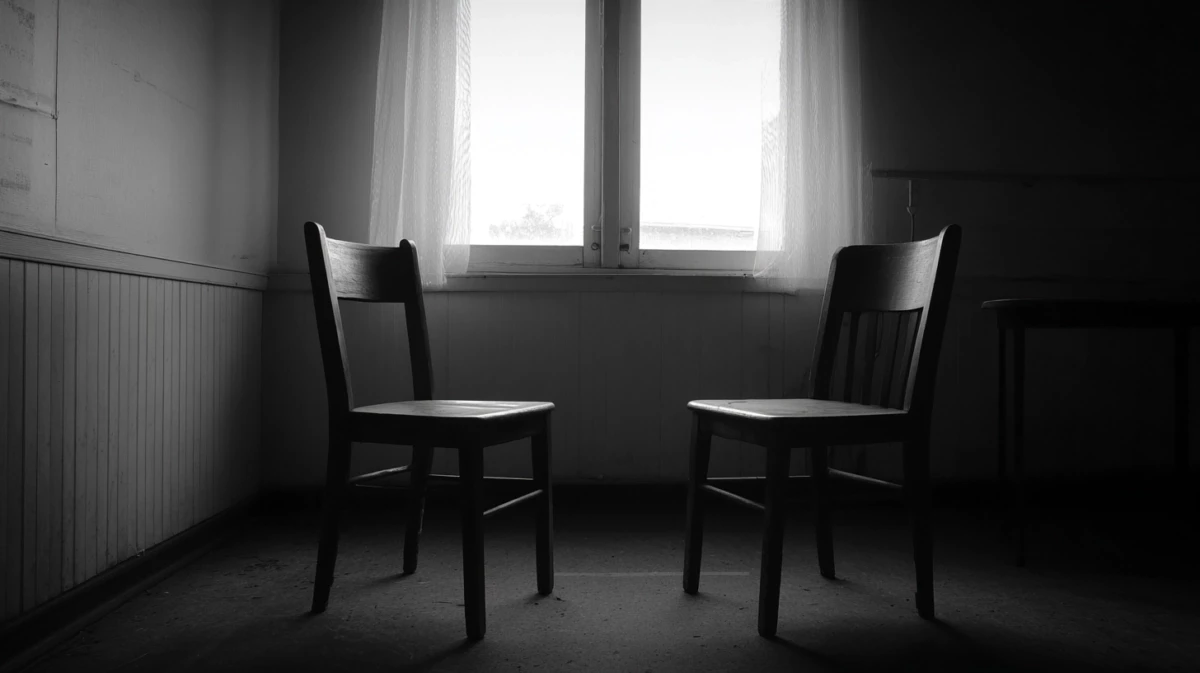
Place an empty chair across from you and assign it to someone specific: a parent, a boss, a version of yourself you've outgrown. Speak to the chair out loud, then physically move into it and respond as that person. While parts dialogue happens inside your own psyche, empty chair work externalizes the exchange. Instead of just imagining their words, let your body find their posture, their tone, and their logic. The shift in seating forces a perspective break that internal monologue rarely achieves. Most men find the first switch awkward and the second one uncomfortably revealing.
Structured Journaling as a Shadow Work Exercise
Most men who journal already write about goals, gratitude, or daily events. Shadow work journaling flips that: you write toward the discomfort you'd normally skip past. The target is shame, resentment, contradiction, and the patterns you notice but don't want to name.
Three structural approaches tend to work for different situations, and starting shadow work with a clear method prevents the aimless writing that produces nothing. Prompt-based journaling gives you a specific question designed to surface hidden material, something like "What do I criticize in others that I refuse to see in myself?" Trigger-response review works best after a charged moment: you write what happened, what you felt, and what older memory the reaction echoes. Dialogue format puts two voices on paper, yours and the part you identified during a parts dialogue or body scan, letting them argue without editing.
The trap with shadow journaling is turning it into performance. Writing polished paragraphs about your wounds still keeps the shadow at arm's length. Messy, unfinished sentences that make you uncomfortable are usually closer to the real material.
Exercises like these work best when you're not doing them alone in your head. The Unspoken Man gives you a structured, 40-page format for this exact kind of work — guided prompts across four stages, built for private use, not group settings. Several of these exercises — especially the body-based ones — are covered in more depth in The Grounding Ritual Kit, if you want a structured week-by-week practice built around them.
The easiest first exercise? It's free.
If you want a low-stakes way to test whether body-based practice actually works for you, start with the free 5-Day Breathwork Challenge before diving into a full kit. Five days, one short session each — enough to know if this approach is worth building on.
Frequently Asked Questions About Shadow Work
Can shadow work exercises be harmful without a therapist?
Exercises like trigger logging or body scanning rarely cause harm on their own, but working with deep trauma (abuse, grief, dissociation) without professional support can destabilize you. If an exercise leaves you unable to return to baseline within a few hours, that's a signal to bring in a therapist.
How often should you do shadow work exercises?
Two to three focused sessions per week tends to produce more lasting change than daily attempts that become routine. Spacing sessions out gives the nervous system time to process what surfaces, which matters more than volume.
What is the easiest shadow work exercise to start with?
A trigger log has the lowest barrier because it only asks you to notice and record reactions after the fact. It requires no confrontation, no dialogue, and no writing toward pain. You build raw material first and decide what to do with it later.
Do shadow work exercises actually work without journaling?
Mirror confrontation, empty chair work, and body scanning all bypass writing entirely and still surface repressed material. Journaling adds a layer of reflection, but the emotional charge shows up in the body and voice regardless of whether you write anything down.
How do you know shadow work is working?
The clearest sign is a shift in reactivity: situations that used to trigger a disproportionate response start landing differently. You might also notice you can name what you feel in the moment rather than reconstructing it hours later.
Another strong indicator is a decrease in compulsive numbing behaviors. When you stop spending so much energy repressing shadow material, the urge to overwork, drink, or endlessly scroll often drops naturally.
By Jonatan Rajala, Founder of Inner Kingdom. About the author →