Emotionally Unavailable Men: Signs, Causes, and How to Change

Emotionally unavailable men typically withdraw from vulnerable conversations, shut down during conflict, and keep relationships at a controlled distance, often without realizing they're doing it. These patterns usually trace back to learned suppression rather than a lack of caring. Change starts with recognizing specific behaviors in real time and gradually building the capacity to stay present with discomfort instead of retreating from it.
What Emotional Unavailability Actually Looks Like from the Inside
Someone probably used those words about you, or you typed them into a search bar at 1 a.m. after another argument that ended with you going quiet. Either way, the signs of emotionally unavailable men are easier to spot from the outside than from the inside, because internally, most of these behaviors feel like common sense. They feel like keeping the peace.

You cut emotional conversations short. Your partner brings up something that matters to them, and within seconds you're scanning for the exit: changing the subject, offering a quick fix, or going flat. From your side, the conversation felt pointless or circular. From theirs, you just disappeared mid-sentence.
You pull back right when things get closer. A good weekend together, an honest late-night talk, a moment where you actually felt something. Then Monday hits and you need distance you can't explain. While the other person experiences whiplash, your primary sensation is usually just relief.
You stay in the relationship but feel alone in it. Not dramatically lonely. More like a low hum of disconnection that you've stopped questioning. You're physically present, doing the right things, but something stays locked behind glass.
You control when and how contact happens. Texts get answered on your schedule. Plans stay loose. If someone pushes for more structure or commitment, the walls go up fast. While others might interpret this as mixed signals, to you it simply feels like protecting your space.
You go blank during conflict. Not strategic silence. Actual blankness, where the words and feelings seem to vanish at the same time. Your body might feel tight or numb. The person across from you sees stone. You're not choosing coldness; you genuinely can't access what they're asking for in that moment.
These patterns show up with friends and family too: keeping calls short, dodging anything deeper than logistics, showing up reliably for tasks but never for the emotional part. The common thread is a gap between what you do and what the people around you actually receive.
Where These Patterns Come From: Root Causes Most Men Never Examine
Many boys receive their first lesson in emotional suppression early in childhood, usually from a caregiver who meant well. A father who responded to tears with "toughen up," a mother who visibly panicked when her son expressed anger, a household where no one named feelings at all. The specific message varied, but the takeaway was consistent: certain emotions make you a problem. The boy didn't decide to shut down. He adapted. And the adaptation worked so well it became invisible.
The father wound as amplifier
An emotionally absent or punitive father does particular damage because the boy loses his primary model for what a man does with vulnerability. When dad went silent during conflict, or disappeared into work, or responded to closeness with irritation, the son learned that distance equals safety. That template runs quietly underneath adult relationships for decades.
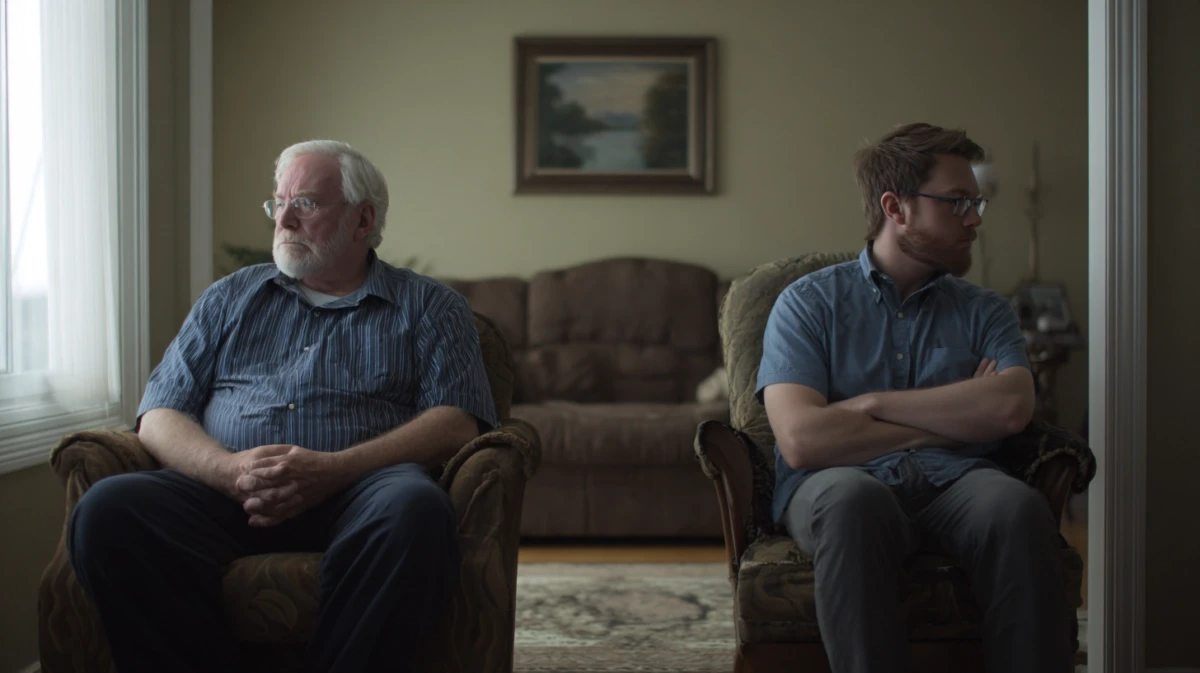
Understanding how early paternal relationships create lasting emotional patterns is central to the father wound in men, which often operates invisibly for decades before a man recognizes its influence on his adult relationships.
Peer enforcement during adolescence
Whatever survived childhood got pressure-tested by other boys. Showing hurt, admitting confusion, or caring visibly about rejection typically triggered ridicule or social demotion. The lesson sharpened: vulnerability costs you status. By late adolescence, most men have internalized this so deeply they no longer experience the suppression as a choice.
Adult relationships that reward the pattern
Stoicism often gets mistaken for strength early in a relationship. A man who stays calm, doesn't "make things emotional," and seems unshakeable can read as stable and confident. That positive feedback reinforces the shutdown. The cost only surfaces later, when a partner asks for depth and finds nothing accessible. By then, the pattern has years of reinforcement behind it.
None of these causes reflect a character flaw. They describe a protection strategy that outlived its usefulness. The man who can trace his pattern to a specific origin, whether a silent father, a locker room, or a relationship that rewarded his flatness, has already started loosening its grip.
Why 'Just Be More Open' Fails as Advice
A nervous system that spent two decades treating vulnerability as a threat does not reverse course because someone asks nicely. The shutdown is automatic, closer to flinching away from a hot surface than making a conscious choice. Telling a man in that state to "just open up" is functionally the same as telling someone mid-panic attack to calm down: the instruction describes the destination but ignores the locked door between here and there.
What usually happens next is worse than silence. Faced with enough pressure, many men produce performative vulnerability: they say words that sound emotionally honest without any felt experience behind them. The right phrases come out. A partner feels momentarily relieved. But the man himself registers the whole exchange as proof that emotional openness is a performance, not something real, which deepens the distrust of the entire process.
That cycle, genuine pressure followed by hollow compliance followed by quiet withdrawal, is one of the clearest emotionally unavailable men signs that something structural needs to shift. Willpower alone cannot override a protective mechanism that runs below conscious thought. What actually works starts with building the capacity to tolerate discomfort in small, controlled doses before anyone asks for a breakthrough.
How Change Actually Starts: Building Capacity Before Forcing Breakthroughs
Noticing the impulse to pull away mid-conversation is the smallest possible starting point, and it's where most men should begin. Not acting on the observation. Not correcting it. Just catching the moment your chest tightens or your attention drifts toward your phone when someone asks how you're doing. That recognition, repeated over a few weeks, rewires the automatic quality of the shutdown. You start seeing the exit before you take it.
The next step costs more: staying in the discomfort ten seconds longer than your body wants to. When a partner brings up something that triggers the familiar urge to deflect or go quiet, hold still. Don't fix, don't explain, don't reassure. Sit with the tension in your jaw or stomach. Ten seconds sounds trivial until you try it during a real conversation. Expect your mind to generate a dozen reasons why the other person is being unreasonable. That's the defense talking, not your judgment.
Writing down what you actually felt after a charged interaction, even one sentence, builds a different kind of muscle through shadow work for men, which creates a structured path for examining the hidden patterns driving emotional shutdown. Shadow work journaling anchors this: you name the feeling without editing it into something more acceptable. "I felt cornered" or "I wanted to disappear" is more useful than "I was fine." A structured journal like The Unspoken Man gives this step a container so it doesn't spiral into rumination.
Saying "I don't know how to respond to that, but I'm not leaving" out loud to another person is where real friction lives. Most emotionally unavailable men signs trace back to the belief that admitting confusion equals losing ground. Saying it anyway, even once, breaks that equation. The resistance will feel disproportionate to the words. That's normal. Capacity grows at the edges of what feels survivable, not in the middle of what's comfortable.
It is crucial to communicate this slow pace to your partner so they don't mistake small, deliberate steps for a lack of effort. If they expect an overnight transformation, their anxiety will likely trigger your withdrawal reflex all over again, resetting your progress.
When to Seek Professional Therapy for Emotional Shutdowns
Journaling, breathwork, and daily pattern recognition handle a lot of the early ground. Most men who stick with structured self-work for a few months get noticeably better at catching their shutdown impulse and staying present a beat longer. That capacity matters, and it doesn't require a therapist to build.
Professional support changes the equation when one of these is true: emotional shutdowns come paired with substance use or explosive anger that puts relationships at physical or emotional risk; you've been doing consistent self-directed work for three months or more and the same pattern keeps firing with no shift in intensity; or a relationship is actively deteriorating and your partner is running out of patience faster than you're building capacity. In those situations, a structured outside perspective cuts through blind spots that no journal prompt can reach, because the pattern itself blocks you from seeing it clearly.
Self-work and therapy aren't competing options. The men who gain the most from professional support tend to be the ones already doing the daily work on their own, not the ones waiting for a therapist to fix them.
Common Questions About Emotionally Unavailable Men
Is emotional unavailability permanent?
Emotional unavailability is a learned pattern, not a fixed trait. Men who consistently practice self-awareness and build tolerance for discomfort can shift it over months or years, though the pace depends on how deeply the pattern is rooted and whether professional support is involved.
What is the difference between being emotionally unavailable and being introverted?
Introverted men recharge alone but can still share feelings, respond to a partner's emotions, and deepen connection when they choose to. Emotionally unavailable men withdraw specifically when vulnerability or emotional closeness is required, regardless of how social they are otherwise.
Can you be emotionally unavailable without childhood trauma?
Cultural conditioning around masculinity, high-pressure work environments, or a single painful relationship can produce the same shutdown patterns without any obvious childhood wound. The protective mechanism forms wherever emotional openness was consistently punished or ignored.
How do emotionally unavailable men act in relationships?
Common signs of emotionally unavailable men include pulling back when the relationship deepens, deflecting emotional conversations with humor or logic, offering inconsistent attention, and leaving a partner feeling lonely despite being physically present.
Can an emotionally unavailable man fall in love?
Falling in love and sustaining emotional connection are different capacities. Many emotionally unavailable men experience strong initial attraction and genuine feelings but lack the tools to stay present once vulnerability becomes necessary, which is why relationships stall after the early intensity fades.
The key difference is that a man simply losing interest will stop making an effort across the board, whereas an emotionally unavailable man in love will often try to maintain the relationship through acts of service or financial support while strictly avoiding emotional intimacy.