The Jungian Shadow: What It Is, Where It Hides, and Why It Runs Your Life

A habit you can already name and feel guilty about is conscious, which by definition places it outside the shadow. The Jungian shadow is everything the ego refuses to recognize as its own, disowned strengths included, not only impulses judged as bad. Because it stays unconscious, it surfaces sideways: projection onto other people, reactions out of scale with the event, and figures in dreams. Integration means noticing it rather than acting it out.
Jung's shadow is not your dark side: what the term actually covers
The persona is the nearest neighbour and the easiest thing to mistake for the shadow. Your persona is the face assembled for other people, and it's broadly available to you when you look at it honestly. Whatever that face had to exclude is what gets pressed down, which is why a well-built professional front tends to point straight at the material.
A complex is something else again: a charged cluster of associations around one theme, say money or authority, that fires whenever it's touched. Shadow contents often live inside complexes, but a complex can also carry material the ego owns without much trouble.
The third boundary matters most. Not every unconscious content is shadow. Most of what sits below awareness never had anything to do with refusal. Carl Jung's shadow is specifically what the ego declined to be.
Some of what got refused was good: competence, appetite, tenderness. That's why the online version, which reads as a dark-side inventory, misses half of it, and why readers arriving from the broader question of masculinity often find the missing half is the harder one to claim.
Four checks before you call a reaction shadow material
Six hours of sleep and no lunch produce most of what men later interpret as deep psychological content. Run these four checks first.

Depletion: Did the same person or situation land fine two weeks ago when you were rested? Shadow material tends to hold its charge regardless of sleep. Fatigue collapses on its own once you eat and rest.
A real values conflict: Sometimes the other man actually did something wrong, and disliking it is judgment, not projection. The tell that points back toward shadow is moral heat, that flush of righteousness that outlasts the incident by days.
Trauma activation: If the body arrives before the thought — racing heart, tunnel vision, a sense of being much younger than you are — treat that as a signal to slow down rather than dig. It needs different handling than a journaling prompt.
Proportionate anger: Anger at a genuine boundary violation resolves once the boundary is restated. Shadow-driven anger returns with unrelated people around the same theme, and leaves you unable to describe the person without contempt.
When the check says not shadow, the action changes: sleep, state the boundary, or get support. Save the inner work for the reaction that survives all four.
How do you recognize your own shadow self?
Start with the public figure you can't stand. He costs you nothing, you'll never meet him, and every degree of that heat is manufactured on your side, which makes him the cleanest specimen you have. Closer to home it's the colleague whose self-promotion tightens your jaw while everyone else shrugs.
Then there are reactions that overshoot the trigger. A tone in your partner's voice, a two-second delay, and you're several degrees past what the moment called for. Moral heat behaves the same way, so follow where the certainty burns hardest rather than what it's aimed at. Dreams run slower: the same hostile stranger or rival returning over months. Write them down before you interpret anything, because early interpretation mostly produces the meaning you were already hoping for. Jokes and slips do their own work, especially late in the day when you're holding things less carefully.
The admiration that gives you away
Deflecting a compliment is the visible half. The other half is the man you watch with something warmer than respect, a low ache when he speaks plainly in a room or asks for what he wants. That longing usually points at capability you decided wasn't yours to claim. Jung's shadow self holds disowned strength as readily as disowned appetite.
None of this proves anything on its own. Irritation is cheap. The signal worth trusting is a theme that keeps returning with different people, in different rooms.
Where the shadow comes from: what socialization rewarded and punished
Two different forces cut material away, and they don't respond to the same handling. The first is your specific household and playground. A father who went cold for a week after his son cried at a funeral taught something precise about grief, and the father wound that shapes a man's shadow usually begins with exactly that kind of moment. A group of eleven-year-olds who found one boy's enthusiasm for something hilarious taught something precise about wanting things out loud. That layer is personal, local, and traceable. You can often name the room it happened in.
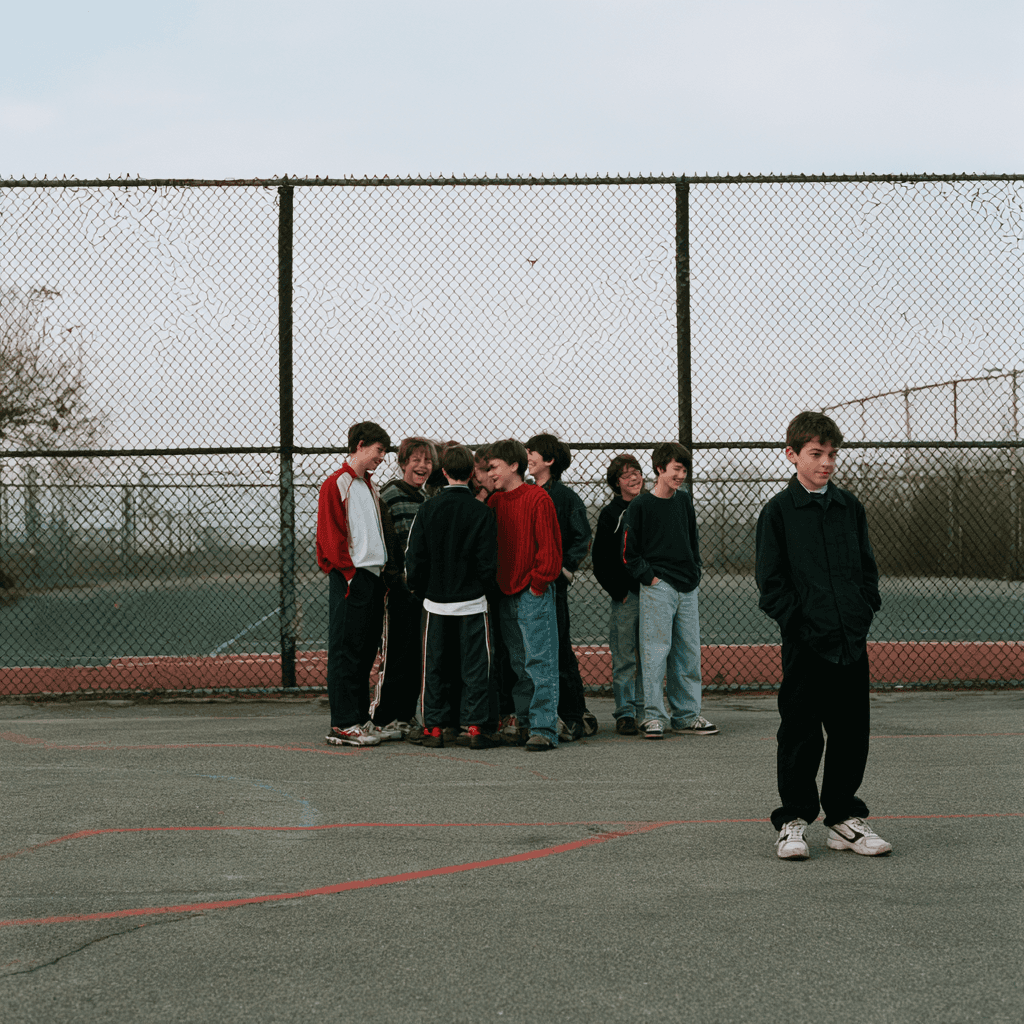
The second layer arrives pre-installed. Visible grief, stated need, open ambition, and raw aggression carry a cost for men across an entire culture, not just in one family, which is why the way men learn to handle emotion looks so uniform from the outside. A man who buried his own tenderness because of a specific uncle will find the world mostly indifferent when he starts unburying it. A man reclaiming stated need runs into fresh reinforcement every week: at work, among friends, sometimes from a partner. Same mechanism, different weather.
That difference matters practically. Personal material tends to loosen once you locate the source and see it was one household's rule, not a law. Collectively prohibited material keeps getting re-punished, so it needs deliberate choice about where and with whom you express it rather than a single insight.
Men's shadows tend to gather around a few areas: disowned vulnerability, ambition that felt arrogant to admit, anger that got labelled dangerous early, tenderness that drew mockery. Treat these as tendencies to check against your own history, not slots to file yourself into.
Shadow integration, step by step (and what it is not)
Integration ends with a choice, not a confession. The sequence that tends to hold up looks like this:
Register the signal at the moment it fires: the contempt, the flare, the odd ache when a friend gets promoted. Note it before you explain it away.
Name the trait in plain words. Not "issues around success" but "I want to be the one people ask." Vague naming keeps the material safe.
Trace the prohibition. Who taught you that trait was dangerous, and were they wrong about it, or only wrong about you?
Hold the tension. Neither discharge it on someone nor push it back down. Sit with the fact that you contain this. Most men find this the hardest and shortest-lived step.
Make one deliberate choice in one specific situation. A single sentence said directly to a colleague counts more than a page of insight.
The goal is being less run by the material, not free to express it. A man who integrates his anger gains the option of directness. He does not gain permission to detonate.
On scale: Jung placed this inside individuation, a process measured in years. A weekend prompt list is a starting point, nothing more.
Tools are parallel, not sequential. Dream recording suits material that only surfaces indirectly. Active imagination works if structured internal dialogue doesn't unsettle you. A men's group catches traits that only appear in front of other men. Inner Kingdom's Shadow Work Journal gives the sequence above a structured container, though a journal reflects nothing back at you, working with the shadow self covers what that outside perspective adds and when it becomes necessary.
When solo shadow work isn't enough: criteria for bringing it to a therapist
Five signals suggest the work has outgrown a notebook: the material traces back to a specific traumatic event rather than a general prohibition; you lose time or feel disconnected from your body while writing; sleep breaks down in the weeks after you start; images keep intruding at random hours and never settle; or the same pattern keeps costing you a relationship or a job even though you can describe it accurately. Insight without change over months is a signal, not a personal failure.
The choice isn't only about severity: how shadow work and therapy actually differ in pacing, structure, and accountability tells you which one your current material needs.
The advice you'll find on this is genuinely split. Some practitioners treat self-guided work as risky enough to require outside pacing, while self-directed guides publish gentle practice with instructions to go slowly and expect little. Both positions come from people with a stake in the answer, so weigh it against your own five signals rather than the loudest voice.
One practical precondition either way: if your nervous system can't stay with discomfort, nothing lands. Slow breathing before a session, ending early when you're flooded, or a structured option like Inner Kingdom's free five-day breathwork challenge all serve that. None of it dissolves the shadow.
Common questions about Carl Jung's shadow
Is the Jungian shadow the same as Freudian repression?
They overlap but aren't identical. Freud treated repressed material as mostly instinctual drive pushed out of awareness, while Jung included positive traits, talents, and capacities the shadow holds as well, plus material that was never conscious in the first place rather than actively pushed down.
Is the anima part of the shadow?
Jung treated the anima as a separate structure, encountered typically after shadow material rather than inside it. In practice the two get confused because both surface through strong reactions to other people, but shadow projections usually land on your own sex while anima projections land on women.
How long does Jungian shadow work take?
Jung framed it as lifelong rather than a project with an end date. A single recurring pattern, however, often loosens noticeably within a few months of consistent attention, shadow work exercises give the structure that makes those months productive rather than circular, which is a more useful unit to measure than the whole shadow.
How do you know when a shadow trait has actually been integrated?
The trait becomes available to you as a choice instead of erupting or being disowned. A man who buried his anger doesn't become permanently calm; he becomes able to use it deliberately and drop it afterwards without a hangover of shame.
Can shadow work be done without remembering childhood clearly?
Patchy childhood memory doesn't block the work. Current reactions, repeated relationship dynamics, and what you find intolerable in others carry the same information, and none of it requires reconstructing an accurate biography.
JOURNAL
The Unspoken Man
The structured shadow work journal for men doing this work — the sequence above in a 40-page container with prompts for each stage.
Not ready to buy? Start here instead:
Five short breathwork sessions to build the nervous system foundation before the harder material surfaces.