Healthy Masculinity vs Toxic Masculinity: A Shadow Work Perspective

Most discussions of healthy masculinity vs toxic masculinity treat them as a checklist: aggression, dominance, and emotional suppression on the toxic side; empathy, vulnerability, and communication on the healthy side. Shadow work reframes this split entirely. What shows up as "toxic" behavior usually traces back to unintegrated shadow material, suppressed fear or vulnerability that leaks out as control or aggression, rather than masculinity itself being the problem. Healthy masculinity emerges when a man meets those buried patterns deliberately instead of being driven by them. The real dividing line between a toxic and a healthy expression of the same impulse is whether the behavior is a reactive defense or a conscious choice.
The Binary That Keeps Men Stuck
Standard definitions often rely on rigid lists. One column says strength, stoicism, assertiveness. The other says empathy, openness, emotional intelligence. Pick the wrong column and you're toxic. Pick the right one and you're performing a version of masculinity that might not feel like yours either.
That framing creates paralysis. A man who recognizes genuine aggression in himself doesn't get much from being told "aggression bad, empathy good." He already knows. What he doesn't know is why the aggression keeps surfacing when he doesn't want it to, or why the approved alternative feels hollow when he tries it on.
The binary also flattens real complexity. Protectiveness and control can look identical from the outside. Silence can be either avoidance or composure. The standard debate never asks what's underneath the behavior, only whether the behavior lands on the correct side of the line.
Shadow work fills that gap. Instead of sorting traits into acceptable and unacceptable, it asks a different question: what's driving this? When the driver is an unexamined wound or a suppressed emotion, even "healthy" traits can turn rigid and performative. When the driver is awareness, even intense traits like directness or fierce protectiveness stop being problems. The distinction that actually matters isn't which trait you display. It's whether you chose it or it chose you.
This approach to examining unconscious patterns is part of a broader framework for shadow work for men, which provides structured methods for uncovering what drives reactive behavior rather than simply labeling it.
What Shadow Work Reveals About 'Toxic' Patterns
Anger that erupts during a calm disagreement rarely starts as anger. Trace it back and you usually find shame, helplessness, or grief that got locked away years earlier because expressing it felt unsafe. Shadow work names this mechanism precisely: a suppressed emotion doesn't disappear. It leaks out wearing a disguise.

Three patterns show up repeatedly when men start examining what's underneath their reactive behavior.
Suppressed vulnerability surfacing as aggression
A boy who learned that crying earns ridicule doesn't stop feeling pain. He stops showing it. By adulthood, that buried hurt often exits as irritability, sarcasm, or explosive anger during low-stakes moments. The trigger seems trivial because the real charge is old. Shadow work exposes the original wound so the man can respond to the actual situation rather than a decades-old one.
Buried fear leaking as control
When fear itself feels unacceptable, it tends to reshape into micromanagement, rigidity, or dominance in relationships. A man who insists on making every decision isn't necessarily power-hungry. He may be terrified of outcomes he can't predict, and controlling the environment is the only coping strategy he was never shamed for using. Recognizing the fear underneath loosens the grip.
Grief that never got space turns into emotional flatness, a pattern closely tied to emotional unavailability in men.
Friends often call this state "being stoic," while partners might describe it as being "checked out." Friends call it "being stoic." Partners call it "checked out." Neither label reaches the root. The man isn't choosing calm. He lost access to the feeling entirely, and shadow work is one path to recovering it.
Understanding the mechanism doesn't erase the impact these behaviors have on others. What it does is replace a dead-end label with a starting point for actual change: name the buried feeling, meet it deliberately, and the distorted output loses its fuel.
Same Impulse, Two Expressions: A Self-Diagnosis Tool
Anger, protectiveness, competitiveness, stoicism, the drive to lead: none of these are problems. The question is whether you're running them or they're running you. Five common impulses often show up in both shadow-driven and integrated versions, and recognizing the difference helps identify personal patterns.
Anger
Shadow-driven anger punishes. It flares at a partner's tone, a colleague's mistake, a driver who cut you off, and the intensity never matches the trigger. Integrated anger draws a line: you feel the heat, name what crossed the boundary, and speak it without needing the other person to cower. Quick check: after the last time you got angry, did the situation change, or did you just feel briefly powerful?
Protectiveness
When protectiveness runs through shadow, it looks like monitoring: checking someone's phone, deciding who they spend time with, framing control as care. Integrated protectiveness creates safety without removing the other person's autonomy. The relational impact is the clearest signal here. Ask yourself whether the people you protect feel safer or smaller around you.
Competitiveness
A competitive drive pushes your own standard higher, but when it operates from the shadow, it often surfaces as a need to subtly one-up others in casual conversation, especially when feeling unseen.
Stoicism
Useful composure under real pressure turns shadow when it becomes the only available setting. If you can stay calm during a crisis but also stay calm when your child needs you to be emotionally present, that composure costs more than it saves. The internal sensation matters most: genuine steadiness feels quiet, while shadow stoicism feels like holding your breath.
The Drive to Lead
A genuine leader tolerates disagreement and adjusts course when someone else's idea is better. If the drive to lead requires strict compliance and makes it impossible to publicly admit when a team member is right, it is likely running on shadow.
How Shadow Work Moves You From Reactive to Deliberate
Tracking a trigger in real time takes about three seconds of honest attention, and most men skip those three seconds for years. These techniques aren't sequential steps. Pick the one that matches the pattern you recognized in the previous section.

Men new to this process often benefit from structured guidance on how to start shadow work, particularly when choosing which technique matches their specific pattern.
Trigger journaling for anger and control patterns
Write the situation that set you off, then answer one question: "What did I believe was about to happen to me?" Not what the other person did wrong. What you feared was coming. A man whose anger masks abandonment fear will notice the same predicted loss showing up across wildly different situations: a partner going quiet, a colleague not responding to a message, a friend cancelling plans. The repetition is the data. Once you see the same predicted threat in ten entries, the trigger loses its invisibility.
Seeing the trigger doesn't immediately stop the reflex, and it is common to notice the shadow pattern firing but still act on it anyway during the initial stages.
Somatic check-in for stoicism that's gone numb
Set a timer three times a day.
When it goes off, locate the tightest spot in your body without trying to fix it.
Name what emotion that tension would be if it had a voice.
Men running shadow stoicism typically draw a blank for the first week. That blank is the finding. Genuine composure still registers sensation; numbness registers nothing. If you consistently feel "nothing," you're dissociating, not composed.
When written reflection alone isn't sufficient, shadow work exercises for men offer additional practices for accessing buried emotional material.
Pattern interrupt for competitive overdrive
Next time you catch yourself measuring your performance against someone else's, pause and ask whether you'd still want the outcome if nobody ever knew you achieved it. If the honest answer is no, the drive is feeding an image rather than a standard you actually care about. Redirect by naming the internal standard you'd hold yourself to privately.
The Shadow Work Journal by Inner Kingdom structures this kind of self-examination into daily prompts built around trigger tracking and honest self-confrontation, similar to the approach outlined in targeted shadow work journal prompts for men. It won't replace the discomfort of doing the work, but it removes the guesswork about where to start.
Where Healthy Traits Slide Back Into Shadow
Patience during a partner's emotional outburst can look like composure. It can also be a man quietly dissociating because feeling the conflict would crack something open he sealed shut years ago. The difference sits in whether he's choosing stillness or whether stillness is choosing him because anger got exiled long ago. One check: after the argument passes, does he feel settled or hollow? Settled means he held ground. Hollow means something got bypassed, and the trait he calls patience is running on avoidance fuel.
Self-reliance that blocks repair
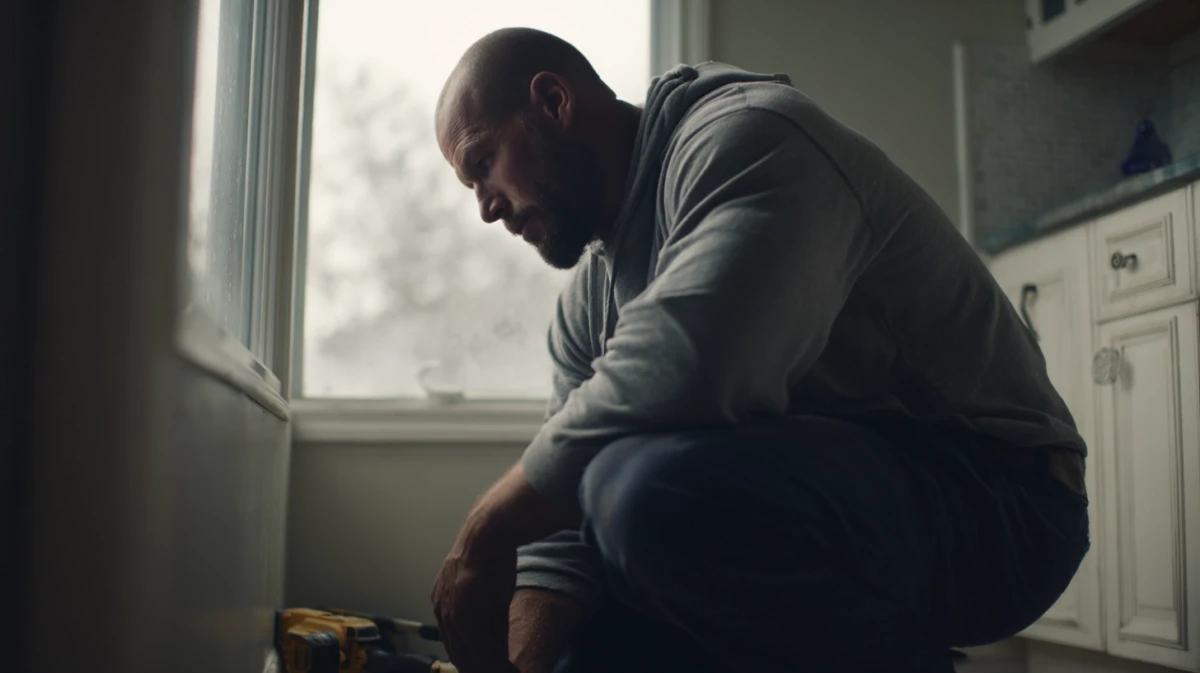
A man who handles his own problems without dragging others into chaos sounds integrated. Where it slides: he stops mentioning struggles to anyone, not because he's capable, but because asking for support triggers a shame response he hasn't examined. The signal is subtle. He notices irritation when someone offers help unprompted. The calibration question: "Am I solving this alone because I can, or because needing someone feels like losing?"
A man might spend three exhausting days fixing a household issue himself rather than asking a friend for help, preserving his self-image as the 'capable provider' while sacrificing the opportunity to build connection.
Accountability that becomes self-punishment
Owning mistakes publicly reads as mature. Shadow creeps back when a man uses relentless self-criticism as a way to preempt anyone else's judgment. He beats himself up before they can. The internal signal is a compulsive need to confess or over-apologize, paired with tension if someone says "it's fine, don't worry about it." The question worth sitting with: "Am I taking responsibility here, or am I performing guilt so nobody can hold anything over me?"
Each of these looks healthy from the outside. The most reliable sensor is usually internal: tension, defensiveness, or a rigid need to maintain the image of the trait. When that shows up, the behavior has stopped being a choice and started being a costume.
FAQs on Masculinity and Shadow Work
Is toxic masculinity an actual psychological concept or just a cultural label?
The term originated in the mythopoetic men's movement of the 1980s and later entered academic psychology through gender role strain research. It describes specific behavioral patterns tied to rigid norms, not a clinical diagnosis, so it functions as both a cultural shorthand and a framework studied in peer-reviewed mental health literature.
Can stoicism be part of healthy masculinity?
Chosen composure under pressure is a genuine strength. The distinction sits in whether you can access emotion and choose restraint, or whether the calm masks an inability to feel at all. If stoicism collapses the moment someone asks you a direct emotional question, it was never composure.
Does shadow work replace therapy for men?
Shadow work is a self-directed reflective practice, not a clinical intervention. It can surface patterns worth exploring, but it lacks the feedback loop a trained therapist brings, especially around trauma, addiction, or persistent mental health conditions. Treating it as a substitute risks reinforcing the exact self-reliance trap the practice is meant to expose.
How do I know if my anger is healthy or a shadow pattern?
Healthy anger points at a specific boundary violation, communicates something concrete, and settles once the situation resolves. Shadow anger fires disproportionately, targets the wrong person, or lingers as a background hum long after the trigger has passed. Track what you do with the anger once it arrives, not whether it shows up.
Can you unlearn toxic masculinity as an adult?
Rigid patterns formed early can be restructured, though "unlearn" oversimplifies the process. What changes is the automatic quality of the response. Through sustained self-observation, the gap between impulse and action widens enough to choose a different behavior, even when the old reflex still fires underneath.
Relationships may also shift during this process, as partners and friends adjust to new boundaries and the absence of old, predictable shadow behaviors.
By Jonatan Rajala, Founder of Inner Kingdom. About the author →
The journal that structures this work
The Unspoken Man is a 40-page guided shadow work journal built around exactly these patterns — trigger tracking, confronting what you've been avoiding, and turning insight into behavior. Four stages, no therapy-speak.
Want a simpler starting point?
Before the journal, the body. The free 5-Day Breathwork Challenge gives you five short practices to settle your nervous system first — so the deeper identity work actually lands.