Somatic Therapy Exercises: The Body-Based Practices You Can Do Without a Therapist

Orienting, sensation tracking, pendulation, titration, progressive muscle relaxation, and self-directed tremoring all run fine without a practitioner in the room. Those are the somatic therapy exercises most people can genuinely do alone; somatic therapy itself is a clinical framework built around a trained therapist and a live relationship. Solo work suits everyday tension and mild activation. When numbness, panic, or trauma memory keeps escalating instead of settling, that's the point to bring someone in.
Start here: orienting and sensation tracking
Orienting is a visual sweep, not a meditation. Let the eyes move first and the head follow a beat behind them, slowly enough that details actually land: the corner of a doorframe, light on a wall, the texture of whatever's in front of you. A minute or two covers it. Rushing turns the same movement into threat scanning instead of a check that there's nothing to scan for.
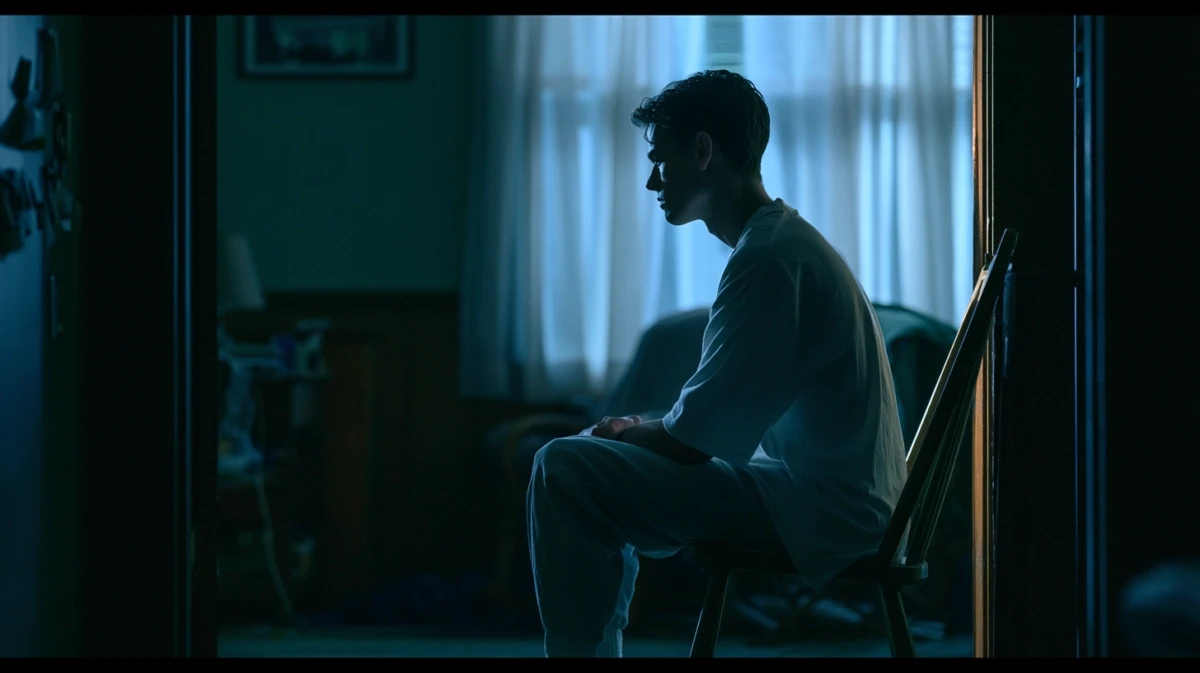
Sensation tracking asks a different question. What's physically here, in plain physical words? Tightness. Weight. Temperature. Buzzing through the hands. A hollow space under the ribs. You're not breathing anything away or softening it. This is where sensation tracking differs from a mindfulness body scan aimed at calm: activation, constriction, and temperature change are the data, and noticing them accurately is the whole task. Neither practice requires you to understand nervous system regulation theory first.
A completed repetition is small. Breath drops slightly lower in the torso, the jaw or shoulders let go a fraction. That's the result. Men who keep waiting for a dramatic release usually quit before the quiet version arrives.
If turning attention inward reliably pulls up an unresolved trauma memory, work with a practitioner before going further on your own.
Somatic therapy vs. self-directed practice: where the line sits
Four different lineages get flattened into one word online, and they don't carry the same risk profile.
Somatic Experiencing, developed by Peter Levine, supplies most of the vocabulary you'll meet everywhere: titration, pendulation, resourcing, tracking, containment. The full method runs through a trained practitioner who reads your face, breathing, and posture in real time and slows you down before you notice you're overshooting. What translates to solo work is the observational half. Tracking sensation and moving attention between activation and something neutral hold up alone. Deliberate work with a specific trauma memory doesn't, because the person who catches the overshoot isn't there.
TRE, from David Berceli's work, was built as a self-practice from the start. That's a genuine distinction. Providers still tend to introduce it in person for the first few sessions, largely so you learn where your own off switch is before you're using it unsupervised.
Progressive muscle relaxation occupies an odd position: it's among the best-studied of the four, and it came out of clinical relaxation research rather than the trauma field. That origin is exactly why it carries the least risk when practiced alone. Nothing about it invites you toward difficult material.
The slow micro-movement work you'll see labeled somatic workouts belongs to a mobility and body-awareness frame. Useful, low-stakes, and not trauma work. Blending it with the other three is where people end up attempting compressed clinical work by accident.
No comparative outcome data separates these methods, so treat claims that one outperforms the rest with suspicion.
Dose it small: titration and pendulation without flooding
A pendulation rep has four parts and a defined end. Make contact with the tight or uncomfortable area for a few seconds, no more. Move attention deliberately to somewhere neutral or genuinely comfortable: the weight of your feet, the warmth of your hands, the back of your legs against the chair. Stay there until something settles, which usually reads as a small softening, a slower breath, or the neutral area becoming easier to feel. Then come back to the difficult spot and see whether it has changed.
What ends the rep is the settling, not a timer. Three to five cycles in a sitting is a reasonable ceiling for most people working alone. If nothing settles on the neutral side after a while, the session is finished for the day.
Titration is the dosing rule underneath all of that: keep intensity low enough that your body still gives you usable information. There's a plain test for it. If you can still describe the sensation in words, the dose is workable. Once you can't find language for it, you've gone past the working range and you're just enduring.
Release versus flooding
Release tends to move. Sensation shifts location, changes shape, softens, or resolves into a breath that goes deeper without you asking it to. Flooding spreads. The sensation goes from one place to everywhere, your thinking narrows to a single loop, and the room falls out of your awareness.
If a rep goes badly, the correction is counter-intuitive for anyone who trains hard: shorten the contact and lengthen the neutral time. Two seconds in, a full minute out. Pushing harder into the sensation is the one adjustment that reliably makes it worse.
Discharge work: shaking, tremoring and muscle release
The useful ranking for these three is how far each one can knock you off balance. Systematic tension and release through the major muscle groups sits lowest on that scale, and it stays the fallback whenever shaking feels like more than you want to handle alone. Nothing is lost by staying there for a few weeks.
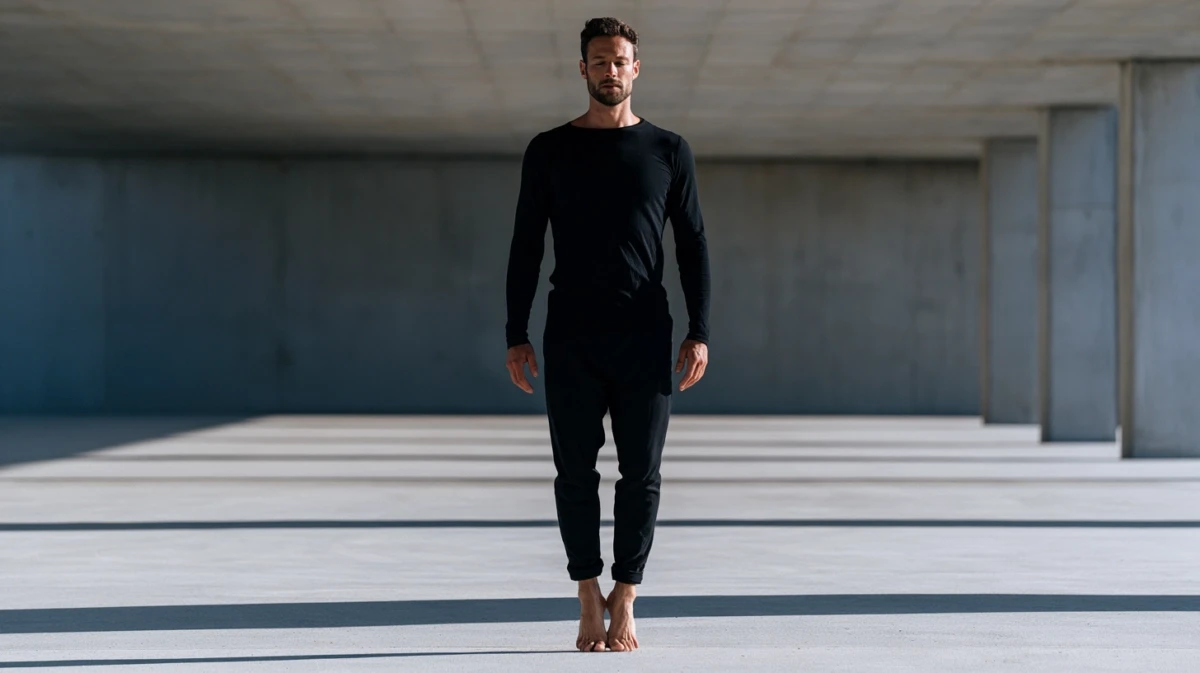
Heel drops and light shaking sit in the middle. Stand, rise onto the balls of the feet, drop the heels, then stay still long enough to feel the buzz fade. It's short, contained, and workable in a hallway or a parked car.
TRE-style neurogenic tremoring belongs last. When you practice it alone, a few things do most of the work: mild leg fatigue beforehand rather than exhaustion, a supported position with the back on the floor and knees bent, short sessions, and a deliberate ending. Straighten the legs, put the feet flat, look around the room and name what you see. Letting the tremor run until it stops on its own is how people get up shaky and vague.
Watch the next day. Soreness deeper than training explains, emotional flatness, or tiredness out of proportion to the effort usually means the dose was too high. Cut the duration or drop back a level.
Longer and harder isn't a bigger dose here. Counting tremoring as sets is where solo discharge work usually goes wrong.
How often should you practice, and for how long?
Five to ten minutes on most days of the week builds more tolerance than a single 45-minute session on Sunday. Intensity inside a long session doesn't compensate for the missing frequency. Nervous system capacity behaves like grip strength: repeated short loads under a manageable threshold, not one heroic effort.
A workable order for a full session: orient to the room, track sensation for a minute, run two or three titrated pendulation cycles, add discharge only if the day calls for it, then a minute of settling before you stand up.
When you have four minutes, keep orienting and one pendulation cycle. Drop the discharge work first. Settling is the last thing to cut, because ending mid-activation is what makes men skip the next day.
Most early sessions register as almost nothing. That's normal. A realistic first signal is a slightly deeper breath you didn't plan, a jaw that unclenches, or the room looking marginally sharper afterwards. Not tears, not shaking.
If you want a printable to follow, a sequence written by hand on an index card works the same as any downloaded somatic therapy exercises PDF. What helps is having a fixed order you don't renegotiate each time. Structured alternatives exist too, from body-led breathwork practice in free five-day formats to a physical prompt like Inner Kingdom's Grounding Ritual Kit, and they matter mainly if unstructured practice keeps dying on day four.
When to stop and bring in a practitioner
Stop mid-exercise rather than finishing the round. Open your eyes and let them travel around the room, stand up and put weight through both feet, run cold water over your hands or step outside where the air is different. Then end the session there. Trying to repair a bad session with more practice usually adds dose to a system that's already past its limit.

One rough session doesn't mean much on its own. What matters is the pattern across several. Solo practice is the wrong container when any of these show up:
Activation that climbs session to session instead of settling
Numbness or a disconnected feeling that's still there by the end of the day
Panic during or after a session
Trauma memory arriving as images or a sense of reliving it, not as recall
Sleep getting worse over the weeks after you started
Practice that has become something to grind through
A practitioner supplies two things you can't give yourself. One is a second nervous system in the room, pacing the dose from outside your own perception of it. The other is someone who spots escalation while it's still small, which is hardest to see in your own body.
An SE practitioner, a trauma-informed therapist, and a certified TRE provider are all reasonable options here. Self-directed practice isn't treatment for PTSD or a diagnosed trauma disorder, and it doesn't become treatment by being done consistently.
Questions that come up once you start practicing alone
How is somatic therapy different from talk therapy?
Talk therapy works through narrative and meaning; somatic work enters through sensation, posture, and breath, often without discussing the story at all. Many practitioners combine both, using body tracking when words stall out or when a memory keeps producing the same physical response.
Is there a somatic therapy exercises PDF worth following?
Most downloadable guides repackage the same four or five drills and exist mainly to collect email addresses, so judge one by whether it specifies dosage and a stop signal rather than by exercise count. A printed sheet is useful for sequence reminders, not for deciding how far to push.
Can somatic exercises release trauma stored in the body?
Evidence for the "stored trauma" model is contested, and no reliable outcome data supports the claim that solo body-based practices resolve trauma. What they more plausibly do is shift nervous system arousal and improve sensation awareness, which is worth having on its own terms.
Can I do somatic work on the same day as hard training?
Heavy lifting or intervals leave the system already activated, which blurs the signals you're trying to read, so most people find the practice lands better on rest days or several hours after the session. Light mobility work beforehand causes no conflict.
5-Day Breathwork Challenge
Five short sessions to build the body-led regulation habit — the structured on-ramp that keeps solo somatic practice alive past day four.
The Grounding Ritual Kit
A 7-day structured nervous system practice — breathwork, grounding and stillness built into a daily system with physical prompts that keep the sequence consistent.