Somatic Exercises for Anxiety: Body-Based Practices That Actually Regulate
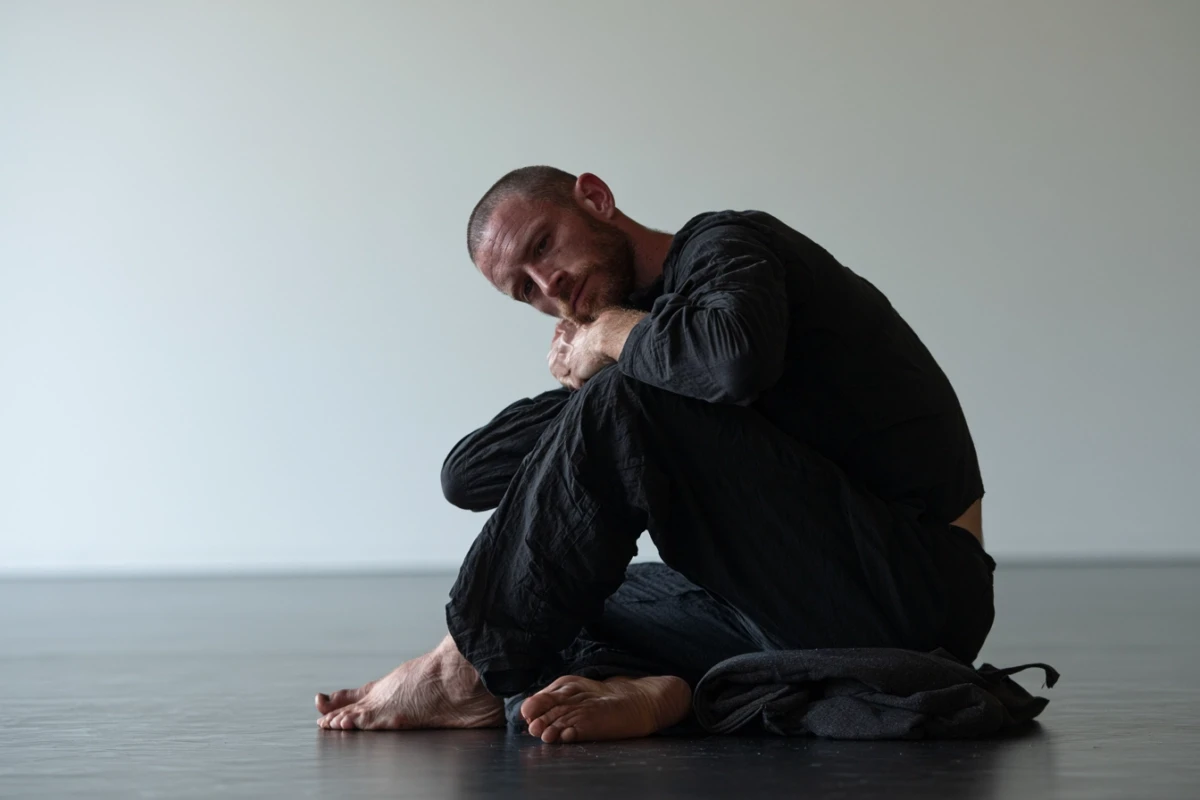
Orienting, extended exhale, self-hold, and shaking cover most of what somatic exercises for anxiety are actually used for, and the right one depends on where the activation already sits. A slow head turn plus a lengthened exhale fits the spike ten minutes before a high-stakes moment; pressure and self-hold work better once panic is already surging; shaking or a psoas release clears what stayed in the body after an argument. Reps usually run one to three minutes, and a spontaneous sigh, a yawn, or shoulders dropping without effort tells you it landed.
Find Your Pattern First, Then Pick the Practice
Match by what your body is doing right now, not by which technique sounds most credible.

Anticipatory spike: slow visual scanning of the room for roughly 60 to 90 seconds, then a few long exhales. You'll know it landed when your gaze stops darting.
Panic already surging: firm self-hold, one hand under the opposite armpit, plus weight pressed into both feet. Two to three minutes. Watch for warmth returning to the hands.
Chronic background tension: foot-to-floor loading and jaw release, around two minutes, repeated a few times across the day rather than once.
Post-conflict activation that won't settle: shaking or tremoring through the legs, one to two minutes, until gut sounds or an involuntary shudder shows that discharge has started.
Night waking: weighted pressure across the chest and a psoas release on the floor, five minutes or so, no lights.
Stop at the signal. Pushing a rep past it tends to re-activate rather than settle.
Individual reps sit inside the wider practice of nervous system regulation, where baseline, sleep, and daily load set the ceiling on what one exercise can do.
Acute Anxiety: The Ten Minutes Before, and the Surge Already Moving
Ten minutes before a presentation, the body is still taking instruction. Slow the head turn until the room actually registers, load both feet into the floor as if pressing down through the heels, then let the jaw drop half an inch and rest the tongue flat on the floor of the mouth. Two or three minutes usually covers it. The end-point worth watching for is a single spontaneous swallow or a shoulder drop you didn't ask for. Layer a longer out-breath over that if it helps, with the exhale running roughly twice as long as the inhale as a starting ratio.

Once the surge is already in motion, breath-led work often backfires. Someone mid-spike is usually over-breathing already, and counting breaths gives the attention one more internal signal to fixate on. Pressure and contact work better here.
Self-hold: one hand under the opposite armpit, the other over the outer upper arm, held firmly for two to three minutes. Best done seated with your back against something solid.
Weight on chest or thighs: forearms, a folded coat, a bag. Look for breathing that widens rather than quickens.
Humming or a low sustained tone: quiet enough to use in a meeting room with your mouth barely open. If two rounds change nothing, switch to cold water on the wrists or the back of the neck rather than repeating it.
Cold works fastest but wears off fastest too. For a fuller acute sequence, the nervous system reset piece runs the whole chain in order.
Discharging What Will Not Come Down After Conflict or at 3am
Adrenaline clears in minutes, but the muscular bracing it recruited can hold for hours. That's why you can sit in a quiet kitchen two hours after an argument with a heart rate that won't drop below eighty and legs that feel like they want to be somewhere else. Nothing is happening. The charge that got mobilised for the confrontation simply never went anywhere.
Leftover activation responds to movement more than to stillness. Shaking works here for the reason it fails mid-surge: there's no acute spike to amplify. One to two minutes of loose knees, letting the tremor come from the legs rather than driving it, is usually enough. Hip and psoas work suits the same window, especially if you sat through the conflict. Pendulation is the underrated one: put attention on the tight place, stay maybe fifteen seconds, then move to somewhere neutral like your hands or the soles of your feet, and go back and forth six or seven times. Slow walking counts too. Rhythm matters more than intensity.
A spontaneous yawn, a long unforced sigh, or feet that warm up all mark the end of that rep.
At 3am the rules change
In bed, the darkness removes the visual anchors that tell the body nothing is coming. Open your eyes, find one fixed point (a door frame, a lamp edge), and rest there for around a minute before moving your gaze slowly to another. Side-lying with one hand on the ribs and one on the opposite upper arm works better than lying flat.
Long closed-eye body scans tend to backfire at that hour, since there is no external input to compete with a racing chest.
Replaying the argument while you do any of this isn't a failed rep. The body discharges regardless of what the mind is doing. If the same conflict keeps recurring with the same person, though, discharge handles the aftermath, not the pattern, and shadow work is the more useful next direction.
When Somatic Exercises Make Anxiety Worse (and How to Titrate)
Of the common mistakes, the ten-minute closed-eye body scan is the one that most often makes anxiety worse. Sustained internal attention on a system that's already scanning for threat tends to amplify what it finds: the heartbeat gets louder, the chest feels tighter, and the sensation you were observing becomes the thing you're now frightened of. Interoceptive flooding, in short. The practice didn't fail; the dose was too high.
The other failure routes show up differently. Shaking that runs too long can tip into genuine panic, usually announced by a shift from loose trembling to bracing, breath held high in the chest. Deep-breathing sets layered on top of over-breathing add air to a system that already has too much. Progressive muscle release sometimes opens more sensation than you can hold, particularly around the jaw and hips. And some people don't escalate at all: attention on the body goes flat, the room recedes, and they lose contact entirely. If that's your pattern, grounding work aimed at dissociation fits better than anything on this page.
Titration means cutting the dose, not abandoning the practice:
Shorten reps: 30 to 45 seconds with a pause between, instead of one long block
Eyes open: soft gaze on a fixed object, not the ceiling
External anchor first: feel the chair or floor before turning attention inward
One area at a time: hands only, or feet only, never a full sweep
Stop at the first signal: overwhelm is the end point, not completion
Useful discomfort feels like something moving: heat, prickling, a wobble that settles. Amplification feels like something closing in and speeding up. When it goes sideways mid-practice, open your eyes, stand up, name four objects out loud, and end the session there. Retry tomorrow at half the length.
Somatic Exercise or Breathing Exercise: Which One Should You Reach For?
Breath practices change your blood chemistry and impose a rhythm from the outside in. Somatic work runs on movement, pressure, orientation, and raw sensation, and it doesn't ask your lungs for permission first.
That distinction matters most when you're already over-breathing: chest high, hands tingling, ten breaths in and the count keeps slipping. Pacing the breath there means steering the exact system that's misfiring. Push into the floor, turn your head slowly across the room, press your palms hard together instead. Something that isn't your breath.
Breath practices hold up well when you're reasonably composed and want to lower activation before it climbs: the walk to a difficult meeting, sitting in a parked car. Somatic work covers the states where control isn't available.
Once the acute surge has passed, they stack well. Discharge or orient first, then let a slow exhale pattern settle what's left. The somatic breathwork piece covers that hybrid in detail.
Chronic Background Anxiety: Where Single Exercises Stop Working
One rep moves your state for minutes, sometimes a few hours. A baseline that has been humming at low-grade activation for years moves through repetition, and there is no exercise clever enough to skip that part.

What that looks like in practice is unglamorous: short sessions on most days, not one long push on Sunday. Most people who get somewhere do two things. They keep one anchored practice at a fixed point in the day, short enough that skipping it takes more effort than doing it, and they keep one practice in reserve for when something spikes.
The first two weeks often feel worse before they feel better. More sensation, not less. Sleep can go strange for a stretch, either heavier or broken. Some men notice a few days of thin patience, which usually means tension that was previously sitting under the surface is now audible. That phase passing on its own is common; it staying and intensifying for weeks is worth taking seriously.
The realistic options, briefly:
A written log: a line a day on state and what you practised. Boring, and the fastest way to see whether your baseline is actually shifting or you just remember the bad days.
A TRE or somatic movement class: useful if you struggle to let discharge happen without someone else holding the container.
Somatic experiencing sessions: the paid route with the most depth, and the right one if old material keeps surfacing.
Free guided audio: fine for consistency, weak for troubleshooting your specific pattern.
Inner Kingdom's free 5-Day Breathwork Challenge: a structured on-ramp for building the daily habit; the Grounding Ritual Kit gives you a repeatable sequence for pressure, though a kit cannot assess your pattern or adjust when something backfires.
If panic attacks continue, sleep stays disrupted, work gets genuinely difficult, irritability doesn't lift, or you notice yourself flattening out or carrying trauma symptoms that consistent practice hasn't touched, that's the point to bring in a professional. Hard training and holding it together are not discharge routes, however well they've worked so far.
Common Questions About Somatic Anxiety Exercises
Do somatic exercises actually work for anxiety?
For acute activation, the evidence is mostly clinical and experiential rather than large-trial: people report a drop in physical arousal within minutes. What holds up best is the modest claim that body-based work shifts the physical layer of anxiety, while the thoughts driving it often need separate attention.
Is a somatic exercise the same thing as somatic therapy?
A somatic exercise is a single self-administered rep, roughly a minute or two. Somatic therapy is a guided relationship with a trained practitioner who tracks what surfaces and paces it, which matters when memory or grief comes up mid-practice.
What if you feel nothing during a somatic exercise?
Feeling nothing usually means either the intensity is too low or interoception is dulled from long-term numbing. Slow the rep down and look for smaller signals instead of a wave: a single deeper breath, warmth in the hands, a jaw that unclenches without instruction.
Does hard training do the same thing as somatic release for anxiety?
Heavy training burns off adrenaline and improves sleep, but it does not complete the threat cycle the way discharge and orienting do. Many men lift hard for years and stay wired at 3am, which is the tell that the exertion route stops short.
How often should you practise somatic exercises for anxiety?
Daily and short beats occasional and long: one brief rep attached to an existing habit, with a second practice kept in reserve for spikes.
The Grounding Ritual Kit
A 7-day structured nervous system practice — breathwork, grounding and stillness built into a daily system.