Somatic Release Exercises: How to Discharge Stored Stress From the Body

Somatic release exercises discharge stored stress by letting the body finish an interrupted stress response: involuntary tremoring, deliberate shaking, cycles of tension and release, or one long audible exhale. Most sessions run from two minutes up to around ten, depending on the exercise. What matters more than technique is matching the exercise to the state you're in right now, since shaking that helps a braced body can make a numb one feel further away.
Start Here: Wired, Shut Down, or On the Edge
Wired and braced shows up as a jaw that won't unclench, breath sitting high in the chest, and a body still switched on hours after the pressure ended. Deliberate shaking is the fastest way in: stand, bounce the knees, let the arms hang loose, two to three minutes. If that feels absurd or you're somewhere public, working through tension and release from jaw to feet does similar work more quietly.
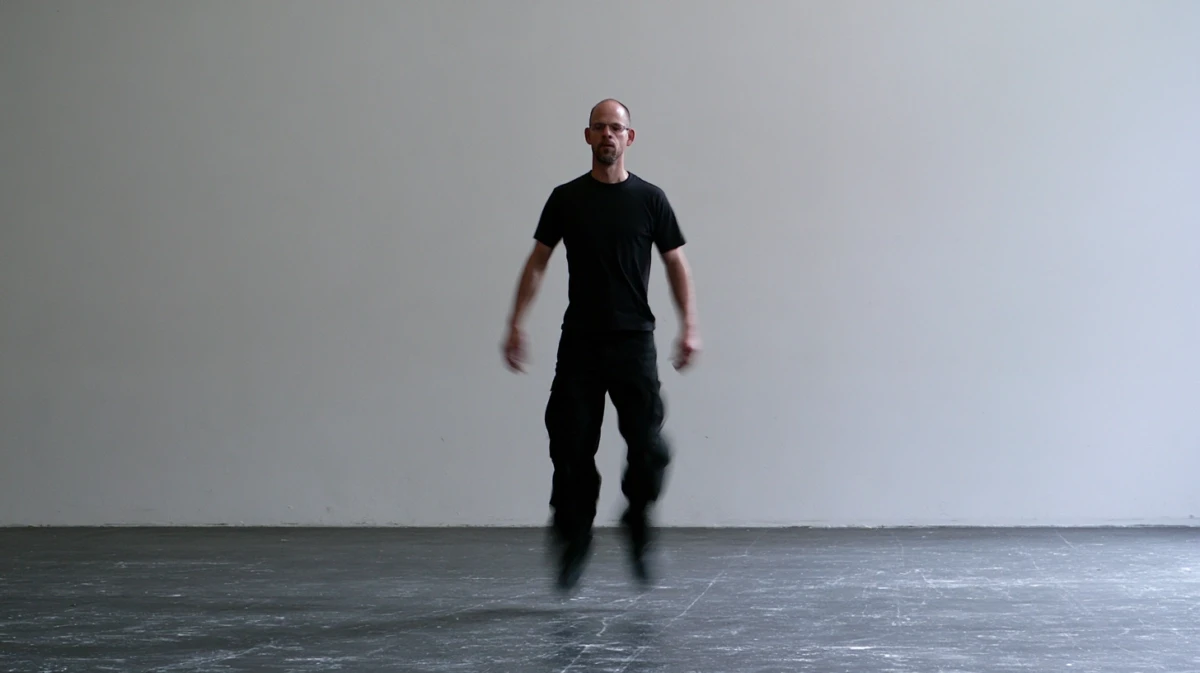
Flat, heavy, or numb is a different problem, and vigorous shaking often bounces off it. Smaller inputs come first: slow rocking, pressing the feet down until you feel the floor push back, a hummed exhale long enough to empty the lungs. Two or three minutes is plenty.
If you're on the edge, calm one moment and flooded the next, a smaller dose works better than a longer session. Under a minute of tension and release in the hands alone, seated, eyes open, then stop while it still feels manageable.
Two or three sessions a week works for most men practising alone, because the quiet days in between are when the settling happens. Daily somatic stress release tends to keep the body stirred up instead of letting anything integrate.
Release, Relaxation, and Regulation Do Three Different Jobs
A hot shower lowers arousal for twenty minutes. That's relaxation, and it doesn't touch what's stored underneath. Release is different work: it finishes an activation cycle that got interrupted somewhere along the way. Peter Levine built his framework around a simple field observation: a prey animal that survives a chase will tremble, shake, and breathe hard for a minute or two, then walk off clean. The charge leaves. Humans learned to hold still instead.
Hard training confuses this. Sprints, heavy sets, and a brutal conditioning finish all raise activation, which is the point, but the session usually ends with a stretch and a protein shake rather than a settling phase. Charge goes up, never comes down. That's why a man can train six days a week and still clench his jaw at every red light.
Settling looks like this: breathing shifts on its own, warmth or heaviness arrives in the legs, a sigh escapes without you deciding to sigh. The test for real somatic tension release is whether you have to work to keep it going. If you're driving the movement, you're performing. If it's driving you, something is discharging.
Regulation is the third job, and it's the long game: building baseline capacity through nervous system regulation so that ordinary pressure stops registering as threat. That belongs to daily practice, not to a release session.
Five Exercises for a Body That's Wired and Braced
Tremoring needs the most detail of the five, since it's usually botched by too little leg fatigue and too much steering.
Neurogenic tremoring (TRE)
Most TRE exercises circulating online skip straight to the floor position, which is why nothing happens for the people who try them. The legs have to be genuinely tired before the mechanism engages.
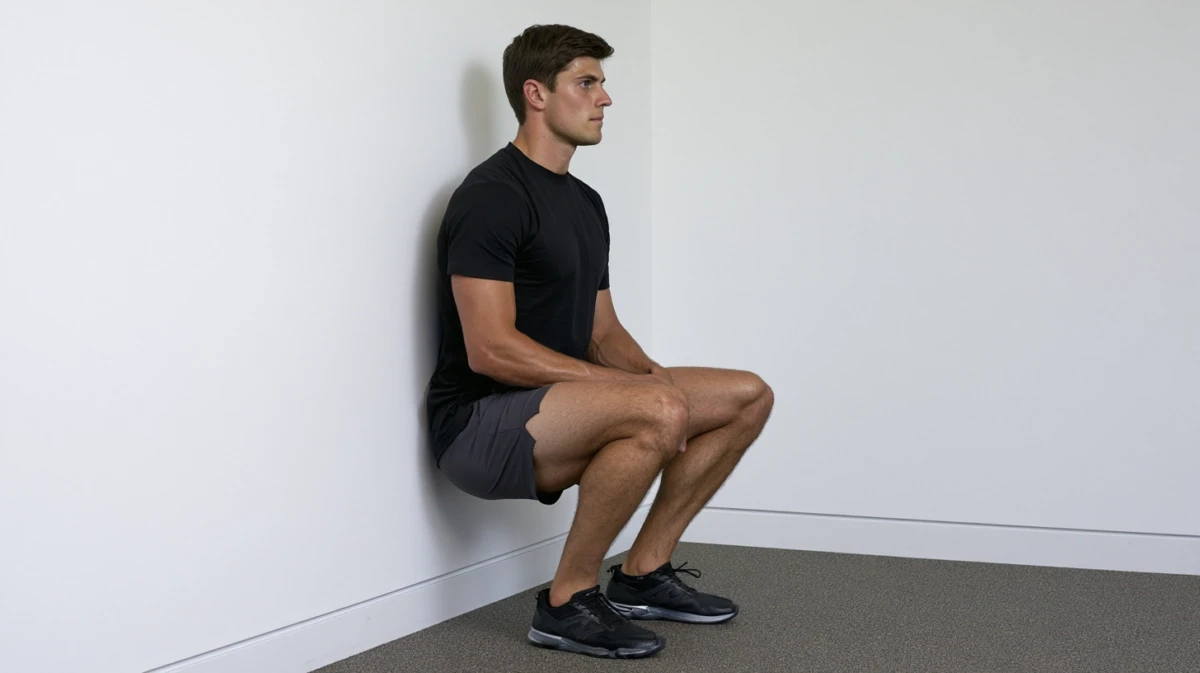
Fatigue: hold a wall sit until the thighs burn and start to quiver, then stand and let the upper body hang forward for 30 seconds.
Support: lie on your back, knees bent, soles of the feet together and knees dropped wide, so the inner thighs carry no load.
Wait: tremor usually begins as a fine flutter just above the knees and travels up into the pelvis.
Let it run five to ten minutes on a first session. Don't amplify it, don't hold the position rigid, and don't chase it if the legs go quiet. It either starts on its own or it doesn't, and forcing it produces strain rather than discharge. End it on purpose: straighten the legs, put the feet flat on the floor, and lie still until everything goes quiet.
Two minutes of shaking, no setup
This is the version for when you have a gap between two obligations and the whole fatigue sequence feels like too much production. Stand with soft knees, bounce from the heels, and let the arms, jaw, and shoulders go slack for one to two minutes. Heat in the hands and a breath that drops lower without you managing it are the usual signs. When that deeper breath arrives, stop. Past that point it's just cardio.
Tension and release from jaw to feet
Squeeze at roughly half effort, hold a few seconds, then let go and do nothing for twice as long before moving on. The rest phase is the working part, so keep the attention on the drop rather than the squeeze. Jaw, shoulders, hands, belly, glutes, calves, feet: around eight minutes, seated or lying. Cramping means the effort was too high.
An isometric hold when there's no floor space
Press both palms hard into a doorframe, or hold a wall sit, for 45 to 90 seconds, then step away and stand still. The tremble that arrives in the legs afterwards is the point, and it fades within a minute.
Hard effort, then deliberate stillness
Stairs, burpees, a short sprint: something that leaves you breathing hard. Then lie down for five minutes with the phone somewhere else. Sighs that arrive unbidden, twitching around the hips, a shift in temperature. That's the settling phase, and it's the part that disappears when you head straight for the shower.
When the System Is Shut Down: Smaller Inputs That Restore Signal
A big input on a flat day reads as one more thing to brace against, and the body drops further out instead of coming back online. When you feel heavy, blank, or slightly unreal rather than wired, the useful inputs are small enough that you have to pay attention to notice them working.
Orienting with the eyes open. Sit up, let your head turn slowly, and look at actual objects: a door frame, a lamp, the edge of a window. Don't scan. Rest on one thing until something in you registers it as "seen," then move on. Roughly a minute or two. A swallow, a yawn, or a slight softening at the back of the neck is the response you're after.
Pressure works on the same principle: press both feet flat into the floor and both palms into your thighs, firm but not straining, for five or six slow breaths. The point is contact, not effort. Sensation returning to cold hands or feet counts as a full result here.
Movement can go smaller still, so roll one shoulder or turn the head a few degrees, right at the edge of what you can actually feel. Somatic tension release at this end of the scale looks almost like nothing from outside. If a movement is too big to track internally, halve it.
Sound on the exhale. Hum, or let out a low audible tone, for four or five breaths. Vocal cord vibration gives the system a signal it can't ignore, and it needs no volume at all, which makes it one of the simplest ways of stimulating the vagus nerve from the inside.
The deliberate sigh. Two short inhales through the nose, then a long, audible exhale out of the mouth. Three or four rounds. The sigh is the body's own release valve, and mild restlessness afterwards is a good sign, not a problem.
If breath keeps being the input that shifts things most reliably for you, a full body-led breathwork practice is a natural next layer on top of these single-round sighs.
Small signs are the ceiling here: a spontaneous deeper breath means stop. If your flat days alternate with sharp anxious spikes, work aimed at calming anxiety is the better place to start.
Troubleshooting: Nothing Happens, Too Much Happens, and the Day After
Most "nothing happened" reports come down to the legs not being tired enough before the shaking phase. Fatigue is what makes the tremor mechanism available. If you skipped or rushed that part, add another round of the wall-sit position before anything else. Second most common cause: watching for a result. A body under observation stays braced. Lie there with your eyes closed and let your attention drift to something dull, like the weight of your heels.
If you've fixed the fatigue and still get nothing after two or three attempts, try a shorter dose more often instead. Some systems respond to three minutes twice a week better than fifteen minutes once.
When more surfaces than you wanted
Stop the exercise. Not later, now. Then in this order: both feet flat on the floor, eyes open, name five objects in the room out loud, exhale longer than you inhale for a minute, then stand and walk somewhere else. The whole return takes a couple of minutes.

Stopping early is a skill, not a failed session. A man who can end a practice while it still feels manageable has more control than one who rides it out and needs the rest of the evening to recover.
The Day After: Fatigue, Flat Mood, and Halving the Dose
Fatigue, a flat mood, or emotion arriving without any story attached is a common pattern 12 to 24 hours later. It usually settles on its own. That week, halve the dose and add nothing new. Pushing through is what turns a manageable aftereffect into a week of avoiding the practice entirely.
Where solo work stops being the right container
Significant trauma history, dissociation, panic responses, or a body that reacts hard to very small doses all point toward working with a somatic or TRE-trained practitioner. Some nervous systems need another person in the room tracking what you can't track yourself, and careful self-dosing doesn't substitute for that.
For everyone else, structure is the thing that keeps the practice alive between sessions. That can be a written log, the free five-day breathwork challenge, or the Grounding Ritual Kit if you want the settling-afterward part handled for you. None of it is required. A floor, a chair, and a timer cover the actual work.
Common Questions About Somatic Release Work
How long does it take before somatic release exercises make a difference?
Most people notice a shift within a single session, usually a warmer face, looser jaw, or slower breathing. Whether that shift holds between sessions is a different question, and that usually takes two to three weeks of short, regular practice rather than one long attempt.
Can you do somatic release exercises before bed?
Evening works well for slow, downshifting work like a body scan or gentle rocking. Tremoring and other activating practices sit better earlier in the day, since some people feel alert rather than sleepy for an hour or two afterwards.
Can you do tremoring exercises with a lower back or knee problem?
Tremoring is often done lying down with feet on the floor, which takes most load off the knees, but the fatigue positions that precede it usually don't suit an acute injury. Skip the loading phase and start from breath and small pelvic movement instead.
Do you need to feel emotional or cry for somatic release to have worked?
Tears aren't the marker. A change in breathing depth, temperature, or how much your shoulders sit down toward your ribs counts just as much, and chasing an emotional response usually pushes people past the point where they should have stopped.
5-Day Breathwork Challenge
Five short sessions to build the daily regulation habit — the structured practice that keeps the settling-afterward phase consistent.
The Grounding Ritual Kit
A 7-day structured nervous system practice — breathwork, grounding and stillness built into a daily system with the settling phase built in.