Shadow Work Therapy: How the Two Approaches Actually Differ

Shadow work is self-directed pattern recognition: you sit with a journal prompt, notice what triggers you, trace it back to a buried pattern, and reframe it through writing. Therapy puts a trained professional in the room who can regulate your nervous system in real time, spot defenses you can't see yourself, and diagnose conditions that journaling alone won't resolve. The two overlap in uncovering hidden emotional patterns, but they diverge sharply in scope and safety net. Most men can start with structured self-work as a complement to shadow work for men, though persistent triggers, trauma responses, or emotional shutdown usually signal that professional support is the practical next step.
Core Differences: How Each Approach Handles Difficult Emotions
Shadow work vs therapy comes down to what happens when difficult material surfaces. With a journal prompt, you notice a reaction, sit with it, and try to write your way toward the root. If anger spikes mid-sentence, you're alone with it. You can pause, breathe, come back tomorrow. That's a genuine strength for building self-awareness over time, but it also means nobody catches the defense mechanism you don't realize you're running. You might rationalize the anger away, close the notebook, and call it progress.
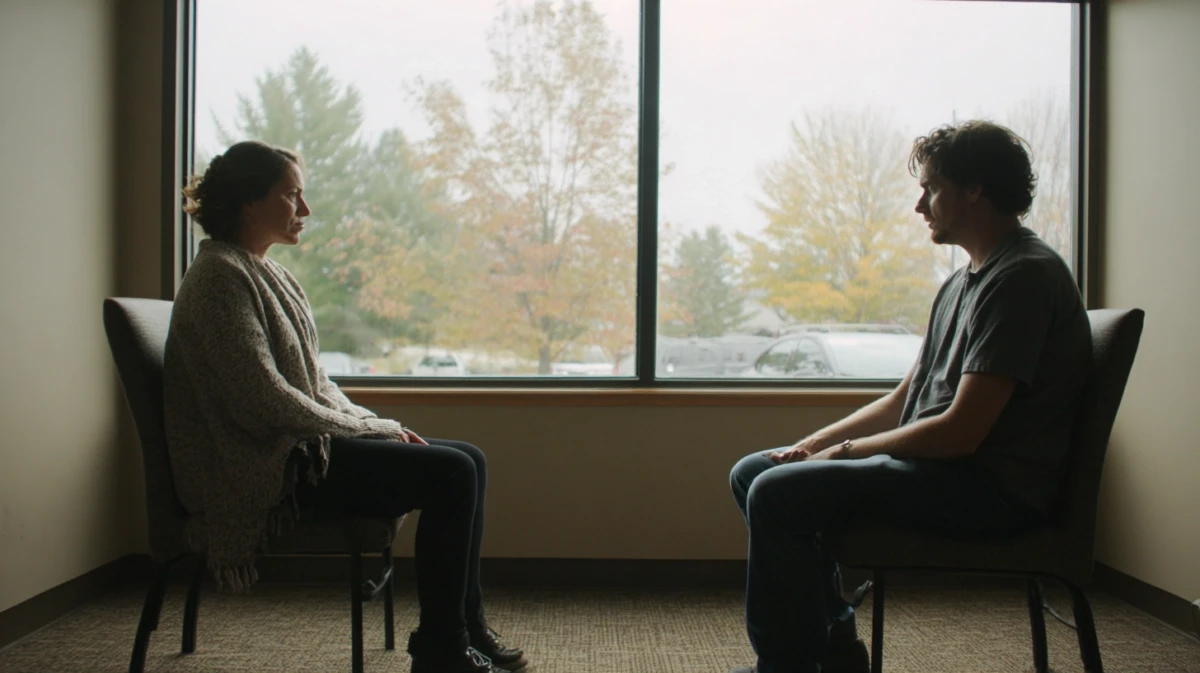
In a therapy session, escalation looks different. A trained therapist notices the shift in your voice or posture before you do. They can slow the conversation, help your nervous system settle through co-regulation (their calm presence literally affects your physiology), and then guide you back into the material from a more grounded place. They also see patterns across sessions that a journal can't track for you: the way you deflect with humor every time vulnerability gets close, or how you frame every conflict as someone else's fault.
The sharpest contrast shows up around blind spots. Self-directed work depends on your own honesty, which is limited by the very defenses you're trying to uncover. A therapist works with transference (the way you project old relational patterns onto them) as live diagnostic material. That's not something you can replicate with a pen and a prompt.
Both approaches serve a purpose. Daily reflection builds self-awareness over time, while a therapist can catch the blind spots you miss on your own.
There is also a stark practical reality: therapy requires financial investment, scheduling, and finding the right practitioner, which can take months. Shadow work is immediate and virtually free, making it a highly accessible starting point while you navigate the logistical hurdles of professional care.
Where Shadow Work and Therapy Cover the Same Ground
Trigger awareness sits at the center of both practices. A journal prompt asking "what did that reaction protect?" and a therapist asking the same question during a session produce the same demand: stop deflecting and look at the pattern underneath. While the methods look different, they both train your ability to face uncomfortable emotions.
Pattern recognition works similarly. Whether you're tracking recurring conflicts in a field journal or mapping them across sessions with a clinician, the outcome is a growing catalog of behaviors you used to run on autopilot. Both approaches require you to tolerate discomfort long enough to see what's actually driving the loop, which is why emotional honesty functions as shared currency between them.
Reduced shame follows from the same root in both cases. Naming a disowned trait on paper or voicing it to a trained listener breaks the same silence. The relief comes not from the format but from the act of acknowledgment itself.
They target the same avoidance patterns through different entry points, making them complementary rather than competing systems.
The Line Self-Directed Work Cannot Cross
While a journal can surface a pattern, it doesn't diagnose whether that pattern stems from a trauma response, clinical depression, or a long-standing personality structure. That distinction matters because the next step looks completely different depending on the answer.

Men often discover this boundary when shadow work exercises beyond journaling trigger physical responses or emotional intensity that writing alone cannot contain.
Consider the moment a writing prompt pulls up a memory and your body locks: chest tight, vision narrowing, thoughts gone blank. The notebook sits open, but there's no one to notice your breathing has changed or to guide you back into a regulated state before the window closes. A trained therapist reads those signals in real time and adjusts pace, question, or technique within seconds. Self-directed work has no feedback loop for nervous system overwhelm.
Diagnosis versus pattern recognition
Months of flat mood, broken sleep, and disappearing motivation can look like "a rough patch" from the inside. A psychologist differentiates between situational burnout and a depressive episode that responds to specific treatment. Journaling about low energy won't produce that clinical distinction, and acting on the wrong assumption costs time.
The relationship as data
Therapy uses transference, the way you relate to the therapist, as live material. If you default to performing competence in front of authority figures, that pattern shows up in session and can be examined on the spot. No amount of solo reflection replicates a relationship you can study while you're inside it.
Structured trauma protocols
Techniques like EMDR or somatic experiencing follow clinical protocols built around controlled exposure and titrated intensity. They require someone trained to hold the container when the material exceeds what conscious reflection can manage. Attempting that level of processing alone risks reinforcing the shutdown rather than resolving it.
These differences highlight that the two approaches operate at different depths, and knowing your own limits is a crucial part of the process.
When Self-Directed Shadow Work Is Enough
A journal, a few honest prompts, and consistent breathwork carry most men further than they expect, provided certain conditions hold. The clearest sign that self-directed shadow work is doing its job: you can sit with an uncomfortable emotion long enough to name it without your body shutting down the process. Dissociation, blanking out mid-sentence, or a sudden urge to close the notebook and "deal with it later" every single session points somewhere else. But if you notice the discomfort, stay with it, and still function normally afterward, the container you've built for yourself is holding.
Noticing small behavioral changes is more important than expecting rapid breakthroughs. When journaling surfaces a pattern you recognize from two or three different situations, and you catch yourself responding differently in at least one of them over the following weeks, that's real traction. The change is rarely dramatic. It looks like pausing before a defensive reply, or noticing jealousy without constructing a story around it. Triggers don't vanish, but their grip loosens. If a situation that used to ruin your evening now costs you ten uncomfortable minutes, self-directed work is earning its keep.
Starting with a structured approach to shadow work helps establish the consistency needed to track these shifts across weeks rather than expecting immediate breakthroughs.
One distinction worth watching closely: productive discomfort versus repetitive loops. Productive discomfort moves somewhere. You write about anger, and by the end of the entry you've connected it to something older, something specific. Loops feel busy but circular. The same grievance, the same framing, the same dead-end conclusion, session after session. When that pattern sets in, the tool hasn't failed, but it has reached its current ceiling.
If your solo practice is working well, adding professional support becomes an optional choice rather than an urgent necessity.
When Professional Support Becomes the Right Move
A journal prompt that used to produce honest writing now triggers a blank stare and a tight chest. That shift is one of the clearest signs self-directed shadow work has hit material it can't metabolize alone.

Several scenarios indicate that a therapist is the practical next step:
You dissociate during practice. Mid-journaling or breathwork, you notice gaps: lost time, sudden emotional flatness, or feeling like you're watching yourself from across the room. Dissociation is the nervous system pulling the emergency brake. No prompt or ritual can override that protective response safely without a trained person tracking what's happening in real time.
Trauma surfaces that you didn't go looking for. A shadow work prompt about anger at your father unlocks a memory you'd sealed off for decades. Trauma material that arrives uninvited needs containment a notebook can't hold. Protocols like somatic experiencing or EMDR exist because the body stores what the conscious mind locked away, and releasing it without guidance risks re-traumatization.
This scenario is particularly common for men working with father wound material, where decades of buried relational patterns can surface suddenly through seemingly simple prompts.
Months of consistent work change nothing. You journal daily, you name the pattern, you see the trigger coming. And you still repeat the same destructive cycle. Awareness without behavioral shift after sustained effort usually points to something structural: attachment wounds, developmental gaps, or undiagnosed conditions that pattern recognition alone won't resolve.
Physical symptoms arrive alongside the practice. Sleep fractures, appetite swings, or persistent tension that coincides with deeper shadow work sessions. The body is processing faster than your current tools can regulate.
In practice, men often mistake this somatic overload for 'doing the work correctly,' believing that intense suffering equals deep healing. Recognizing that physical dysregulation is a boundary to respect is a critical shift in mature self-development.
This confusion is especially dangerous when working with repressed anger, where the body's stored tension can escalate rapidly once the initial defenses crack.
Emotional numbness deepens instead of lifting. Shadow work should gradually increase your emotional range. If months of practice leave you feeling less, not more, the work may be reinforcing a protective shutdown rather than dissolving it.
These signals indicate that the self-directed work successfully located a deeper issue, which a therapist can now help you process.
How to Combine Shadow Work and Therapy Effectively
Bring your journal to sessions, not as a script, but as raw material. Flag entries where your reaction surprised you or where the same theme surfaced three times in a week. A therapist can spot the structural pattern underneath a trigger you've been circling in your notebook without resolution. That single connection often moves faster than six more journal entries on the same loop.
After a session, write down the one reframe or observation that landed hardest. Turn it into a prompt for the next week of self-directed work. If your therapist pointed out that your anger at a colleague mirrors an old dynamic with your father, sit with that specific link during your next journaling block. The goal is to let therapy sharpen the questions you ask yourself between sessions, not to wait passively until the next appointment.
The trap most people fall into: using journaling to rehearse what they'd say in therapy without ever actually saying it, or handing every uncomfortable feeling to the therapist and doing zero reflection between sessions. Both patterns hollow out the combination, as journaling shouldn't replace honesty in the room, and therapy requires self-directed follow-through to gain traction between appointments.
A structured shadow work journal like The Unspoken Man (€17) works as a self-directed complement to therapy, not a substitute. It gives the week between sessions a container for pattern tracking and honest reflection, so you arrive at your next appointment with something concrete rather than a vague sense that the week was "fine."
FAQ
Can shadow work replace therapy for trauma?
Shadow work can surface trauma patterns, but it lacks the clinical protocols (EMDR, somatic experiencing, structured exposure) needed to process traumatic memory safely. Treating it as a replacement risks re-traumatization without anyone trained to contain what comes up.
What type of therapist is best for shadow work?
Jungian analysts work most directly with shadow material, but depth-oriented psychotherapists, IFS practitioners, and psychodynamic therapists all engage with repressed patterns. The modality matters less than finding someone comfortable sitting with unconscious material rather than rushing to fix symptoms.
When interviewing potential therapists, ask directly how they handle projection and unconscious patterns. A practitioner who immediately steers the conversation back to simple behavioral tweaks or worksheets might not be the right fit for deep shadow integration.
Is shadow work dangerous without a therapist?
General self-reflection through journaling or trigger awareness carries low risk for most people. Danger increases when the practice consistently surfaces intense emotions, dissociation, or memories you can't regulate on your own. If you notice those responses, that's the signal to stop and get professional support.
How long should you do shadow work before seeing a therapist?
There's no fixed timeline. Some people journal for months and gain steady clarity. Others hit disorienting material within weeks. The deciding factor isn't duration but what the practice reveals: if patterns stay locked despite honest effort, or emotional intensity keeps escalating, the work has done its job by showing you where professional support starts.