Black Tourmaline Bracelet: How to Wear the Protection Stone

This article contains affiliate links. If you purchase through our links, we may earn a small commission at no extra cost to you.
A black tourmaline bracelet keeps the stone against your skin all day without you thinking about it. Wear it on your left wrist for a shielding effect or your right to push energy outward. Choose beads at least 10mm so the striations stay visible, and check for genuine tourmaline before you buy. For stacking, onyx builds composure while tiger's eye sharpens focus.
Bracelet vs. Pocket Carry: What Changes When Tourmaline Stays on Your Skin
Pocket carry gives you a deliberate, tactile interrupt. You reach into your pocket, grip the raw stone, feel its ridged surface, and that physical action pulls your attention back to the present moment. It works well during acute stress because the gesture itself becomes part of the reset.
A bracelet flips the mechanism. Contact is passive and continuous. You don't need to remember to reach for it, and you don't lose the stone at the bottom of a bag. The trade-off is sensory: smooth beads lack the rough texture that makes a pocket stone feel like a grounding tool in your hand. You gain consistency but lose that sharp tactile signal.
On convenience, the bracelet is generally the easier option. A pocket stone demands intention each time. That's a strength during a difficult conversation or a high-pressure moment, but it falls apart on an ordinary Tuesday when you simply forget the stone is there.
If you want background grounding throughout the day, the bracelet format delivers the consistent effect most people are after—part of why tourmaline appears frequently in practical crystals for men who prioritize function over ritual. If you need something to grab during a specific stress spike, keep a raw chunk in your jacket pocket. Both carry methods are valid. They just solve different problems.
How to Spot Genuine Black Tourmaline (and Avoid Dyed Fakes)
Genuine black tourmaline (schorl) scores 7 to 7.5 on the Mohs hardness scale, which means it scratches glass easily. If your bracelet beads feel lightweight like plastic or look uniformly glassy, you're probably holding dyed black glass, the most common fake on the market. Glass beads have a smooth, almost liquid sheen and zero surface texture. Real tourmaline sits heavier in the hand and shows a matte-to-slightly-glossy finish with tiny surface irregularities you can feel under your thumb.
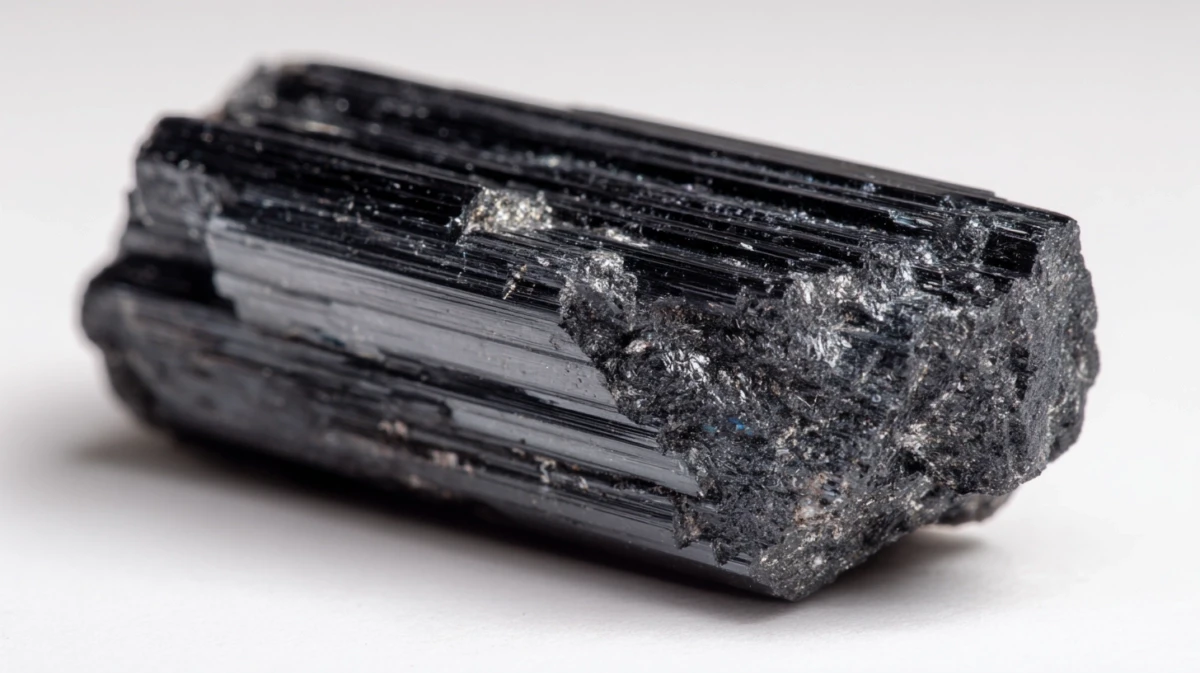
The second stone frequently sold as tourmaline is black obsidian. Obsidian is real volcanic glass, so it shares the glassy look but lacks the fine needle-like striations that run through genuine tourmaline. On beads 10 mm or larger, those striations become visible to the naked eye, especially under direct light angled across the surface. That's the practical reason to choose beads at least 10 mm: below that size, even authentic tourmaline looks featureless, and telling it apart from obsidian or glass gets much harder.
However, wearing 10 mm or 12 mm beads comes with a daily ergonomic cost if you work at a computer. The larger stones elevate your wrist off the desk and clack heavily against laptop palm rests, meaning you will likely need to take the bracelet off while typing.
A bracelet like the RTZN Black Tourmaline bracelet on Amazon uses beads large enough to show those natural inclusions and surface lines. It is worth checking the bead photos before ordering, since listings with perfectly uniform, mirror-finish beads almost always signal a dyed substitute.
One more tell: tourmaline is piezoelectric, meaning it generates a faint electric charge under pressure or heat. That property sits at the core of why crystal-healing traditions associate the stone with energetic shielding. No bracelet vendor can prove that claim clinically, but if the stone doesn't even have the right mineral composition, the traditional reasoning falls apart entirely.
Left Wrist, Right Wrist, or Does It Matter?
Crystal-healing tradition splits wrists into receptive and projective. The left wrist (for right-handed people) is considered the receptive side, the one that absorbs energy inward. The right is projective, pushing energy outward toward others.
In practice, that distinction maps to two different scenarios. If you're walking into a high-pressure office or a space that drains you, the left wrist is the traditional pick: the black tourmaline bracelet sits on your absorbing side, acting as a filter between external stress and your own state. If you're heading into a social situation where you need to hold a firm boundary or project composure, wearing it on the right wrist aligns with the idea of directing protective energy outward.
Neither placement is scientifically validated. This is a framework from energy-work traditions, not a medical guideline. Most people who wear a tourmaline bracelet daily settle on the wrist that feels more natural and forget about the theory entirely. That's a fine approach. If the framework resonates, match the wrist to the situation. If it doesn't, wear it where it's comfortable and stays out of the way during work.
Stacking Tourmaline with Other Stones: Two Combinations That Work
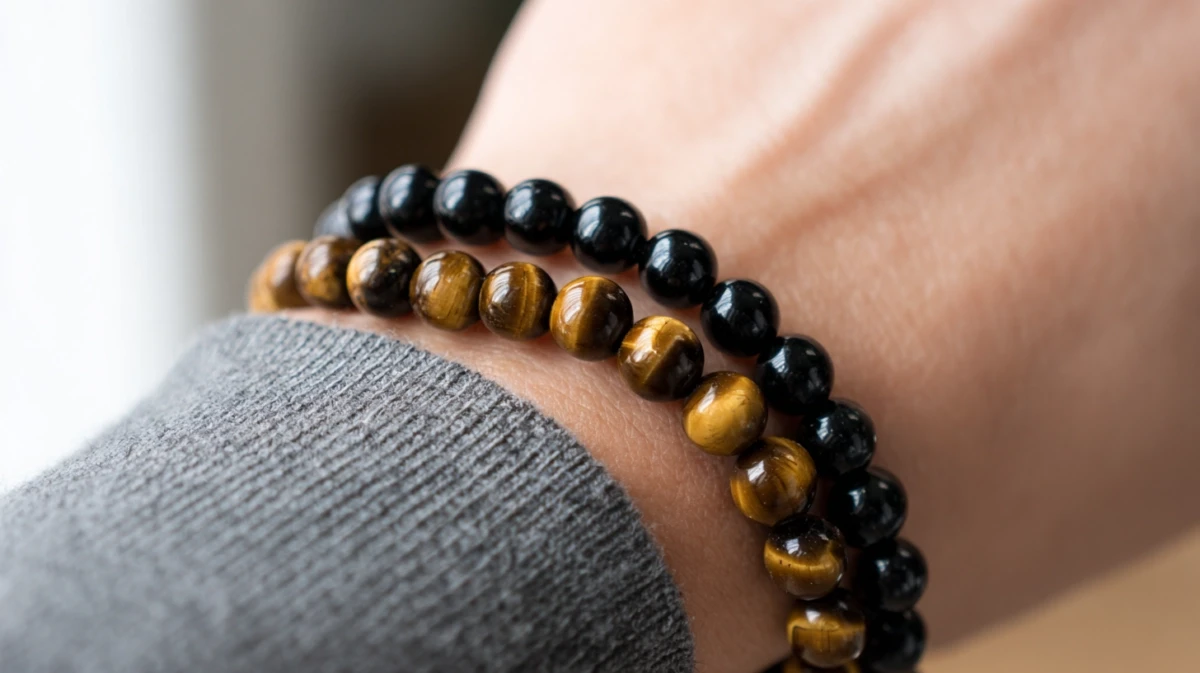
Tourmaline paired with black onyx is the combination that shows up most often in crystal-healing practice because both stones are linked to the Root Chakra, creating an effect practitioners describe as layered composure. Tourmaline filters incoming stress while onyx is traditionally associated with steady emotional control. Wear this pair on days loaded with meetings, conflict, or situations where you need to absorb pressure without reacting. The downside is that doubling up on grounding stones can feel energetically heavy if you already tend toward low energy or sluggishness.
Tourmaline and Tiger's Eye
Swap onyx for tiger's eye when the day calls for outward sharpness rather than quiet absorption. Tiger's eye is connected to the Solar Plexus Chakra, and in traditional stone work it's associated with decisiveness and mental clarity. The pairing shifts the effect from pure defense toward something more active: filtered input combined with sharper output. This stack suits mornings before a presentation, negotiation, or any block of focused creative work. It does lose some of the calm-under-fire quality the onyx pairing carries.
When One Bracelet Is Enough
A single tourmaline bracelet already covers the core grounding and shielding function. Stacking adds nuance, not necessity. If you're drawn to a different grounding stone altogether, hematite is worth comparing: it shares the Root Chakra connection but brings a heavier, more metallic energy that some wearers prefer for physical endurance over emotional filtering.
Raw Chunk or Smooth Bead: Picking the Right Bracelet Style
Raw-chunk tourmaline bracelets keep the stone's natural ridges and edges intact, which gives you a tactile interrupt on your wrist similar to rolling a loose stone between your fingers. A raw chunk like this one on Amazon works well as a pocket carry companion alongside a smooth bead bracelet. That texture is the main advantage unique to the raw format: you notice it constantly, and that friction works as a physical anchor during stressful moments. The cost is practical. Raw edges catch on shirt cuffs and jacket linings, and over months of daily wear the thinner points chip or flake. Expect to replace a raw-chunk bracelet sooner than a polished one.
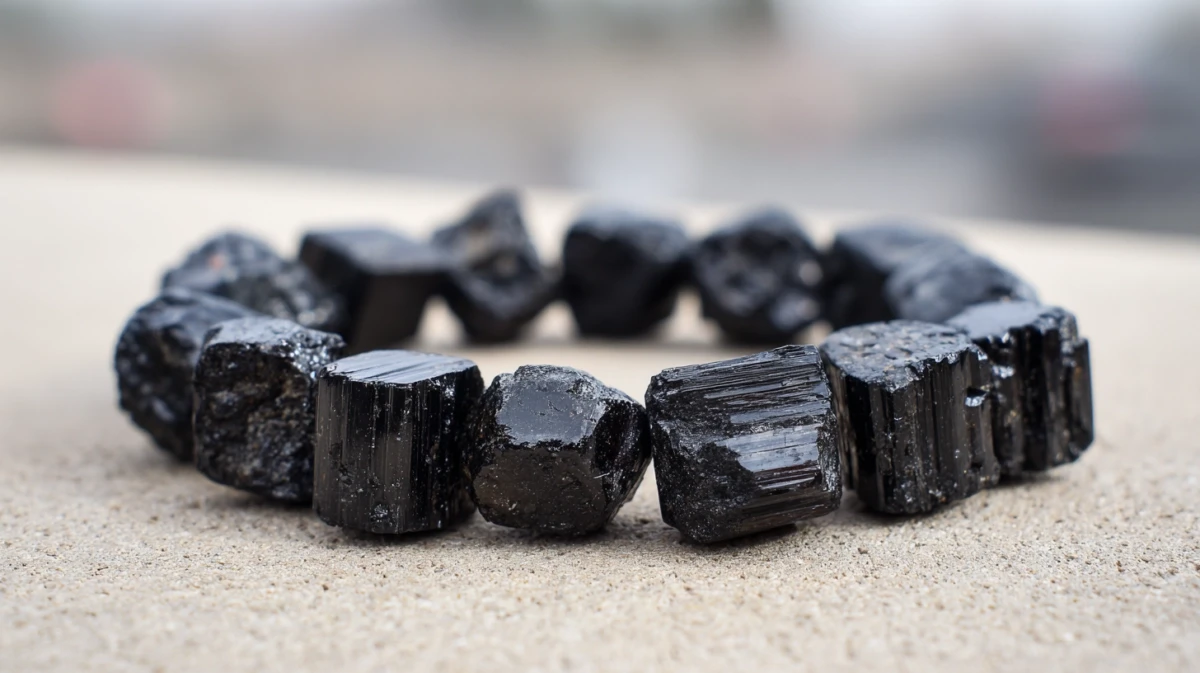
Smooth-bead bracelets sit flat, slide under sleeves without snagging, and hold up longer because rounded surfaces distribute impact evenly. The trade-off is that you stop feeling the bracelet within minutes of putting it on. Skin contact remains, but the conscious reminder disappears.
If you wear tourmaline primarily as a background grounding presence throughout the workday, smooth beads are the more durable choice. If you want that repeated sensory nudge, especially during high-pressure windows, raw chunk delivers it, but treat the bracelet as a consumable you'll rotate out every few months.
Care, Cleaning, and When to Replace Your Bracelet
Because of its natural hardness, the stone itself handles daily wear and brief water exposure without issue. The weak link is the elastic cord. Occasional hand-washing won't destroy it, but repeated soaking in chlorinated pools or hot showers breaks down the elastic faster than most people expect. Remove the bracelet before swimming or showering, and it'll outlast several cords' worth of re-stringing.
Within crystal-healing tradition, two common energetic cleansing methods are running the bracelet through sage smoke or placing it on a selenite plate overnight. Neither carries scientific backing, but practitioners typically repeat them weekly or after particularly draining situations.
Avoid the popular advice to cleanse your bracelet in a bowl of salt water. While raw tourmaline can survive salt, the saline solution rapidly degrades the elastic core and will corrode any metal spacer beads your bracelet might have, leading to a sudden snap within weeks.
Replace the bracelet when the cord shows visible fraying, when a bead cracks, or when raw-chunk surfaces lose their ridged texture and feel glassy smooth. That last sign matters most for raw bracelets, since the tactile quality is the whole point. A smooth-bead version lasts longer before it needs swapping, but even polished tourmaline dulls over time if worn against metal watchbands or stacked tightly against harder stones like quartz.
FAQ
Should I wear black tourmaline on my left or right wrist?
Left wrist is the more common choice in crystal healing traditions, based on the idea that the left side receives energy and the right side projects it. Practically, most people wear it on their non-dominant hand so the bracelet stays out of the way during tasks.
Can I wear a black tourmaline bracelet every day?
Daily wear works fine for smooth-bead bracelets, which are hard enough to handle regular contact well. Pull it off before swimming, showering, or heavy lifting to protect the cord and keep the stone from absorbing chemicals or repeated impact.
How do I know if my tourmaline bracelet is real?
Genuine black tourmaline feels noticeably heavier than plastic or dyed glass, and raw pieces show fine vertical striations along the surface. If a bead looks perfectly uniform, glossy, and completely flawless under light, it's likely dyed agate or resin rather than actual tourmaline.
Does black tourmaline bracelet benefit fade over time?
The stone itself doesn't degrade, but physical wear changes how it interacts with your skin. A raw-chunk bracelet that has gone glassy smooth no longer delivers the same tactile feedback, and a cracked bead can snag or irritate. Swap pieces out when visible wear shifts the experience.
Can I sleep with a black tourmaline bracelet on?
Sleeping with it on is unlikely to damage a smooth-bead bracelet, but the cord wears faster from nightly friction against sheets. If you notice the elastic stretching or beads shifting position in the morning, take it off at night and keep it on a bedside surface instead.
Crystals for Men: The No-Nonsense Field Guide
If you want the full breakdown — the science, all ten stones, a daily carry practice, and a quiz that tells you exactly which stone to start with — the field guide has everything in one place.