Black Obsidian Meaning: The Stone That Shows You What You've Been Avoiding
This article contains affiliate links. If you purchase through our links, we may earn a small commission at no extra cost to you.
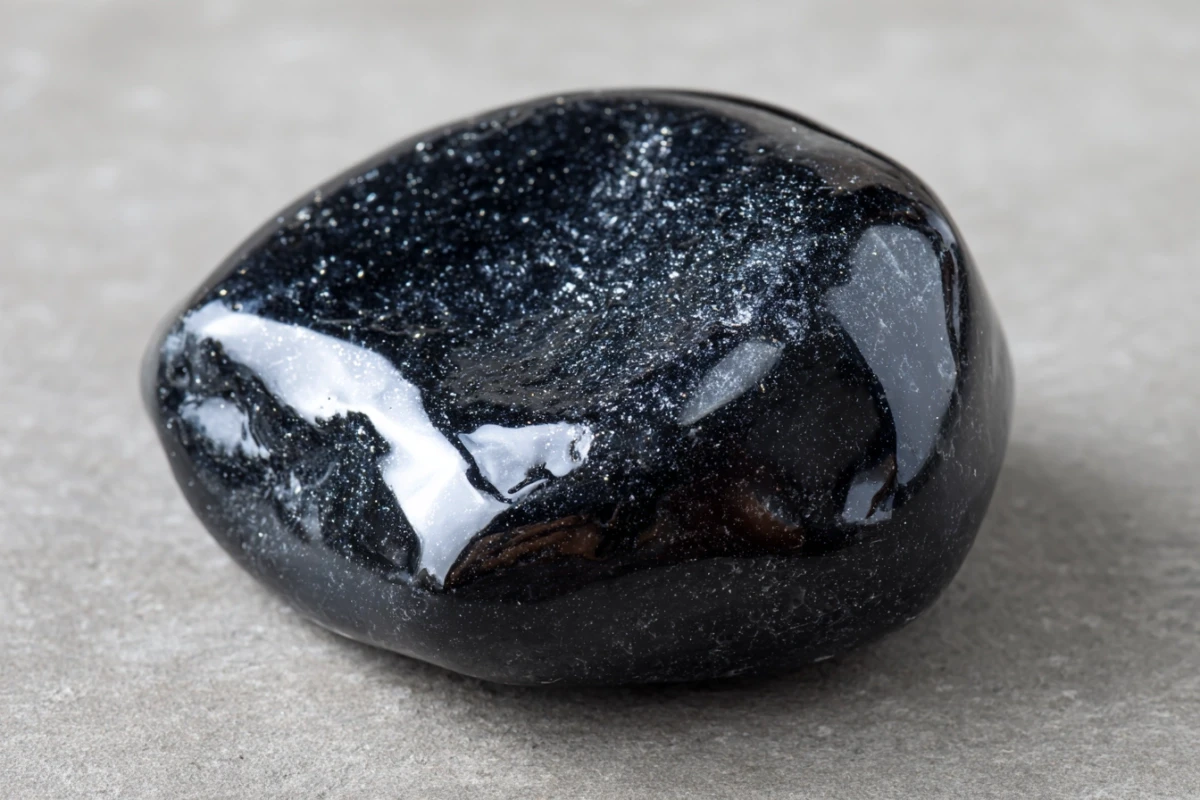
Black obsidian meaning comes down to one thing: forced honesty. It's volcanic glass, not a crystal, formed when silica-rich lava cools so fast that no crystalline structure has time to develop. That amorphous quality gives it a mirror-like surface that cultures across the world have used for scrying and self-examination. Where most stones in the crystals space get wrapped in vague protective language, black obsidian's reputation sits squarely on confrontation: surfacing the patterns, reactions, and avoidances you'd rather not look at.
What Black Obsidian Actually Is (Volcanic Glass, Not a Crystal)
Obsidian forms when felsic lava hits air or water and solidifies within minutes. The cooling happens too rapidly for silicon and oxygen atoms to arrange into a repeating lattice, which is why geologists classify it as mineraloid glass rather than a mineral. The vast majority of its composition is silica, with traces of iron and magnesium giving it that deep black color. You'll find deposits wherever volcanic activity has occurred: Mexico, Japan, parts of the western United States, Iceland, Turkey, and South America among the most commonly sourced locations.
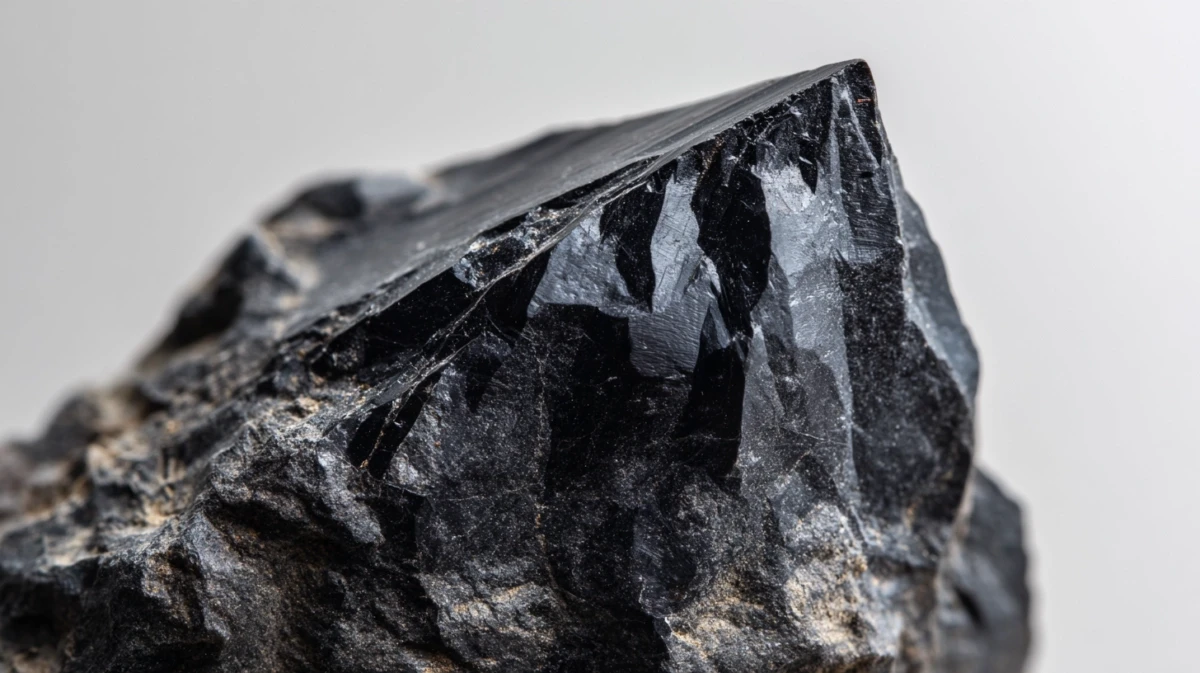
It sits at 5 to 5.5 on the Mohs scale, hard enough to take a polish but brittle enough to chip on a hard drop. Its conchoidal fracture pattern produces edges sharper than surgical steel, which is why Mesoamerican civilizations shaped it into blades, arrowheads, and sacrificial knives. Aztec priests used polished obsidian discs as mirrors for divination. That same fracture property is what makes obsidian jewelry better suited to earrings or pendants than rings, where daily impact would eventually crack it.
Several varieties exist beyond standard black: snowflake, mahogany, rainbow, and golden sheen obsidian each carry distinct inclusions or light effects, though standard black remains the baseline.
The Core Meaning of Black Obsidian: Confrontation Over Comfort
Most stones associated with emotional work aim to soothe. Amethyst calms. Rose quartz softens. Black obsidian does neither. Its meaning across practitioner traditions centers on one function: forcing you to look at what you've been avoiding. That's why it attracts people already doing inner work and repels people who want comfort from their crystals.
Protection Through Exposure, Not Shielding
Black obsidian is traditionally called a protective stone, but the protection works differently than most people expect. Where black tourmaline is said to block incoming negativity, obsidian strips away the illusions you've built around yourself. The protection works by removing blind spots rather than building a defensive barrier. Practitioners describe it as a mirror turned inward: it doesn't guard you from external threats so much as it exposes the internal patterns that keep you vulnerable in the first place. That distinction matters. If you're reaching for obsidian hoping it'll make you feel safe, you're picking the wrong stone.
Root Chakra and What Grounding Actually Means Here
The root chakra association shows up in nearly every tradition that works with black obsidian. Stripped of the esoteric language, root chakra work translates to physical stability and present-moment awareness. Obsidian's grounding effect is described less like calm and more like weight. Practitioners report feeling heavier, more anchored, sometimes uncomfortably still. That stillness is the point. It pulls scattered emotional energy downward and compresses it into something you can actually examine instead of something that runs in the background and drives decisions you don't understand.
The Uncomfortable Edge
Where obsidian diverges from generic "healing crystal" territory is in the discomfort. Experienced practitioners often recommend against using it during periods of acute emotional crisis. The stone is said to surface buried material fast, sometimes faster than you're ready to process. That's a real limitation. Beginners who grab obsidian because it looks dramatic sometimes find themselves sitting with feelings they weren't prepared for and don't have a framework to work through. A structured journaling or breathwork practice alongside the stone makes the confrontation productive rather than destabilizing.
Across traditions, obsidian functions to reveal the wound rather than soothe it.
How Black Obsidian Works as a Shadow Work Tool
Aztec priests used polished obsidian mirrors for scrying centuries before anyone called it "shadow work." The practice had a simple logic: stare into a dark, reflective surface long enough and your mind starts projecting what it normally suppresses. That same principle carries into how people use black obsidian today, minus the ritual priesthood.

Carrying a palm stone during a difficult week
The lowest-commitment approach is keeping a polished obsidian palm stone in your pocket during a period when you know something is off but can't name it. The stone itself doesn't do the work. What it does is create a physical interruption: every time your hand touches it, you're reminded that you chose to pay attention this week. People who carry obsidian during conflict-heavy stretches at work or strained family visits often report that the patterns they've been running from become harder to ignore. The stone functions as a tactile anchor for noticing, not fixing.
Holding obsidian during a journaling session
A step up in intensity. Place a palm stone or small sphere on the table or hold it in your non-writing hand while journaling. The practice here ties directly to confrontation: you're sitting down with the explicit intention of writing what you'd rather skip. The weight and coldness of the stone ground your attention in the body while your pen moves toward uncomfortable territory. This pairs well with structured shadow work prompts, where the goal is naming avoidance patterns rather than producing insight. The stone doesn't generate the honesty. It anchors you physically so you're less likely to drift into comfortable, surface-level entries.
Using a polished sphere or mirror as a focus point
This is the practice with the deepest historical roots. Obsidian scrying mirrors date back to Mesoamerican divination traditions, and the technique translates into modern inner work as a focused meditation object. For this practice, a 60mm polished sphere works well — this obsidian sphere on Amazon comes with a wooden stand and is hand polished without dyes or chemicals. Sit with a polished obsidian sphere at arm's length, soften your gaze, and let your mind surface whatever it surfaces. No guided meditation, no mantra. The reflective black surface acts as a screen for projection. What comes up is typically what you've been avoiding, which is exactly the point. This practice demands more time and stillness than pocket carry, and it can feel genuinely uncomfortable. If you're already doing breathwork or structured journaling, adding a five-minute obsidian focus session before writing sharpens the material that comes out on the page.
For this to work effectively, lighting is critical. Practitioners typically use a single candle placed behind or beside the sphere, keeping the room otherwise dark so the surface reflects ambiguous shadows rather than a crisp, distracting image of your own face.
Across all three approaches, obsidian keeps your attention locked on whatever you'd rather look away from. Because it surfaces difficult material, pairing it with a structured container like journaling or breathwork is highly recommended.
Black Obsidian vs. Black Tourmaline: Different Jobs for Different Stages
Black tourmaline is a crystalline mineral, a boron silicate that forms slowly underground. Black obsidian is volcanic glass that cooled in seconds. That difference in origin maps directly onto how each stone functions in practice, with tourmaline acting as a boundary and obsidian acting as an exposer.
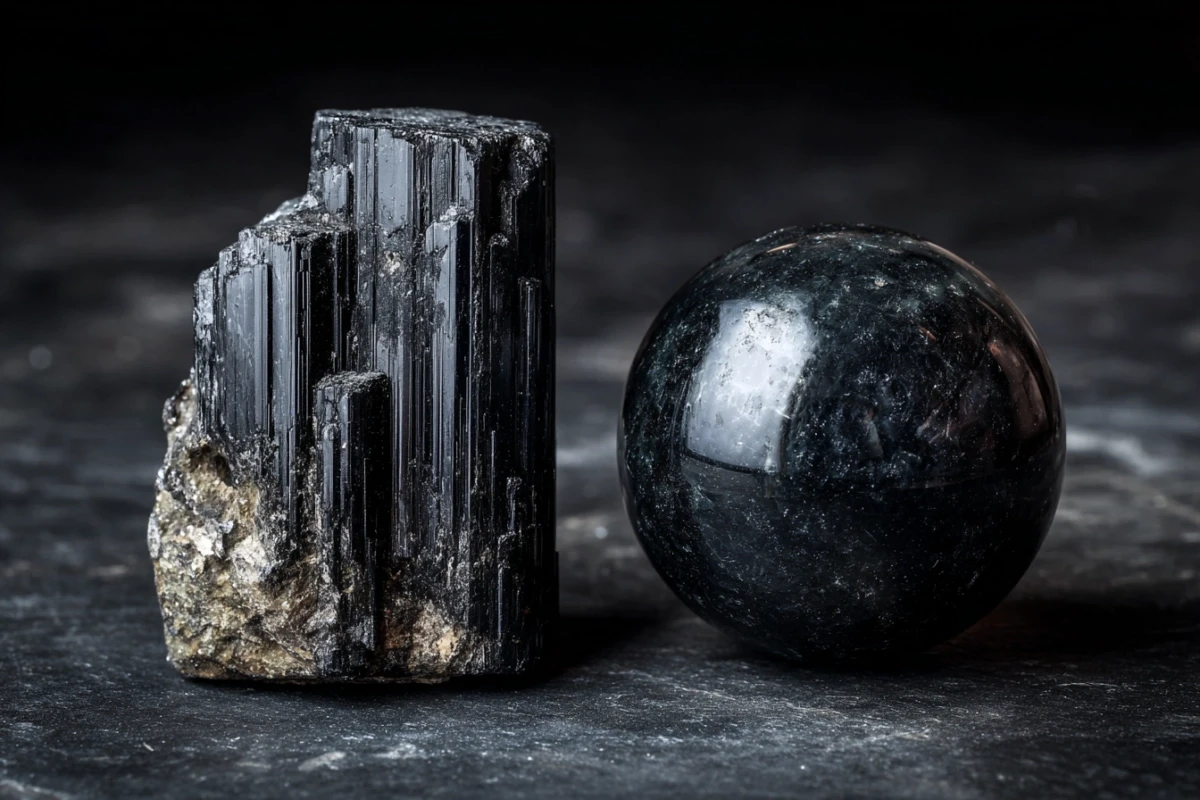
The confusion between these two stones comes up constantly because they look similar on a shelf and both get labeled "protective." But the protection works in opposite directions. Tourmaline acts as a boundary stone. It deflects external noise, other people's emotional weight, environments that drain you. Obsidian turns the lens inward and exposes what you've been carrying without realizing it. Calling both "protection stones" is like calling a lock and a mirror the same tool because they both hang on a door.
smoky quartz sits between these two. It's a slow-release grounding stone, translucent brown-grey quartz that absorbs tension gradually without the sharp confrontational edge of obsidian or the hard perimeter of tourmaline.
Black Obsidian | Black Tourmaline | Smoky Quartz | |
|---|---|---|---|
Primary function | Exposes hidden patterns | Shields against external drain | Gradual emotional release |
Best stage | Already doing inner work | Feeling overwhelmed or porous | Starting out, building stability |
Origin | Volcanic glass (amorphous) | Crystalline mineral | Crystalline quartz |
Intensity | High, can surface material fast | Moderate, stabilizing | Low to moderate, gentle |
Pairs with inner work | Journaling, shadow work | Boundary-setting, recovery | General grounding, daily carry |
If you're already journaling or doing breathwork and want to accelerate what surfaces, obsidian is the sharper instrument. If you feel overwhelmed, emotionally porous, or drained by the people around you, start with tourmaline. It gives you the container first. Smoky quartz works when you want grounding without intensity, a stone you can carry daily without it demanding anything from you.
One common mistake: grabbing obsidian when what you actually need is tourmaline's boundary work. Obsidian strips away defenses. If you haven't built any yet, that's not acceleration, it's exposure without structure.
When Black Obsidian Fits and When to Start Somewhere Else
Someone who already journals, sits with discomfort regularly, or can name at least one pattern they've been avoiding will get the most from black obsidian. The stone's confrontational quality lands differently when there's an existing container for what surfaces.
Signs It Fits Right Now
You've done some form of inner work before and you're not afraid of what you might find, just tired of circling the same blind spot. Specifically:
You can describe a recurring pattern you suspect runs deeper than you've admitted. Maybe it's a relationship dynamic or a way you shut down emotionally at predictable moments. You don't need the stone to "reveal" something from nothing. You need it to stop letting you look away from what you already half-know.
You have a daily practice that can hold intensity. Breathwork, journaling, meditation, even a structured morning routine where you sit with yourself for ten minutes. Obsidian without a container is like opening a pressure valve with no pipe attached.
You want acceleration, not comfort. The meaning of black obsidian centers on exposure, and that only works when you're actively choosing to see more clearly rather than seeking reassurance.
Signs to Start Somewhere Else
If you're brand new to any kind of self-examination, obsidian can feel like being handed a magnifying glass before you've learned to hold still. The confrontation it brings isn't dangerous, but without context it often just produces anxiety rather than insight. Smoky quartz grounds without forcing anything to the surface, making it a better daily carry while you build the habit of sitting with yourself.
If you're in an acute emotional crisis, grief, a breakup, or a period where you're barely holding things together, obsidian's role as a truth-forcer works against you. What you need is stabilization first. Amethyst calms the nervous system and creates space to process without pushing you deeper into material you can't yet sort through.
If what you're really after is calm or a sense of protection from external stress, that's tourmaline's job. Obsidian won't give you a shield. It'll show you why you feel unshielded.
The honest test: if you can name what you're avoiding and you want to stop avoiding it, obsidian fits. If you can't name it yet, or naming it right now feels like it might break something, start with a gentler stone and come back when you've built the floor.
Frequently Asked Questions About Black Obsidian
What does black obsidian actually do?
Black obsidian acts as a mirror for suppressed emotions and avoided truths, pulling buried patterns to the surface where you can actually work with them. In metaphysical practice, it grounds scattered energy through the root chakra while stripping away self-deception.
Is black obsidian good for beginners?
Smoky quartz or amethyst suit most beginners better. Black obsidian works best when you already have a daily practice or journaling habit that gives you somewhere to process what surfaces. Without that container, the intensity tends to scatter rather than clarify.
Can black obsidian be too intense?
It can feel overwhelming during acute emotional crisis or when you lack a structured outlet for what it stirs up. If you notice persistent agitation without resolution after working with it, step back to a gentler grounding stone and return when your practice feels more stable.
How do you cleanse and care for black obsidian?
Wipe it with a soft cloth and mild soapy water, then dry thoroughly. Avoid ultrasonic cleaners and harsh chemicals. Store it separately from harder stones since obsidian scratches easily at 5 to 5.5 on the Mohs scale.
What chakra is black obsidian connected to?
Black obsidian is associated with the root chakra at the base of the spine, which governs grounding, physical stability, and survival instincts. That root connection is why the stone tends to surface foundational fears rather than abstract emotional themes.
By Jonatan Rajala, Founder of Inner Kingdom. About the author →
Crystals for Men: The No-Nonsense Field Guide
If you want the full breakdown — the science, all ten stones, a daily carry practice, and a quiz that tells you exactly which stone to start with — the field guide has everything in one place.
The Unspoken Man
Black obsidian is the stone most closely tied to shadow work. If you're ready to go deeper into the patterns it surfaces, The Unspoken Man gives you the full framework.