Nervous System Regulation Techniques: Match the Method to the State
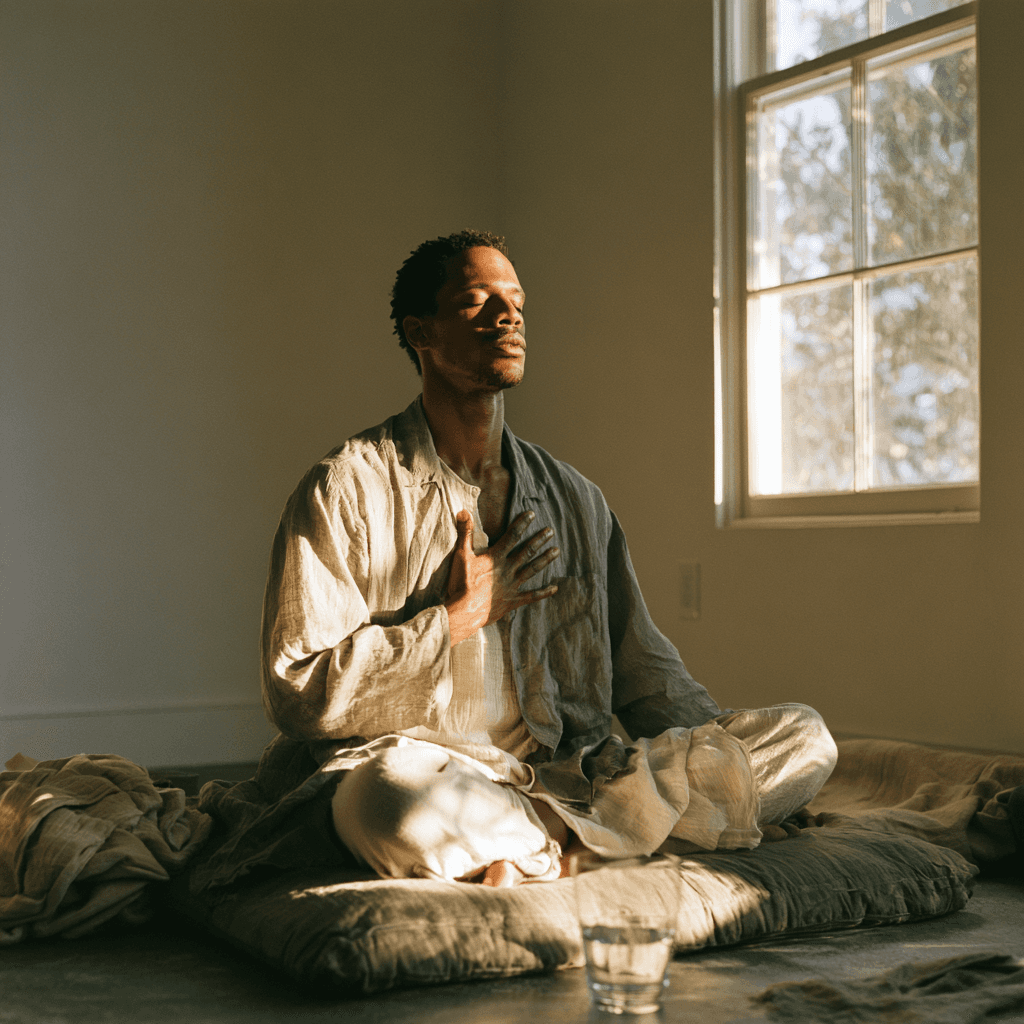
Pick the state before you pick the technique. A wired, racing-heart spike usually settles with a long exhale or one to two minutes of intense effort, such as running in place, taking the stairs, or wall sits and body squats. A numb, shut-down state needs small movement and physical pressure first, the nervous system reset article covers the full acute reset sequence. Chronic tension responds to short daily repetition instead of one long session. Most nervous system regulation techniques fail on mismatch, not on bad form.
Four states, four different nervous system regulation methods
Sorting yourself takes about 20 seconds. Put a hand on your chest, notice your breath, then check whether you feel too much or too little. Too much is activation. Too little is shutdown. Neither is the same problem, and the methods that suit one tend to make the other worse.
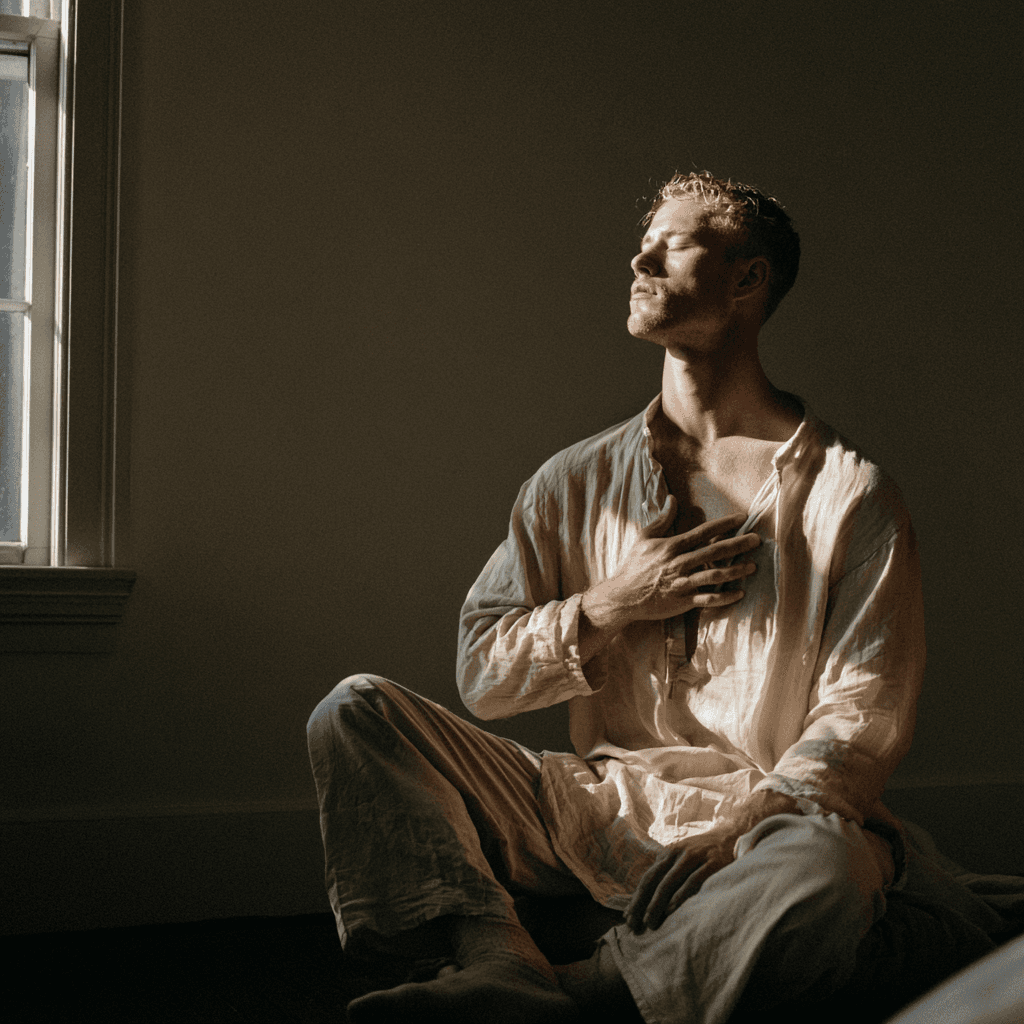
How these states fit together over time is the subject of the wider practical guide to regulation for men under pressure, which covers the mechanics these methods rest on.
State | What you notice | Where to start |
|---|---|---|
Acute spike | Racing heart, shallow breath, jaw locked, urge to act now | Longer exhale, or brief hard effort followed by stillness |
Shutdown or freeze | Numbness, heaviness, foggy distance from the room | Small movement and weight through the feet before any breathwork |
Chronic background stress | Low-grade tension that never fully drops, poor sleep, short fuse | Short daily practice, repeated, rather than one long session |
Building capacity | You regulate fine on quiet days but swing wired to flat under load | Weekly discharge work and deliberate practice between states |
Box breathing gets recommended for all four, and it's the weakest choice for an acute spike. Its symmetry keeps the inhale as long as the exhale, which does little when you're already keyed up.
Techniques to regulate your nervous system in 90 seconds, in public or alone
The physiological sigh takes about ten seconds and nobody at the table notices. Two inhales through the nose, the second one short and stacked on top of the first, then a slow exhale through the mouth until the lungs feel empty. Two or three rounds is usually enough to take the edge off a spike. It works seated, mid-meeting, with a laptop open in front of you.

For something slightly longer, extended-exhale breathing at four counts in and six out, run for two to three minutes, keeps the exhale doing the work. That is the pattern clinicians often guide clients through in sessions, because the longer exhale is what brings physiological arousal down. The asymmetry is what makes the difference.
The discreet physical option is isometric tension. Press your feet hard into the floor, or grip the arms of the chair, hold for around ten seconds, then release completely. Nothing moves above the table. Two or three cycles burn off some of the adrenaline that breathwork alone leaves sitting in your legs and jaw.
With privacy, the options widen. Cold water splashed on the face slows the heart rate through the diving reflex. A hard 60-second effort, stairs or squats, followed by deliberate stillness, finishes the stress cycle rather than interrupting it. At 3am, the extended exhale is still the least stimulating choice.
Shutdown and freeze: grounding techniques that raise activation first
Pressing both feet hard into the floor for ten seconds is a better opening move here than any breathing pattern. Freeze and shutdown aren't over-activation, so the calming toolkit has nothing to calm. Slow, deep breathing in a numb state often deepens the numbness, because you're already too far down and asking the body to go quieter still.
The order that tends to work runs from smallest to largest. Start with weight and pressure: feet driving into the ground, palms pushing against a wall, or something dense held in one hand. Sensation returns before emotion does, and pressure gives the body something unambiguous to register.
After that, move on to micro-movement. Wiggle toes inside your shoes, curl and uncurl fingers, roll your shoulders one at a time. If that feels like nothing, stay there another minute rather than jumping to something bigger.
Cold water on the wrists or a splash on the face works differently in shutdown than in a spike. Here it jolts the system upward. A few seconds is usually enough.
When the distance from the room is the main symptom rather than numbness alone, grounding exercises for dissociation go through the same pressure-first order in more detail.
Bilateral tapping comes next: alternating taps on your thighs or upper arms, slow and even, thirty seconds or so. Left-right rhythm re-engages both sides and often brings speech back before anything else does.
You'll know it's landing when temperature registers again, when your feet feel like they belong to you, or when you actually want to move. If tapping or cold makes you feel further away instead, stop and go back to pressure.
Chronic background stress: daily and weekly practice that builds capacity
Humming for two minutes while you make coffee does more for a low, constant hum of tension than one heroic 30-minute session on Sunday. Griffith Centers puts it plainly: ten seconds of grounding repeated often beats one long attempt to calm down once you're already overwhelmed. That's the whole logic of chronic-state work. You're not interrupting a spike, you're raising the ceiling so fewer things become spikes.

Humming, slow exhales and similar cues work on the same pathway, and a fixed set of daily vagus nerve exercises makes the repetition easier to keep up than deciding each morning.
Slow diaphragmatic breathing at a comfortable pace, humming, or the "vooo" exhale that Alaska Behavioral Health describes all belong in this bucket. Give it two or three minutes on most days, at a time you'd remember anyway. Progressive muscle release works well in the evening: tense and let go of one group at a time from the feet up, which tends to expose tension you'd stopped noticing in the jaw and shoulders.
Movement matters here, and a walk is the version that pays off. Baylor Scott & White notes gentle exercise works best for a stressed system, and intense training on an already-taxed one usually leaves you wired rather than settled.
Sleep is the lever with the most leverage and the one men skip first. Aiming for seven hours with consistent bed and wake times will outperform any breathing method you stack on top of a five-hour night.
Load that built over months behaves the same way on the way out, which is why recovering from chronic stress depends more on the daily minimum being kept than on any single intense session.
A workable weekly rhythm:
Daily, morning: two or three minutes of humming or slow breathing
Daily, evening: progressive muscle release, or a walk if you've been sitting
Two or three times a week: something longer that discharges stored tension
Non-negotiable: the sleep window, protected before anything else gets added
Dose it right: how long, how often, and what progress looks like
Two to three minutes is enough for slow breathing with a longer exhale. Clinicians often use a four-count inhale and six-count exhale for that stretch, and the reason the window stays short is that most people start straining after it, which pushes activation back up.
Frequency does the real work. Spread the short resets across the day rather than saving them up, and note that the deeper practices behave differently: progressive muscle release or somatic work that discharges stored tension tends to fit two or three times a week rather than daily.
The signs a technique is landing are physical and small. Your exhale gets longer without you managing it. Shoulders drop a centimetre. Thoughts move at a walking pace. Then a slower marker: you get irritated at 4pm and it passes in twenty minutes instead of ruining the evening.
There is no fixed timeline for this. Some people notice changes within weeks, others over months, and consistency matters more than speed. If nothing is shifting despite honest daily practice, that usually means the state and the method are mismatched, not that you need more effort. A method built for an acute spike can do nothing at all in a different state, and no amount of extra minutes will close that gap. Switch method before you increase dose.
Some techniques stay neutral no matter what. That tells you something worth knowing. Keep the two or three that produce something you can actually notice and drop the rest; how calm you feel in the moment is the wrong yardstick.
Check these contraindications before you practice
Long slow breathing is the wrong tool when you're already shut down. If you're numb, foggy, or watching yourself from a distance, a two-minute exhale-heavy pattern tends to sink you further. Small movement and orienting to the room come first; breath work comes after activation has come back up.
Cold water is the opposite problem. It cuts panic fast, but on someone whose heart is already pounding it can add a jolt they didn't need. It's also worth skipping if you have a heart condition or blood pressure you're managing, unless a clinician has cleared it.
Forced stillness deserves more caution than it usually gets. Griffith Centers makes the point that for a nervous system that's been in survival mode a long time, silence can amplify intrusive thoughts and rest can surface stored emotion. Gentle engagement is a safer starting point than lying down in a quiet room.
Self-managing has a limit. When symptoms hold on despite consistent practice, disrupt your sleep or work, or leave you feeling detached from people for weeks, a primary care visit is a reasonable next step. Thyroid problems and other medical causes look a lot like dysregulation.
Frequently asked questions
Can nervous system regulation techniques replace therapy?
They work as a floor, not a substitute. Regulation practices give the body a way to settle, but they don't process trauma or change the patterns underneath it, which is where trauma-informed or somatic therapy does work that self-practice can't reach.
Is it normal for the same technique to work one day and not the next?
Common, and usually a sign of state rather than skill: sleep debt, low blood sugar, or a higher baseline load all change how a practice lands. Keep two or three methods in rotation so you have an alternative on days when the usual one goes flat.
How do I know if I need professional help instead of self-regulation?
Function is the marker. When sleep, work, or relationships are visibly affected, or you feel disconnected from yourself and others for weeks at a time, a primary care visit is the sensible starting point, since medical issues such as thyroid disorders, chronic infections, or hormonal imbalances can contribute to nervous system dysregulation and need to be ruled out.
Can these techniques be combined with medication or other treatment?
They generally sit alongside medication and therapy rather than competing with them, and most clinicians treat breath, movement, and grounding as between-session support. Mention what you're practising to your prescriber, particularly cold exposure or anything that changes heart rate.
The Grounding Ritual Kit
A 7-day structured nervous system practice — the daily stack this article describes, built into a consistent sequence with physical prompts that keep it from becoming another thing you meant to do.
Sources:
How to heal a dysregulated nervous system: 7 tips to feel like yourself again (retrieved 2026-08-25)
Understanding Your Nervous System (retrieved 2026-08-25)
Nervous System Regulation Techniques: Griffith Centers (retrieved 2026-08-25)
5 Somatic Techniques to Regulate the Nervous System for Stress and Anxiety (retrieved 2026-08-25)