Crystal Bracelets for Men: The Complete Guide to Wearing Stone Jewelry
This article contains affiliate links. If you purchase through our links, we may earn a small commission at no extra cost to you.
Crystal bracelets for men work best with stones hard enough to handle constant skin contact: black onyx, tiger's eye, hematite, black tourmaline, and carnelian all score 6 or higher on the Mohs scale, which keeps them from chipping against a desk edge or watch case. For most wrists, 10mm beads hit the sweet spot between visible and proportional. Start with one dark, neutral stone before you think about stacking.
Bracelet vs Pocket Carry: Why the Format Changes How a Stone Works
A stone in your pocket gets touched maybe a dozen times a day. A bracelet sits against warm skin for eight to twelve hours straight, absorbing sweat, body heat, and every bump your wrist takes. That difference sounds minor until you realize it filters out a surprising number of popular stones.
Sustained wrist contact puts three demands on a stone that pocket carry mostly ignores. First, hardness: anything below about 6 on the Mohs scale scratches and dulls fast when it rubs against sleeves, keyboards, and countertops all day. Second, porosity: stones with a porous surface (like raw howlite or unpolished lava stone) absorb sweat and oils, which discolors them within weeks. Third, fracture toughness: a stone can be hard yet brittle. Obsidian scores 5 to 5.5 on Mohs but fractures along conchoidal lines, meaning a sharp knock against a doorframe can crack a bead clean through. That same obsidian palm stone in your jacket pocket would last years.
The takeaway is simple: if you already carry crystals for men, don't assume every stone that works in your pocket belongs on your wrist. Some stones survive this daily wear easily, while others degrade quickly.
Five Stones That Hold Up as Bracelets: and Two That Don't
Black onyx is the default starting stone for this type of jewelry, and for good reason: it barely scratches, absorbs sweat without discoloring, and reads as a plain black accessory to anyone who isn't paying close attention. Tiger's eye stands out for a different reason. The chatoyant shimmer across brown and gold bands shifts under light, giving each bead a slightly different look depending on angle. That visual depth keeps a single bracelet from feeling monotone.
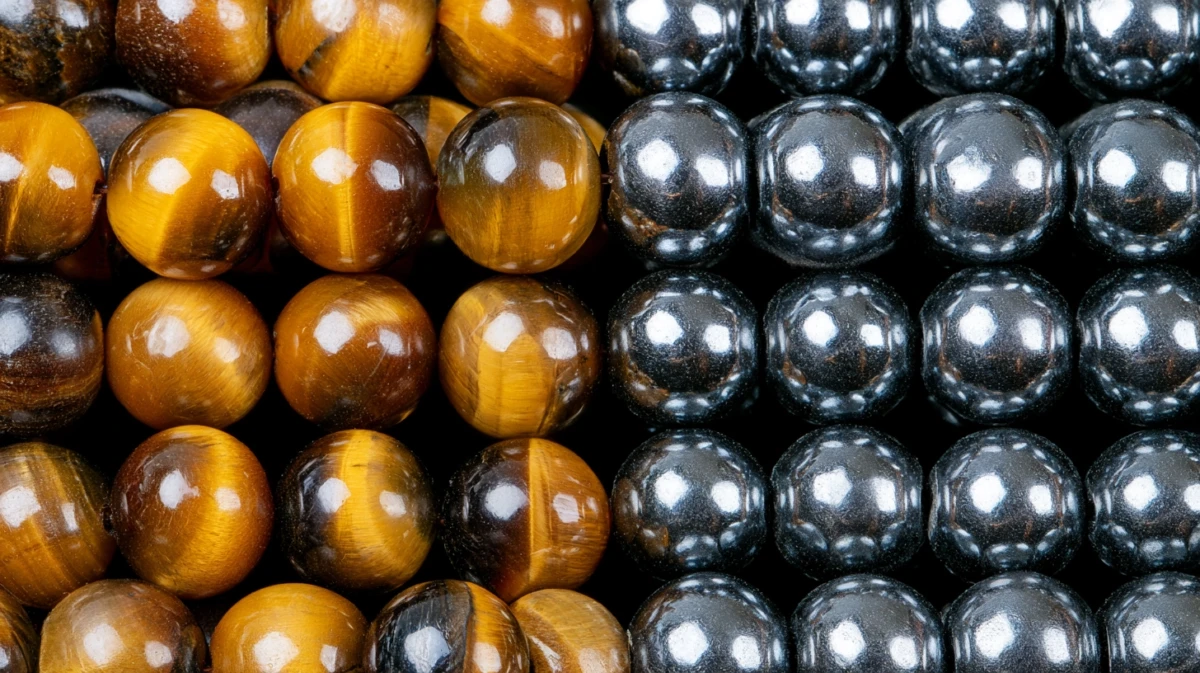
Hematite brings noticeable weight. A 10mm hematite bracelet sits heavier on the wrist than most stone options, which some men prefer as a tactile anchor throughout the day. The downside: hematite's metallic surface shows micro-scratches faster than matte stones, so it ages visibly within a few months of daily wear.
Black Tourmaline and Carnelian
Black tourmaline is harder to source as uniform round beads because the raw crystal fractures unevenly. Well-cut tourmaline bracelets exist, but cheaper versions often have visible inclusions or rough patches that catch on shirt cuffs. It is worth inspecting them closely before buying. Carnelian sits at the warmer end of the color spectrum, a burnt orange that pairs surprisingly well with earth-toned clothing. It holds up to daily wear without special care.
Two That Fail the Bracelet Format
Obsidian is volcanic glass. It fractures along curved, razor-sharp lines when it chips, and a knocked bead on a doorframe or desk edge can crack clean through. Pocket carry works fine because the stone stays cushioned. On a wrist, it's a matter of time. Pyrite oxidizes on contact with sweat and moisture, developing a dull tarnish and sometimes a faint sulfur smell. Neither problem is fixable once it starts.
8mm, 10mm, or 12mm: Picking the Right Bead Size
Most of these bracelets come in 10mm beads, and that size works for the majority of wrists. It sits proportionally on a wrist circumference somewhere around 17 to 20 cm without looking bulky or delicate.
To find your ideal fit, measure your wrist tight against the skin with a flexible tape and add roughly 1.5 to 2 centimeters. This extra slack ensures the beads can roll slightly when you flex your forearm, preventing the elastic from snapping under tension.
While 8mm beads can work on a slim wrist, they tend to read as thin on larger arms and often disappear visually when stacked with a watch. That thinness is perfect for a subtle, low-profile look, but otherwise, 10mm is usually the better choice.
12mm beads make a statement. They suit larger wrists and look intentional on their own, but stacking two 12mm bracelets usually creates too much visual mass. One 12mm paired with a 10mm works better than doubling up.
Bead size | Wrist fit | Visual effect | Works best when |
|---|---|---|---|
8mm | Slim to average | Understated, can look fragile | You want minimal presence or plan to layer several |
10mm | Average to larger | Balanced, reads clearly as jewelry | Default for a single bracelet or a two-piece stack |
12mm | Larger wrists | Bold, statement piece | Worn alone or paired with one smaller bracelet |
Weight matters too. A 12mm hematite bracelet feels noticeably heavier than a 12mm onyx, so the stone choice and bead size interact. When in doubt, 10mm is the safer starting point.
How to Stack Crystal Bracelets Without Overdoing It
Three bracelets on one wrist is the practical ceiling. Beyond that, beads grind against each other constantly, the clicking becomes audible in quiet rooms, and the stack starts sliding toward your hand every time you move.
The composure stack
Black onyx paired with hematite. The color palette stays dark and cohesive, but the weight difference between the two creates a grounding feel without visual clutter. Hematite's metallic sheen breaks up the matte surface of onyx just enough to look intentional. Both stones sit at 6 to 7 on the Mohs scale, so neither one chews up the other.
The focus stack
Pairing tiger's eye with black tourmaline creates a sharp contrast. The warm amber banding in the tiger's eye stands out against the tourmaline's flat black, keeping the combination from looking like a random assortment. Tourmaline is slightly softer, so mixing bead sizes (10mm tiger's eye, 8mm tourmaline) reduces direct contact between them.
The grounding stack
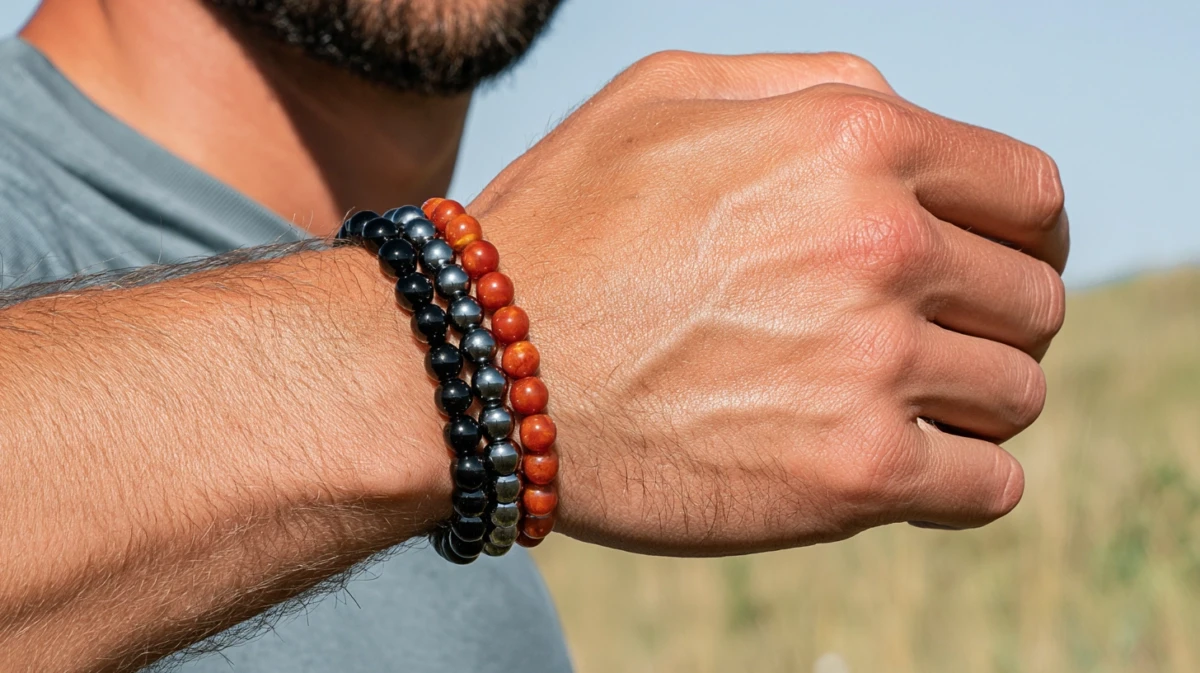
A three-piece set using hematite, black onyx, and carnelian works well when you want a subtle pop of color. The carnelian's burnt orange acts as a single accent against the two darker stones. This is the stack where order matters: carnelian in the middle prevents the two heavier, darker bracelets from looking like a single mass. The warm tone also keeps the combination from reading as purely utilitarian.
A two-bracelet stack works in almost any setting. Three bracelets can work if bead sizes vary and color contrast is deliberate. Four creates bulk that catches on sleeves and produces enough stone-on-stone friction to dull polished surfaces within weeks. If you want to rotate stones, own more bracelets but wear fewer at once.
Wearing a Crystal Bracelet at Work, with a Watch, and on the Right Wrist
Most men default to their non-dominant wrist because that's where a watch sits. Practically, that works: the bracelet stays out of the way when you write, shake hands, or use a mouse. Wearing it on your dominant hand means more contact with surfaces, more scratching against desks, and faster cord wear on elastic strands. If you don't wear a watch, dominant or non-dominant matters less than comfort.
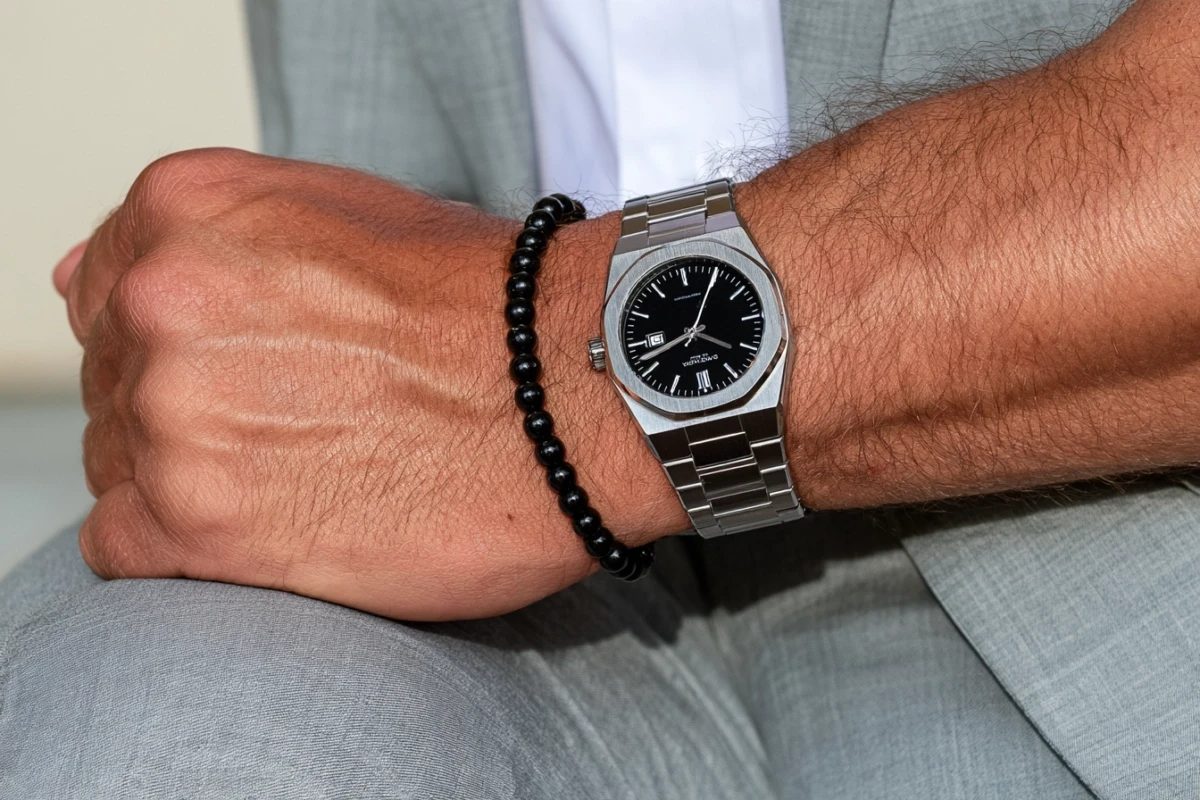
Pairing a crystal bracelet with a watch comes down to spacing. A single 10mm bead bracelet sitting flush against a steel or titanium watch case will click and slide with every wrist movement. Push the bracelet about two finger-widths up from the watch, and the contact drops to near zero. Stone beads rubbing directly against a metal watch case can leave micro-scratches on polished finishes over weeks, particularly softer stones like howlite or lapis. Black onyx and tiger's eye (both Mohs 7) hold up better, but the watch face is usually the thing that suffers. A leather or fabric watch strap creates a natural buffer that metal link bands don't.
Workplace visibility depends almost entirely on color and count. A single dark bracelet, black onyx or black tourmaline, reads like any other men's accessory in a business-casual office. Nobody comments. Stack two or three bracelets with mixed colors, and you've crossed into a style statement that invites questions. In conservative settings (law, finance, client-facing consulting), one bracelet on the opposite wrist from your watch draws the least attention. In creative or casual environments, a two-piece stack barely registers.
Elastic, Steel Wire, or Clasp: Durability and When to Replace
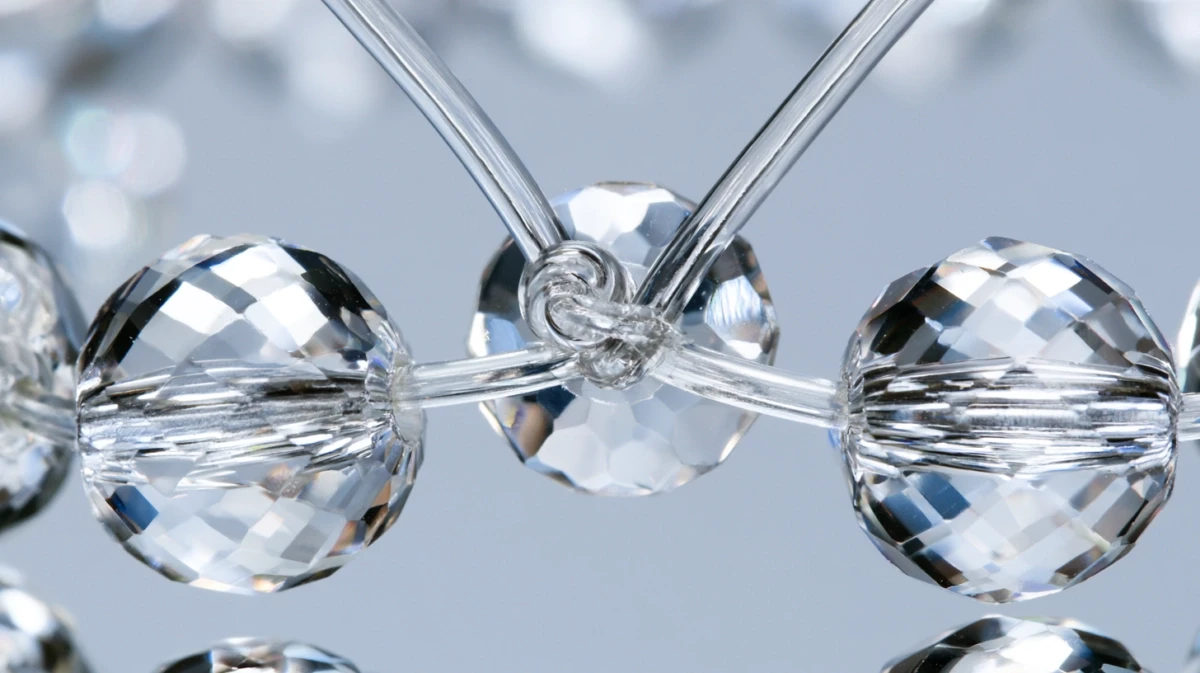
Elastic cord is the most common stringing method for beaded bracelets, and it's also the first to fail. Stretch cord wears fastest at the knot and where beads rub against it during wrist movement. Steel wire (often tiger tail or stainless memory wire) holds shape longer but feels rigid, and resizing means cutting and re-crimping. Clasp closures on a flexible cord or chain split the difference: they last well and allow some adjustment, though they add a metal focal point that changes the bracelet's look.
Elastic | Steel wire | Clasp | |
|---|---|---|---|
Lifespan | Shortest | Longest | Moderate to long |
Comfort | Seamless, no hardware | Stiff on smaller wrists | Slight weight at closure |
Resizing | Easy restring | Requires tools | Toggle or lobster adjusts |
Failure sign | Visible fraying, loose fit | Kinking, bead spin | Worn clasp, weakened jump ring |
Replace elastic cord when it no longer sits snug against your wrist or you spot white fibers poking between beads. Waiting past that point risks losing stones in places you won't find them.
Frequently Asked Questions
Which wrist should a man wear a crystal bracelet on?
Most men default to the non-dominant wrist, which also keeps the bracelet out of the way during tasks. If you wear a watch, the opposite wrist works just as well and avoids stone-on-glass contact.
Can men wear crystal bracelets to work?
A single bracelet in a dark, uniform stone like black onyx reads as a subtle accessory in most office settings. Stacked or brightly colored sets draw more attention and suit creative or casual workplaces better.
How many crystal bracelets can you stack together?
Two or three on one wrist is the practical ceiling for most men. Beyond that, the bracelets compete for space, clack against each other constantly, and the look shifts from intentional to cluttered.
Does sweat damage crystal bracelets?
Sweat itself rarely harms harder stones like tiger's eye or onyx, but it degrades elastic cord faster and can dull softer, porous stones such as howlite over time. Rinsing the bracelet with plain water after heavy sweating extends both cord and stone life.
Rolling the bracelet in a microfiber towel to dry it is safer than using a hair dryer, as direct heat can quickly make the elastic brittle. Avoid wearing them in chlorinated pools or the shower, since soap scum builds up in the drill holes and weakens the stringing material.
Crystals for Men: The No-Nonsense Field Guide
If you want the full breakdown — the science, all ten stones, a daily carry practice, and a quiz that tells you exactly which stone to start with — the field guide has everything in one place.