Conscious Connected Breathwork: The Circular Breathing Practice That Changes State
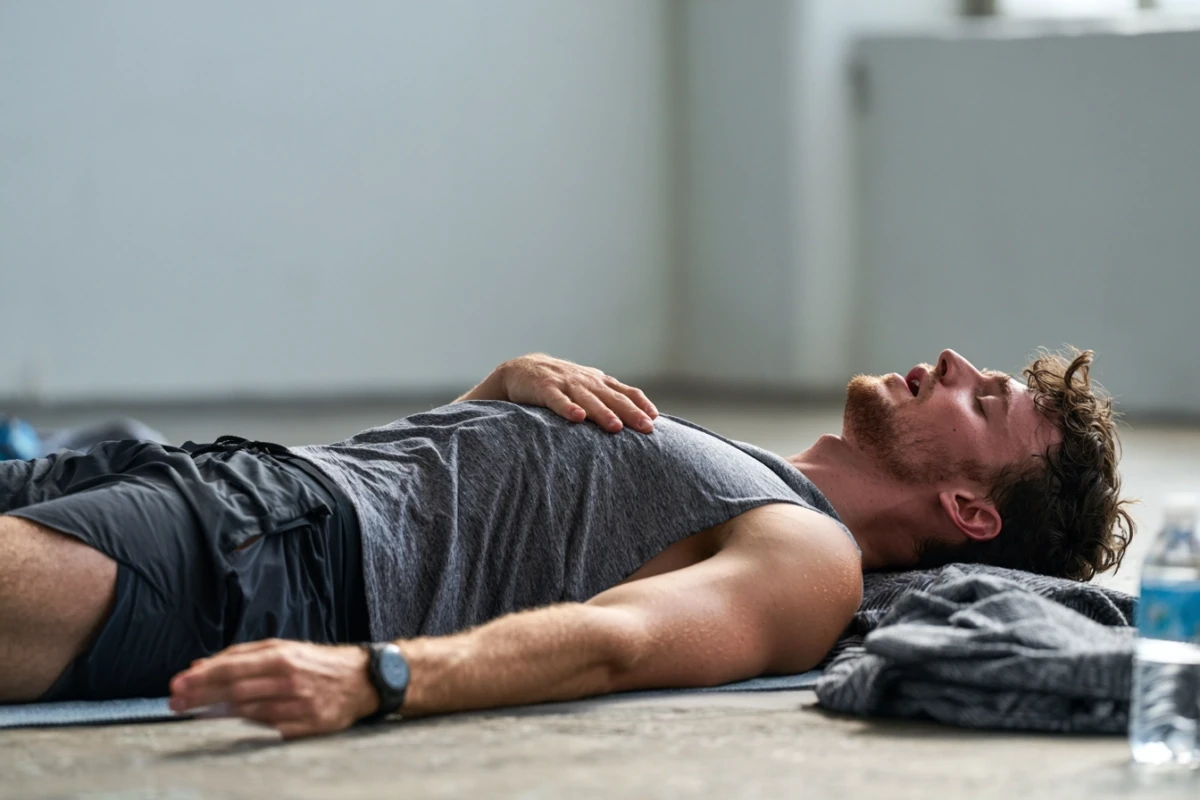
Circular breathing runs the inhale straight into the exhale with no pause at either end, held for 20 to 45 minutes at a stretch. Conscious connected breathwork drives activation up rather than down, which makes it a fit for emotional release and a poor fit for acute panic or shutdown. Use it as an occasional deeper session alongside daily regulation, not instead of it.
Connected breathwork or calming breath: which one does your state need right now?
Two jobs, two different tools. The circular pattern pushes activation upward until stored charge has somewhere to go, while slow-exhale breathing, grounding and paced counts exist to bring activation down. Choosing by mood rather than by state is where men get into trouble.
If the goal is to move stored charge but a 40-minute circular session feels like too much, a slower body-led breathwork approach follows sensation rather than a fixed tempo and stays closer to what the body can absorb.
The right week for a long session looks unremarkable from the outside. You've slept normally for several nights, nothing is actively on fire, and you can name the weight you're carrying: a grief you filed away years ago, or a decision you keep postponing. You also have an hour of privacy afterwards. That combination matters more than motivation does.
Choose something else today if panic is already sitting in your chest, if you feel flat, numb or somewhere behind your own eyes, if you're running on two nights of broken sleep, or if the crisis is still in motion. Activation stacked on activation isn't release. Slow-exhale work, physical grounding or a paced count will do more for you, and the broader nervous system regulation material is the place to sort out which state you're actually in before you commit to a session.
The circular breathing pattern: what removing the pause actually does
The pause sits at the top of the inhale and again at the end of the exhale, and it rarely lasts more than a second. That gap is where most people quietly regulate themselves. Lengthen it slightly and the system settles between cycles. Take it away, and respiratory drive never drops off, so activation stacks instead of resetting.
Most popular explanations of circular breathing meditation get the chemistry backwards. Sustained connected breathing moves more air than the body needs, so blood CO2 falls and pH drifts toward alkalosis. That's the direct reason for tingling in the lips and fingertips, cramping that can lock the hands into a claw, and the swing between heat and chills later in a session. CO2 accumulation belongs to retention protocols, where the breath is deliberately held out. Different design, opposite chemistry.
The research is early. One randomized pilot tested connected breathing with retention against a deep-breathing sham in adults with chronic low back pain, and much of the wider research on retention methods has involved participants trained by the method's founder. That's feasibility, not proof. Treat the therapeutic claims as unproven rather than debunked.
Holotropic, rebirthing, Wim Hof, box breathing: sorted by what each is for
Holotropic and rebirthing run the same engine. Both use the no-pause circular pattern as their mechanical core, and the differences are mostly in format. Holotropic sessions tend to be long, music-driven and done in pairs where one person breathes while the other sits watch. Rebirthing (formalised by Leonard Orr in the 1970s) is usually one-to-one, with a facilitator tracking the breather. Other recognised schools layer sound, bodywork or affirmations onto that same circular base. Connected breathing is the mechanism these schools share, and the branding sits on top of it.
Retention protocols are a different animal. Rounds of fast breathing followed by a breath hold swing you through low and then rising CO2 in short cycles, which produces a sharp, energising after-effect rather than the softer, wrung-out state that follows a long circular session. Box breathing and the physiological sigh sit in a third category entirely: paced, low-intensity, designed to bring activation down within minutes.
Practice | What the breathing does | What it's for | State ~30 minutes later |
|---|---|---|---|
Connected breathwork | Continuous inhale-exhale, no pause; sustained activation | Emotional surfacing and discharge | Tired, open, often tearful or unusually still |
Holotropic | Same circular core, long format with music | Deep exploratory sessions | Similar, plus a longer integration tail |
Rebirthing | Same core, one-to-one, gentler pacing | Guided emotional work | Soft, slightly disoriented |
Wim Hof style rounds | Fast breaths plus retention | Stress tolerance, cold exposure prep | Alert, warm, energised |
Box breathing | Even counts with holds | Steadying before performance | Composed, unchanged otherwise |
Physiological sigh | Double inhale, long exhale | Fast downshift | Calm within minutes, no tail |
Pick by the last column: the after-state tells you whether a practice matches today's job.
Inside a conscious connected breathwork session: ramp, peak and integration
Sessions usually run 20 to 45 minutes, lying on your back, with one channel chosen before you start and kept for the whole session. Mouth breathing moves more air and escalates faster. Nose keeps it slower and more contained. Switching halfway disrupts the rhythm more than most people expect.
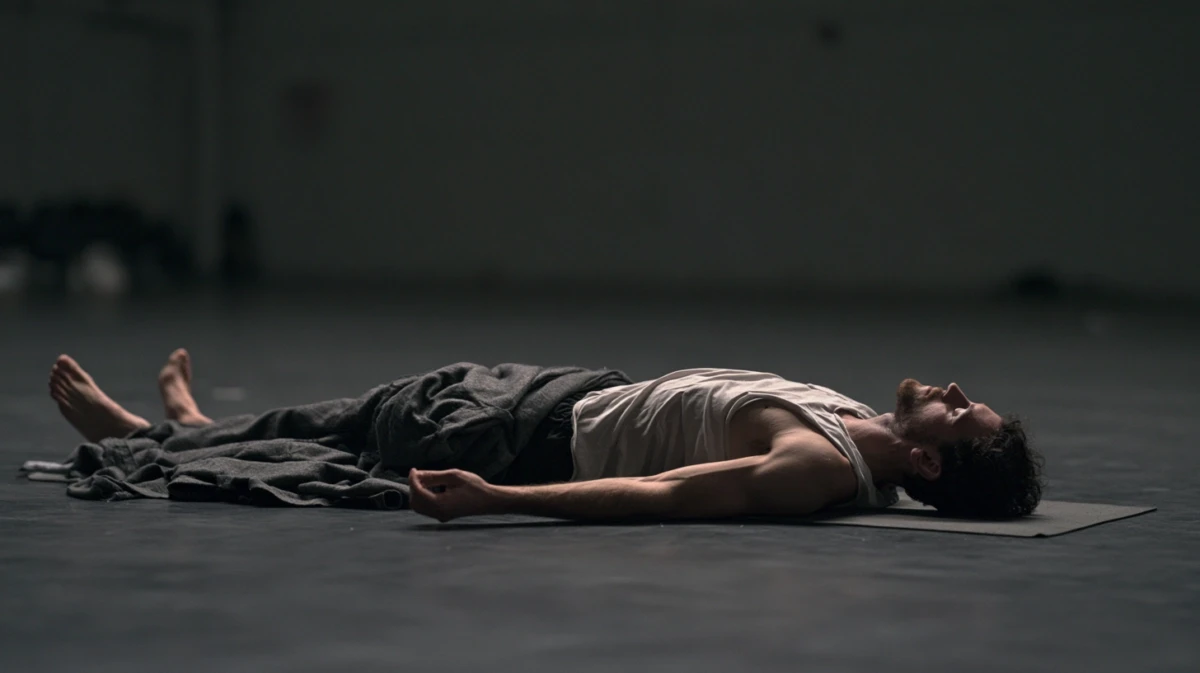
The mechanics are four things happening at once: the inhale rolling straight into the exhale with no pause at the top, an active diaphragmatic inhale that fills the belly while the chest expands without strain, an exhale that's released rather than pushed, and that single channel held throughout.
The opening stretch feels like work. The rhythm is mechanical, the jaw tires, and not much seems to be happening, which is why plenty of first sessions end with the verdict that the whole thing is overhyped. If there's music, treat it as a pacer rather than a soundtrack: driving sections mean stay with the tempo, slower passages mean ease off instead of pushing harder.
In the middle stretch, sensation and emotion tend to arrive on their own. Keeping the pattern steady matters more here than trying to make anything bigger.
Then the part that gets skipped. The breath tapers back to ordinary breathing by itself, and you stay lying down in silence, usually 10 to 20 minutes. Standing up at minute one throws away the settling and tends to leave you flat or wired for the rest of the day. Forcing the pace to chase a bigger experience adds cramped hands and a tight face to the bill.
Sessions also don't stack in a straight line. A quiet one following an intense one isn't a sign you're doing it wrong.
Conscious connected breathwork side effects, stop signals and contraindications
Tingling in the hands and around the lips shows up in most first sessions, and cramping fingers or a stiff jaw come from that same drop in carbon dioxide affecting nerve and muscle excitability. Temperature swings, shaking, and involuntary movement are the body discharging held tension rather than anything going wrong. Sound may stretch or flatten, and forty minutes can feel like ten.
The emotional side rarely arrives as bliss. For men who've spent years compressing everything into a functional flat line, what surfaces first is usually anger, hard shaking, or unexpected grief. Laughing fits happen too. None of that means the session failed.
Different category entirely: chest pain, feeling close to fainting, cramping that doesn't ease when you slow down, panic that keeps climbing with nothing settling underneath it, going numb and distant from your own body, or memories flooding in faster than you can stay present with them. In any of those, drop to slow nasal breathing with a long exhale, end the session, put your feet on the floor and your hand on something solid. Pushing through is not the practice.
Some conditions call for a doctor's clearance before you try this at all: cardiovascular disease, uncontrolled high blood pressure, epilepsy or seizure history, pregnancy, psychosis or bipolar risk, and recent surgery. Significant unprocessed trauma belongs with a professional, not a downloaded track.
A trained facilitator is the sensible call for a first long session, for anyone with a trauma history, and for anyone who tends to dissociate. No journal, ritual kit or app replaces a facilitator, and none of them replace medical advice either.
Vetting one takes ten minutes. Ask which school they trained in and how long the training ran, whether they screen for cardiovascular conditions, seizure history, pregnancy and psychiatric risk before the first session, and what they actually do if someone dissociates or floods mid-session. A facilitator who takes no history, works with ten people at once, or treats every stop signal as material to breathe through is the wrong room for a first long session.
Where a conscious breathing practice fits in your week
Most people who practise regularly settle into one full session every one to three weeks rather than weekly or daily. The material a long session brings up needs somewhere to go, which is why trauma release exercises and journaling in the day after matter as much as the session itself, and piling a new session on top of what hasn't been processed yet tends to give thinner returns each time."

Five minutes of connected breathing is a different tool with a different job. It lifts energy and puts you back in contact with what you're feeling, which suits a flat afternoon or the twenty minutes before a hard conversation. The short version shifts your state for a while and leaves the deeper material where it is.
The day after usually asks for less: lighter training, an earlier bedtime, and ten minutes of writing while the material is still close. If a session leaves nothing much behind, don't chase it harder next time. Sit with it, and look at whether sleep, food, or timing were working against you.
Daily baseline regulation is separate work with quieter tools. Inner Kingdom's free 5-day breathwork challenge is a gentler daily entry point, and the Grounding Ritual Kit can help with settling afterwards. Neither replaces a facilitated session.
Daily vagus nerve exercises shift the baseline over weeks, which is what makes a long session land instead of just adding load.
By Jonatan Rajala, Founder of Inner Kingdom. About the author →
The Grounding Ritual Kit
A 7-day structured nervous system practice — the settling and integration anchor for the days around a longer session.
5-Day Breathwork Challenge
Five short sessions at the down-regulating end of the range — the daily structure that builds the baseline capacity a long session needs to land properly.