Breathwork for Trauma Release: How Breath Reaches What Talk Therapy Doesn't

Slow, extended-exhale breathing is the part of trauma release work most men can start alone tonight. Fast connected breathing, the kind that stacks activation until it discharges, belongs in a room with a trauma-informed facilitator. The dividing line is intensity, not diagnosis: a dissociation history, a seizure disorder, or uncontrolled blood pressure rules out the activating end, never breathing itself. And what makes a session count is the integration afterwards.
Who can practice trauma release breathwork alone (and who shouldn't)
There are three lanes, and most men can tell honestly which one fits them.
Start solo: You eat and sleep roughly normally, you're not in an active crisis, and when something difficult surfaces you can feel your feet on the floor within a minute or two. Down-regulating patterns only: longer exhale than inhale, nasal breathing, physiological sighs.
Keep a second person in the loop: A PTSD diagnosis, current therapy, regular panic attacks, or a previous session that left you raw for days. Activating work happens with a trained facilitator, and your existing clinician should know you've added it.
Hold off on the activating end until cleared: History of dissociation or depersonalization, psychosis or bipolar diagnosis, seizure disorder, cardiovascular conditions or uncontrolled blood pressure, pregnancy, or a trauma still in its acute phase.
That last group is excluded from intensity, not from breath. Slow nasal breathing with a lengthened exhale stays open to everyone on that list, and it's where most of the durable nervous system regulation gets built anyway.
If you genuinely can't tell which lane you're in, act as though you're in the second. Breathwork for trauma release doesn't get safer by being done harder or faster on your own.
Down-regulating breath: extended exhale and the physiological sigh
Four counts in through the nose, eight counts out through slightly pursed lips. That ratio, roughly double the exhale, is the workhorse of solo practice, and it does one job well: it moves you down the activation curve and teaches you to stay with sensation instead of bracing against it. It won't crack anything open. If you're waiting for a wave of stored grief to arrive, you've picked the wrong tier.
That limitation is the point. What you're after is frequency, with enough repetitions that a lower baseline starts to feel normal. Sitting through five minutes of slightly uncomfortable body signal, and finding your baseline lower afterward, builds the tolerance that heavier work would otherwise blow past.
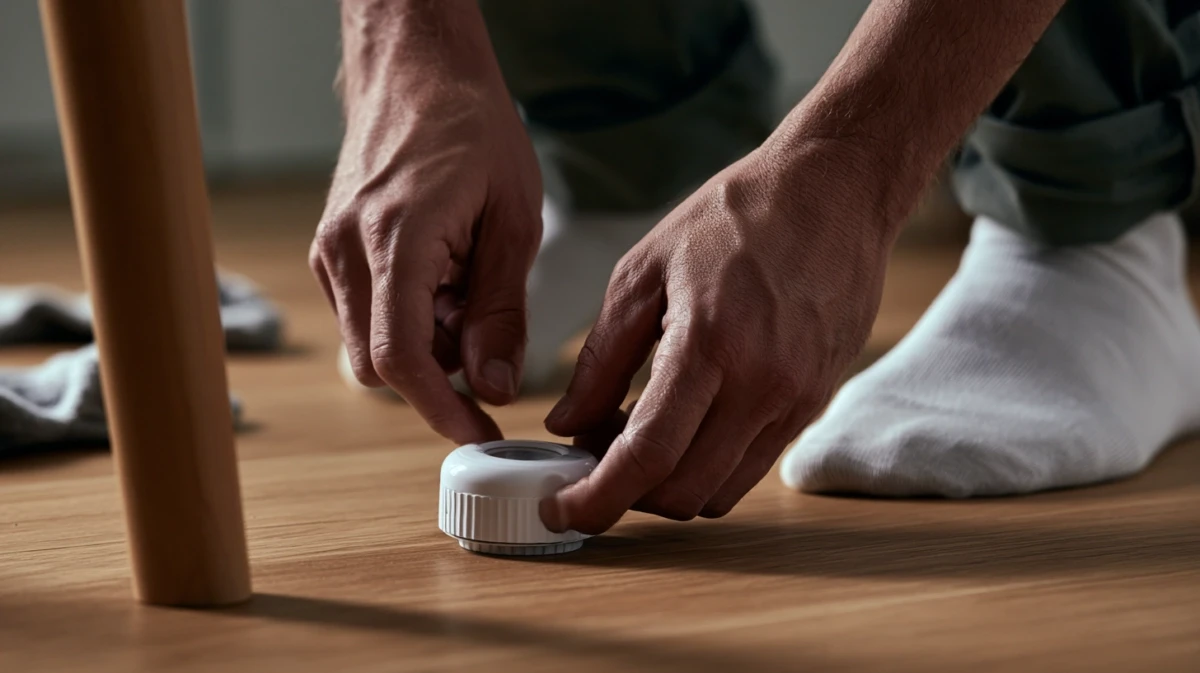
How you set it up matters more than most people assume. If closing your eyes pulls you somewhere you don't want to go, keep them open and softly fixed on a spot on the floor. Feet flat, ideally with shoes off so you can feel the ground. Set a timer for something short. Three to eight minutes is a reasonable window. Stop when it goes off even if you feel fine. An open-ended session is where solo practice quietly turns into something else.
The physiological sigh works differently: two short inhales stacked through the nose, then a long slow release. It works as an interrupt in the middle of a day. Use it standing in a parking lot after a difficult phone call, two or three rounds, then move on.
A timer and a chair cover all of this. The free 5-Day Breathwork Challenge gives the same intensity level a structure and a daily prompt, which some men need to stay consistent. It's nervous system training, not treatment for trauma. For the fuller technique breakdown, the somatic breathwork piece goes deeper into pacing and variation.
Why activating breathwork for PTSD and complex trauma needs a second person in the room
Conscious connected breathing removes the pause at the top and bottom of the breath. Inhale rolls straight into exhale, exhale straight back into inhale, held for 20 minutes or more in the holotropic-style lineage most cathartic sessions descend from. That continuity is the whole mechanism, and it puts the practice in a different category from anything you can safely time with a phone alarm.
Fast, sustained breathing drops blood CO2. Tingling in the fingers, tightness around the mouth, cramping in the hands or jaw follow, and the sympathetic branch stays switched on rather than spiking and settling. Some people meet stored material and discharge it. Others slide sideways into an altered state that looks like depth from outside and feels like leaving the body from inside. From within the session, the two are hard to tell apart.
The efficacy claims here come mostly from practitioners and studios describing their own work, not from settled clinical evidence. Weigh that before you decide the intensity is worth it.
A trained facilitator earns their place by doing four things you cannot do while breathing:
Watching your body: breath rate, colour, tremor, and the moment your eyes stop tracking.
Slowing the pace or calling a stop before activation outruns your capacity.
Bringing you back to the room through orientation, contact, and voice if you dissociate.
Having a plan for whatever state you're in when the music ends.
The failure mode worth naming for men considering breathwork for PTSD: running the session as an endurance test and reading exhaustion as proof it worked. Grinding through 30 minutes of hyperventilation is not evidence of processing. It's evidence you can override your own signals, which is usually the pattern that put the tension there.
Why trauma stays in the body when talk therapy isn't enough
Bessel van der Kolk's framing in The Body Keeps the Score draws a line between two kinds of memory: the story you can tell, and the activation that fires before the story loads. Therapy is built for the first one. You can describe the night, name the people involved, trace the pattern back to a childhood dynamic, and understand all of it with real clarity.
Then someone slams a car door two streets over and your chest locks before you've registered the sound. That gap is the whole reason body-led work exists. Nothing about your understanding was wrong. It just wasn't stored where the reaction lives.
Breathing is the practical opening. It's the one autonomic function you can take over deliberately, which makes it a direct line into a system you otherwise only observe from the outside. Heart rate and digestion don't take instructions. Breath does, and it drags the rest along with it.
That's the mechanism, not a cure. Access isn't resolution, and knowing the door opens says nothing about how hard to push it.
Release, overwhelm, or shutdown: read the signals mid-session
Trembling in the hands and thighs, tears with no story attached, a flush of heat followed by cold, tingling around the mouth and fingers, a limb that moves on its own: this is the ordinary end of the range. Anger or grief can surge up unattached to any memory. Uncomfortable, yes. Not a sign something has gone wrong.
The picture changes when intensity stops cycling and starts climbing. Panic that escalates instead of cresting, numbness spreading outward, watching yourself from somewhere near the ceiling, vision narrowing to a tunnel, cramping that tightens with every breath, imagery you can't orient your way out of. Those mean you've crossed the edge of what your system can process right now. Pushing on doesn't get you through it. It teaches your body that the practice is one more thing to survive.
The stop sequence is short, and worth rehearsing before you need it:
Drop the pattern and breathe through your nose at whatever pace arrives.
Make the exhale longer than the inhale for roughly a minute.
Open your eyes.
Name five things you can see, out loud.
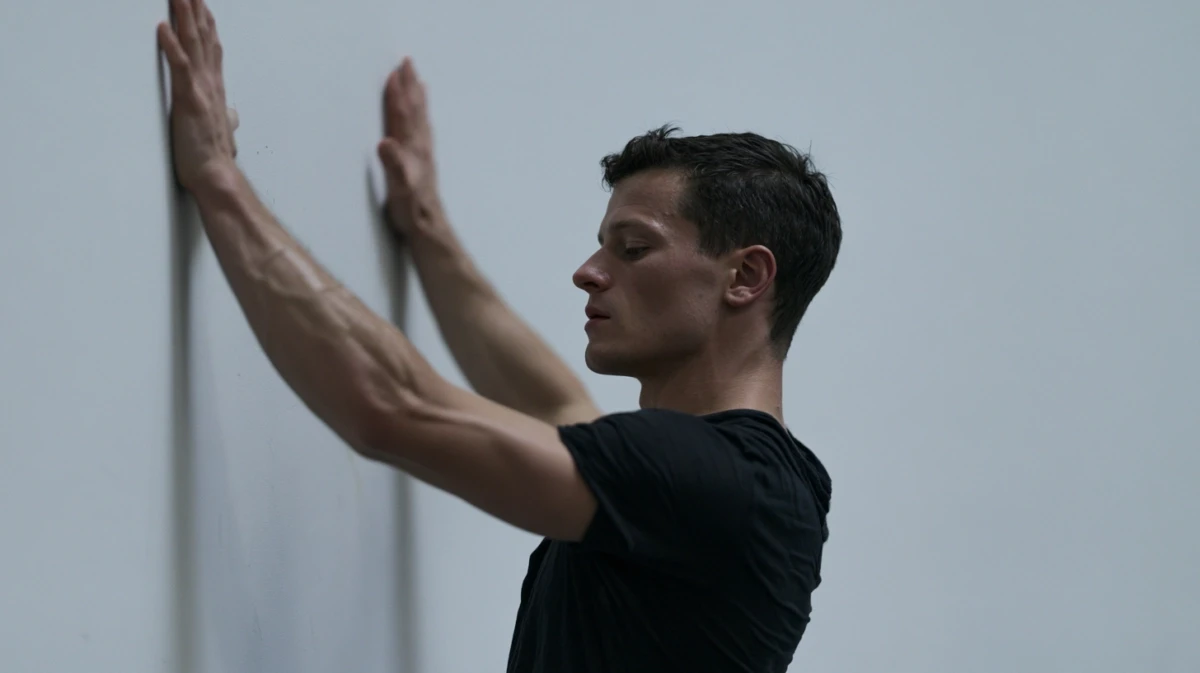
Press your feet into the floor or your palms into a wall until you feel pressure.
Whether something counted as release or as too much isn't decided by how dramatic it looked. The test is whether you can return to baseline in the room, within minutes, under your own steam. Emotional release in breathwork leaves you shaky but oriented. Overwhelm leaves you flat, absent, and unable to feel the chair underneath you.
Dose accordingly. Short exposures with deliberate returns to settling build more capacity than one long push, and backing off at the first climb is a skill rather than a failure. Feeling worse before better gets reported often enough to expect it, though it proves nothing about whether the session did anything useful. Movement-based release work reads the same way: shaking that resolves is fine, shaking that escalates into panic is your cue to stop.
Integration after a breathwork session: what to do in the first hour
Don't drive for at least 20 minutes after an activating session. Coordination and reaction time can stay off longer than the emotional intensity does, and the drop into calm afterwards is often heavier than expected. Get warm, drink water, eat something solid. Food does more for re-entry than any technique.
Then write, while what surfaced is still reachable. An image, a phrase, a body sensation, the age you felt for a second. This is the part men skip most often, and it's where the session either becomes usable material or evaporates by evening. A notebook works. So does a structured prompt set like the Grounding Ritual Kit, or a message to a therapist you already work with. The container matters far less than doing it within the hour.
What to hold off on: big conversations, decisions about relationships or work, alcohol, and a hard training session to bury whatever came up. The system is still open. Anything you decide in that state gets revisited a day later anyway.
Stacking a second session on top of a heavy one is a common mistake in that window. Activating work wants space between rounds, measured in days rather than hours. Down-regulating practice can stay daily without issue.
The result worth tracking isn't the size of the release. It's whether the argument at work next Tuesday hijacks you for forty minutes or four. Volume isn't depth: one session a fortnight with real integration beats three a week with none.
Common questions about breathwork and trauma
How many breathwork sessions does it take to release trauma?
Nobody can give you a number, and any facilitator who quotes one is selling certainty they don't have. Trauma load, nervous system history, and what other support you have in place all change the arc, so track capacity over months rather than counting sessions.
Can breathwork replace trauma therapy?
Breath practice reaches material the thinking mind guards, but it doesn't handle diagnosis, risk assessment, and shadow work that surfaces the patterns underneath, or the slow relational repair that complex trauma usually needs. Treat it as one channel alongside clinical care, not a substitute for it.
How do I find a trauma-informed breathwork facilitator?
Ask what their screening looks like, when they've told someone not to practice, and what clinical support they refer to. A facilitator who has no exclusion criteria and no referral network is running intensity without a safety net.
How is breathwork different from TRE and somatic experiencing?
Breathwork uses respiration to shift arousal, TRE works through induced tremor, and somatic experiencing tracks sensation in slow, guided increments. Somatic experiencing is the most titrated of the three, which is why it's often the safer entry point when activating breath practice feels too fast.
FREE PRACTICE
5-Day Breathwork Challenge
Five short sessions at the down-regulating end of the range — the daily structure that builds capacity before you approach the activating work.
JOURNAL
The Unspoken Man
Shadow work and trauma release work the same material from different angles. The Unspoken Man gives you the journaling framework that makes what surfaces in breathwork usable.
RITUAL
The Grounding Ritual Kit
A 7-day structured nervous system practice — the integration anchor that keeps the days between breathwork sessions from losing what the sessions built.