Black Crystals: The Men's Guide to Dark Stones That Actually Work
This article contains affiliate links. If you purchase through our links, we may earn a small commission at no extra cost to you.
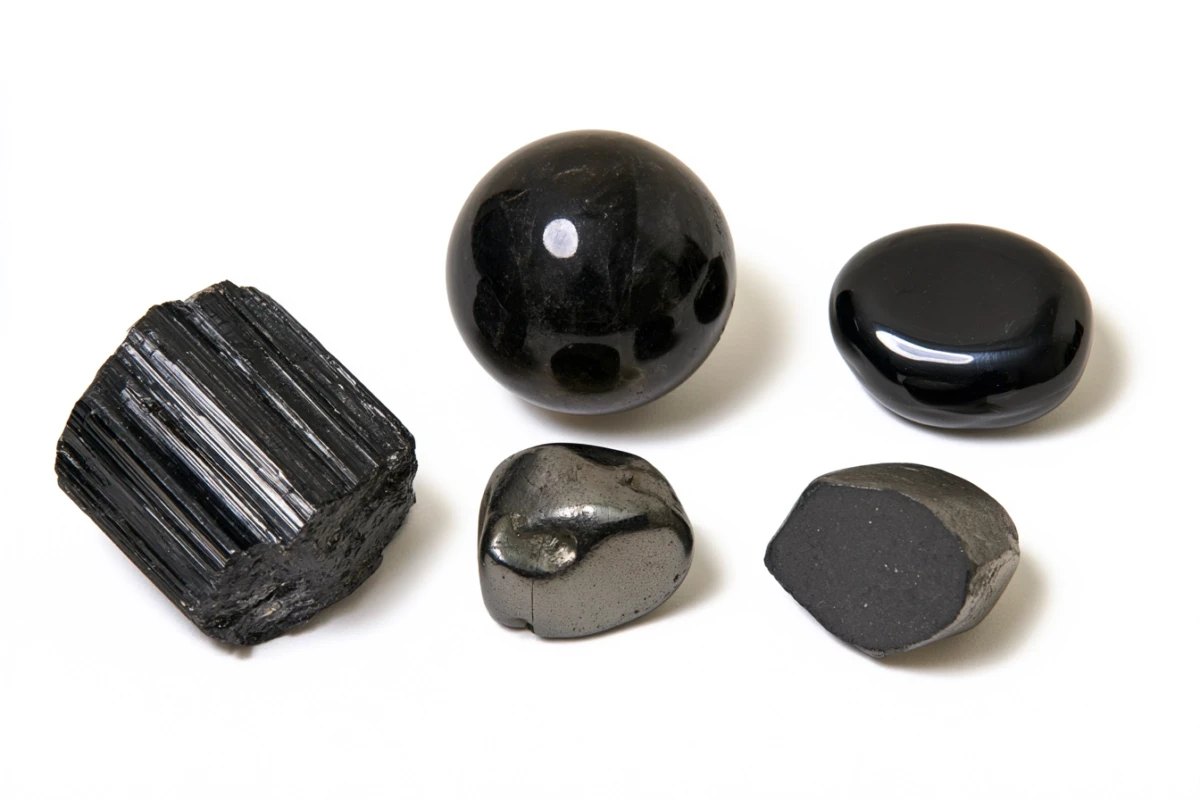
Black Tourmaline blocks external stress before it reaches you. Black Obsidian does the opposite: it pulls buried patterns to the surface. Among black crystals for men, that distinction matters more than any ranking of "most powerful." Black Onyx holds composure during sustained pressure, Hematite grounds through sheer physical weight, and Shungite absorbs environmental noise. The right pick depends on what you're actually dealing with.
These five stones represent a focused slice of a broader landscape. For a complete breakdown of how different stones work for men—including lighter options and stones that activate rather than ground—the full crystals for men guide covers the entire spectrum.
What Each Black Crystal Actually Does
Stone | Primary function | Best-fit situation | Daily-carry durability |
|---|---|---|---|
Black Tourmaline | Energetic shielding | You absorb other people's tension and need a boundary stone | High |
Black Obsidian | Pattern exposure | You sense something unresolved and want honest self-confrontation | Medium (chips if dropped on hard surfaces) |
Black Onyx | Emotional steadiness | You face long stretches of pressure where composure can't slip | High |
Hematite | Physical grounding | Your mind races and you need a heavy, tactile anchor | Medium (surface scratches easily, rusts near water) |
Shungite | Environmental filtering | You want broad-spectrum absorption without strong emotional activation | Medium (soft carbon, can leave black residue) |
These five stones sort into three lanes. Tourmaline and Shungite face outward: they're about what you keep away from yourself. Obsidian faces inward, confronting what you've buried rather than blocking what's incoming. Onyx and Hematite sit between: both stabilize, but Onyx works through emotional endurance while Hematite works through the body. Pick your lane first, then choose the stone.
Black Tourmaline and Shungite: External Shielding Compared
Black Tourmaline scores 7 to 7.5 on the Mohs scale, which makes it hard enough for daily pocket carry without chipping. Shungite sits lower, around 3.5 to 4, closer to a fingernail scratch test than a gemstone. That hardness gap matters more than any metaphysical claim if you plan to carry a stone loose alongside keys or coins.
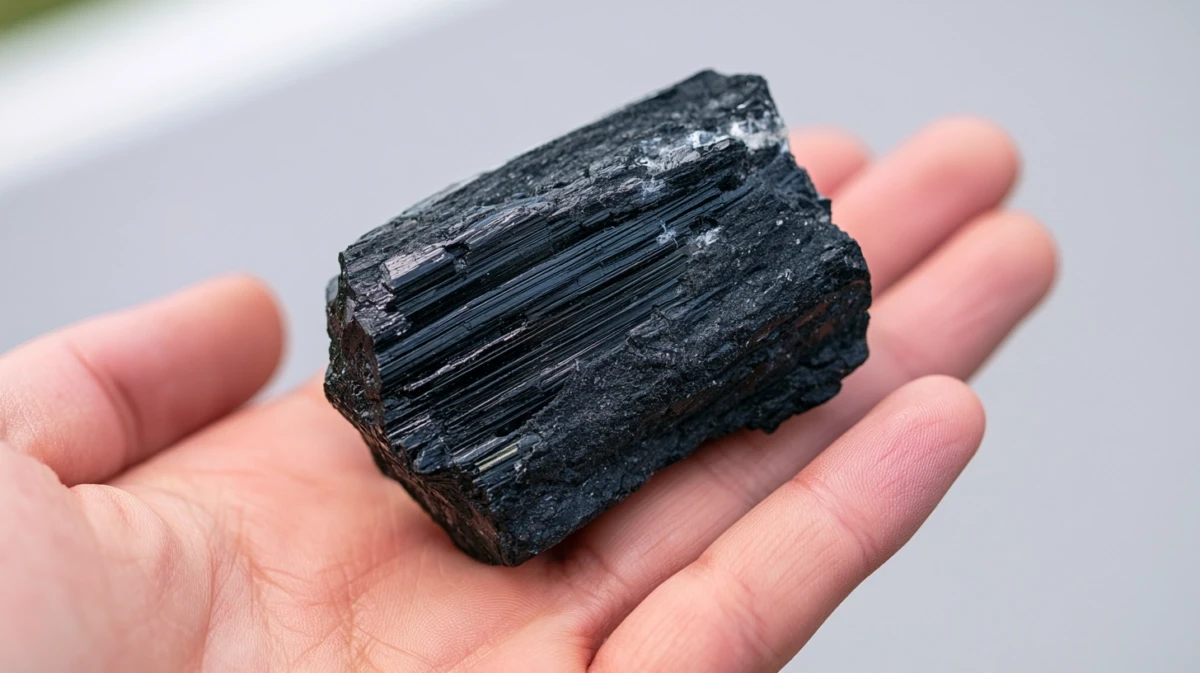
Black Tourmaline
Dense, striated, and slightly rough to the touch. A raw chunk like this one is the right format for pocket carry. Most pieces feel heavier than they look. Users who carry it in high-stimulation environments (open offices, crowded commutes, loud households) consistently describe it as a buffer stone: the external noise still exists, but the reactive impulse to absorb it drops. For a single, general-purpose protective stone, this is usually the most practical starting point. A deeper breakdown of its properties and history lives in the dedicated Black Tourmaline meaning guide.
Shungite
Carbon-based and originally sourced almost exclusively from the Zazhoginsky deposit in Karelia, Russia. It feels lighter and smoother than tourmaline, almost waxy. Shungite's reputation leans toward EMF shielding and environmental purification, which makes it popular as a desk stone or device-adjacent piece rather than a pocket carry. Where it falls short: the softness means surface scratches accumulate fast, and polished shungite can leave black residue on light fabric.
Which One to Pick
Tourmaline is the versatile, durable, carry-anywhere stone. Shungite works better as a stationary piece near a screen or workspace. If your goal is general-purpose shielding you can grab and forget about, tourmaline wins. Shungite earns its place only when the specific concern is a fixed environment you want to shift, not personal carry throughout the day.
Black Obsidian: The Stone That Confronts Instead of Shields
Black Obsidian is volcanic glass, formed when lava cools so fast that no crystal structure has time to develop. That rapid cooling produces a smooth, glassy surface with conchoidal fracture, meaning it breaks into razor-sharp edges. The physical composition matters here: Obsidian sits around 5 on the Mohs scale, harder than Shungite but brittle in a way Tourmaline isn't. Drop it on tile and it chips or shatters.
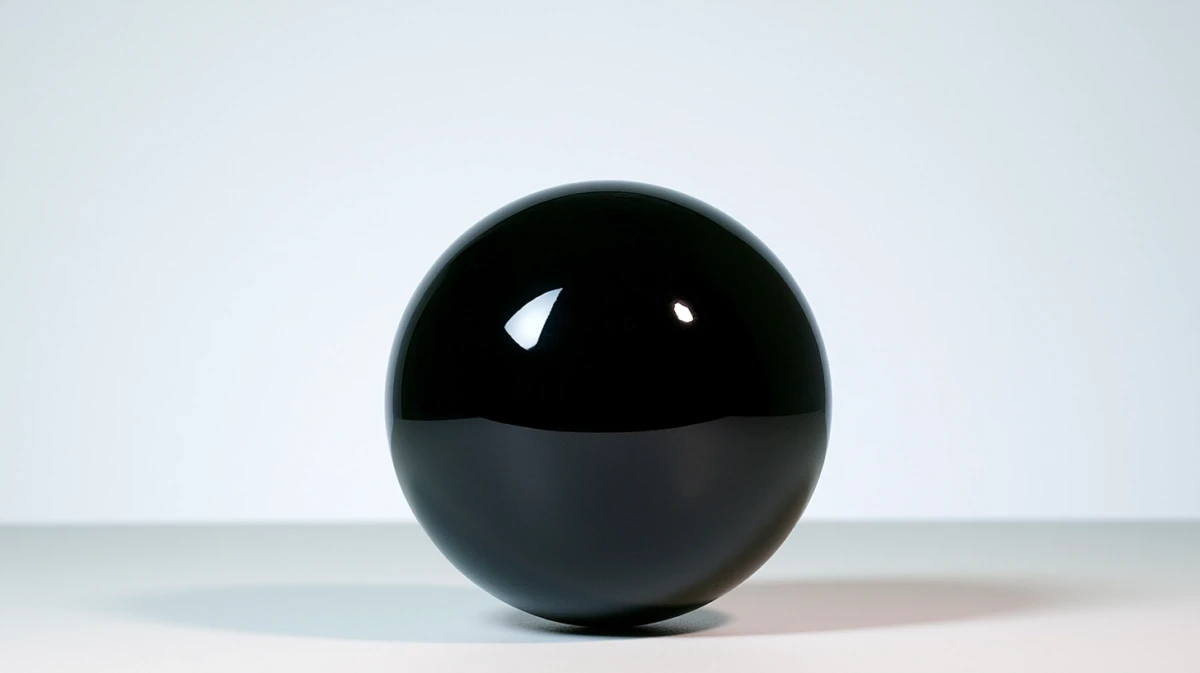
The functional difference from the other black crystals is straightforward. Tourmaline and Shungite absorb or deflect external noise. Obsidian turns the lens inward. People who carry it consistently report that suppressed patterns, avoided decisions, and uncomfortable truths surface faster than expected. If you're already doing shadow work or structured self-examination, Obsidian accelerates the process. If you're in a period of acute stress or grief, that acceleration can feel destabilizing rather than productive.
Apache Tear: The Gentler Entry Point
Apache Tear is a rounded, translucent variety of Obsidian, typically found as small nodules. It carries the same inward-facing quality but with noticeably less intensity. Where raw Obsidian tends to surface everything at once, Apache Tear suits someone processing a specific loss or working through grief at a pace they can sustain. Think of it as Obsidian with a longer fuse.
If you want confrontation and have a practice to hold the discomfort (journaling, breathwork, structured reflection), go with raw Black Obsidian. If you're drawn to inner work but currently feel fragile or overwhelmed, start with Apache Tear and move to Obsidian when you're ready to sit with what comes up.
Sustained Composure: Black Onyx vs Hematite
Hematite weighs roughly twice as much as onyx for the same size stone, and that physical difference maps directly onto how each one works. Hematite is iron oxide with a metallic, gunmetal surface. Pick it up and your hand registers the density before your mind catches up. That weight acts as a body anchor: when your thoughts scatter or your chest tightens before a difficult conversation, the stone's heft pulls attention downward into the hand, into the body. It suits anyone whose primary problem is a racing mind that won't quiet down.
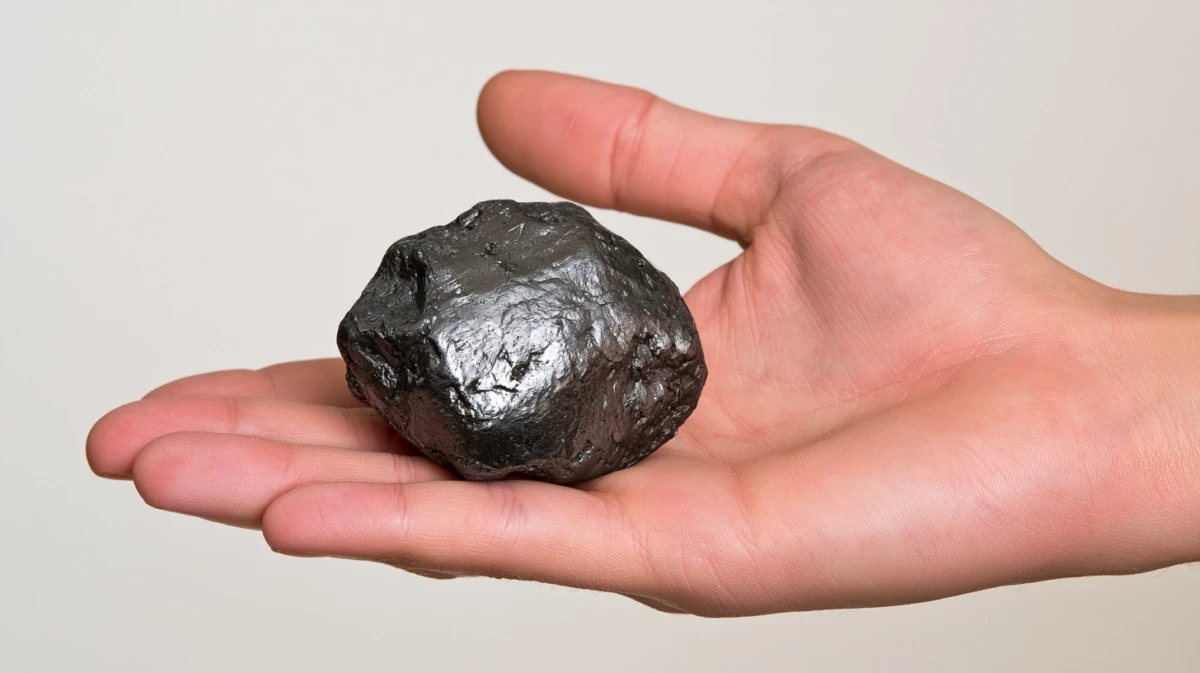
Black onyx operates on a longer timeline. Smooth, lighter, almost warm to the touch, it doesn't jolt you back into your body the way hematite does. Instead, onyx is the stone people reach for during weeks or months of sustained pressure: a leadership role that drains you, a relationship where you're holding more than your share, a season where composure matters more than release. Onyx absorbs emotional noise slowly rather than grounding you through physical shock.
If you need something that interrupts a spiral right now, hematite's density does that faster. If you're managing a long stretch where you can't afford to crack, onyx rewards consistent carry. Hematite's weakness is that it scratches easily and its metallic coating can rub off in a pocket with keys. Onyx holds up better over months of daily use.
One common mistake is buying both and alternating randomly. Pick based on whether your pressure is acute and mental or chronic and emotional. That distinction matters more than any property list.
Carrying and Caring for Black Stones Daily
Black Onyx and Black Tourmaline handle pocket carry without issue. Both score 7 on the Mohs scale, so keys and coins won't scratch them. Hematite sits around 5.5 to 6.5 and holds up reasonably well, though its polished surface shows scuffs faster. Black Obsidian is the fragile one: volcanic glass chips on hard impacts and picks up fine scratches within weeks of loose pocket carry. Wrap it in a small cloth or keep it in a separate pouch if you carry it daily.
If pocket carry feels impractical, beaded bracelets are the most common alternative for men. Matte Black Onyx and Tourmaline hold up well on a wrist exposed to desks and doorframes, whereas Obsidian beads are highly prone to chipping if you have an active lifestyle.
Black crystals for men tend to absorb rather than deflect, which is why regular cleansing matters more than with lighter stones. Running water for 30 seconds works for everything except Hematite, which can rust. Smoke from sage or palo santo covers all of them safely. Moonlight overnight is the lowest-effort option and suits any stone in this category.
If you pair a black stone with something lighter, quartz or Tiger's Eye are common choices that add a different quality without clashing. A tumbled Black Tourmaline alongside a small clear quartz point fits easily in a carry pouch and covers both grounding and clarity without overcomplicating things.
Frequently Asked Questions
What is the most powerful black crystal?
Black Tourmaline absorbs the broadest range of external negativity and is the most commonly cited protective black crystal for men. Black Obsidian cuts deeper internally but demands more emotional readiness, making "powerful" a question of whether you need shielding or confrontation.
What do black crystals do?
Black crystals for men primarily ground scattered energy and absorb tension rather than deflecting it. Most connect to the root chakra, which practitioners link to physical stability, composure under pressure, and a sense of security during high-stress periods.
What is the difference between black tourmaline and black obsidian?
Tourmaline acts as an external filter, absorbing negativity from your environment before it reaches you. Obsidian turns inward, surfacing buried patterns and uncomfortable truths. Choose Tourmaline when the pressure comes from outside, Obsidian when the real friction is internal.
Can you wear multiple black crystals at the same time?
Wearing two black stones at once can feel heavy or emotionally draining, especially if one is Obsidian. Pairing a grounding black stone with a lighter crystal like clear Quartz or Tiger's Eye tends to work better than stacking multiple dark stones together.
How do you cleanse black crystals?
Sage or palo santo smoke works safely across all black stones. Moonlight overnight is another reliable option. Avoid running water for Hematite specifically, since its iron content makes it prone to rust with repeated exposure.
Crystals for Men: The No-Nonsense Field Guide
If you want the full breakdown — the science, all ten stones, a daily carry practice, and a quiz that tells you exactly which stone to start with — the field guide has everything in one place.
Not ready to buy? Start here instead:
Five short sessions to train calm and presence — the perfect companion to whatever stone you choose.