Labradorite Jewelry for Men: How to Wear the Stone of Transformation

This article contains affiliate links. If you purchase through our links, we may earn a small commission at no extra cost to you.
Labradorite jewelry for men works because the stone's iridescent flash (labradorescence) reads as striking without being loud. Bead bracelets in 8 to 10mm are the simplest entry point, pendants on 22 to 24 inch chains sit well under a shirt, and rings demand a bezel setting since labradorite scores only 6 to 6.5 on the Mohs hardness scale. Sterling silver and oxidized metals tend to match the stone's blue-green tones best. If the stone you're looking at doesn't show a strong color flash, the finished piece will look flat and forgettable.
How to Spot Quality Labradorite Before You Buy
Labradorescence is the main factor that separates a piece worth wearing from one that looks like a grey pebble on a string. When you tilt a quality stone, you should see a broad, vivid sweep of blue, gold, or green light moving across the surface. Photos can be misleading here: sellers often shoot under direct LED light at the exact angle that maximizes flash, so a stone that looks electric in a listing may show almost no color shift in person. Look for sellers who include a short video or multiple angles. If every photo shows the same perfect blue, that's staging, not stone quality.
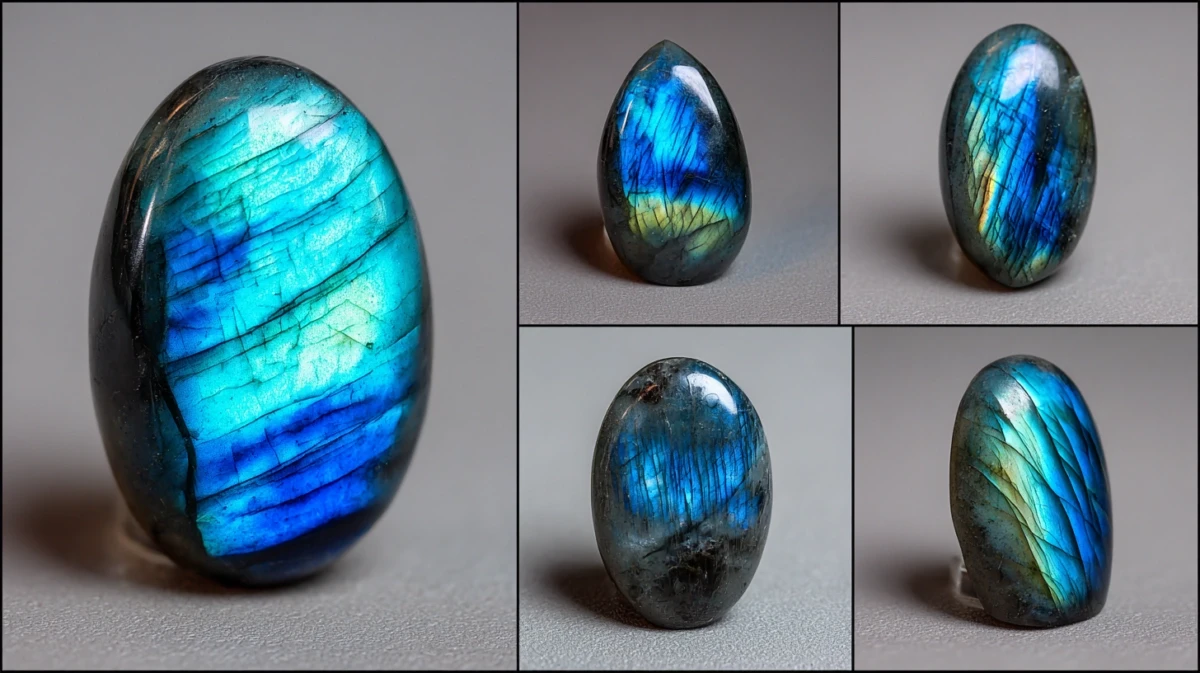
Pay special attention to the angle of the flash, known as directional labradorescence. A poorly cut stone might only show its color when viewed from above, meaning it will look completely dull when hanging flat against your chest as a pendant. It helps to ask the seller if the flash is visible straight-on before buying a piece meant to be worn vertically.
Setting material plays a significant role in how the piece ages. Sterling silver sits at the top for labradorite because it complements the cool blue-green tones without competing. Stainless steel works fine and costs less, though the finish tends to look more industrial. Plated brass is where things fall apart: the gold or silver layer wears through within months of regular wear, exposing a dull base metal that clashes with the stone. Listings that say "gold-plated" without disclosing the base metal underneath are a consistent red flag.
For cabochon cuts (the smooth, domed shape used in most men's rings and pendants), the dome should be even and polished, with no visible pitting or cloudy patches across the face. Raw or tumbled stones work in bead bracelets but shouldn't command premium pricing since the finishing cost is minimal.
On price calibration: very cheap labradorite pieces (under about to ) almost always use stones with weak or no flash and plated hardware—a pattern that holds across most crystals for men, where low entry prices typically signal compromised materials or finishing. Mid-range pieces with genuine sterling silver settings and visible labradorescence typically start higher and reflect actual material cost. If a listing looks too good for its price, the stone or the metal is cutting corners.
Labradorite Bracelets: Bead Size, Stacking, and Fit
8mm beads sit close to the wrist and read almost like dark stone from a distance, with the labradorescence only catching light when you move your hand. That subtlety works well under a shirt cuff or in a professional setting where you want texture without volume. For most men with wrist circumferences under 18 cm, 8mm is the safest starting point for labradorite jewelry.
10mm beads shift the balance. The flash becomes visible at conversation distance, and the bracelet carries enough visual weight to anchor a casual outfit on its own. This is where most men land, and it works across smart-casual and weekend contexts without looking like costume jewelry.
12mm beads are a deliberate statement. They suit larger wrists (19 cm and up) and pair best with rolled sleeves or short-sleeve shirts where the bracelet isn't fighting a cuff for space. On a smaller wrist, 12mm beads can look bulky and slide around uncomfortably.
Stacking Without Clashing
Labradorite's blue-green flash clashes with warm-toned stones like carnelian or tiger's eye, though it pairs well with protective stones in darker, neutral tones. Stick to cooler, neutral companions: black onyx, matte hematite, or plain silver spacer beads. Two bracelets on one wrist is the practical ceiling. A third starts competing for attention and buries the flash you're wearing labradorite for in the first place.
Situations Where Labradorite Bracelets Fail
Anything involving water, impact, or heavy manual work. Labradorite sits at 6 to 6.5 on the Mohs scale, so a bead bracelet worn during weightlifting or construction will chip. Formal suits also tend to make bead bracelets look out of place regardless of stone quality. Smart-casual is the sweet spot.
Pendants and Necklaces: Low-Profile Options That Work
A labradorite pendant on an adjustable cord is the easiest entry point if you want the stone close without committing to a fixed chain length. A 20-inch chain drops a labradorite pendant right at the sternum, visible in an open collar but hidden the moment you button up. That length works for most men who want the stone close without broadcasting it. Go shorter (18 inches) and the pendant sits higher, almost always visible above a crew neck. Go longer (24 inches) and it disappears under nearly any shirt, which suits men who treat it as a private piece rather than a style element.
Format Matters More Than Size
Three pendant formats show up consistently in men's labradorite jewelry. Wire-wrapped raw stones look organic and slightly rough, which reads well on leather cord or a thicker chain. Polished cabochon pendants in a simple bezel give a cleaner, more intentional look, closer to what you'd see in minimal menswear. Dog-tag style bezels, where the stone sits in a rectangular or oval metal frame, tend to look the most masculine and least like something borrowed from a crystal shop.
The wire-wrapped option costs less but often looks improvised at conversation distance. If the wrap is sloppy or the wire too thin, the piece reads as a craft-fair souvenir. A clean bezel setting in sterling silver or stainless steel signals that the pendant was chosen deliberately.
Chain Pairing
Gunmetal, oxidized silver, and matte stainless steel all pick up labradorite's cool blue-grey flash without competing. Bright polished gold pulls attention away from the stone's color shift and can make the piece feel mismatched. A box chain or curb chain between 2mm and 3mm thickness keeps the proportions balanced. Anything thinner looks fragile under a heavier cabochon; anything thicker overwhelms a smaller stone.
Labradorite Rings: When the Flash Is Worth the Trade-off
At 6 to 6.5 on the Mohs scale, labradorite sits below onyx (7) and tiger's eye (7), which means a ring takes more abuse than this stone can comfortably handle. Every door handle, dumbbell, and countertop becomes a scratch risk. That doesn't make labradorite rings a bad idea, but it does make the setting the most important part of the purchase.
Why Bezel Beats Prong
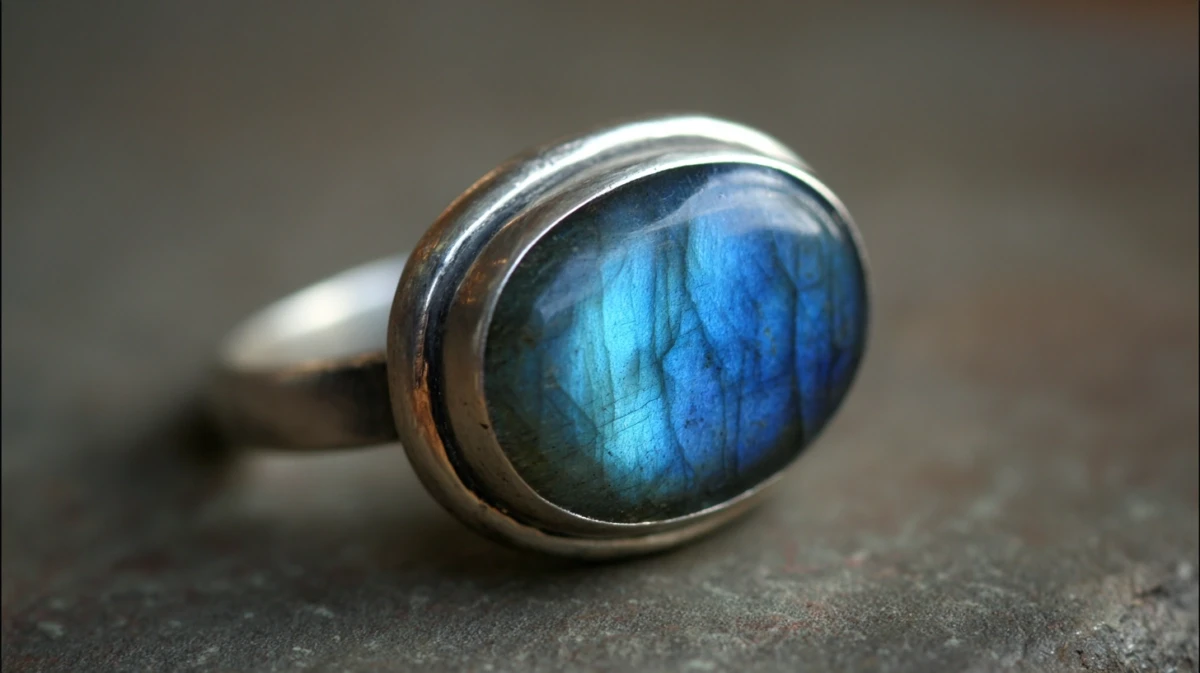
A bezel setting wraps metal around the entire perimeter of the stone, shielding the edges where chips start. Prong settings leave those edges exposed, and on a ring that contacts hard surfaces daily, exposed edges on a 6-Mohs stone rarely survive a full year without visible damage. For labradorite jewelry men actually wear rather than display, bezel is the only setting worth considering. This labradorite ring uses a clean bezel format that protects the stone edges during daily wear.
Profile and Width
Rings narrower than about 8mm tend to shrink the cabochon to a size where the labradorescence barely registers. A width between 10mm and 14mm gives enough surface for the flash to show without looking oversized on most hands. Low-dome profiles keep the stone closer to the finger and reduce the chance of catching it on things.
Keep in mind that wider bands displace more skin, which often requires sizing up by a half or full size compared to your standard ring measurement. If you are ordering a thick bezel ring online, verify the seller's return policy in case the fit feels too restrictive.
When a Harder Stone Makes More Sense
If you work with your hands or wear rings every day without exception, black onyx or tiger's eye in the same bezel format will outlast labradorite by years. Labradorite rings earn their place as occasional-wear pieces or on the non-dominant hand, where contact is lighter. Worn that way, the iridescent flash stands out in a way no harder stone replicates.
Bracelet vs Pendant vs Ring: Which Format Fits Your Situation
Bracelets sit at one end of the commitment spectrum, rings at the other. The table below maps each format against the factors that actually shift the decision for most men buying labradorite jewelry.
Factor | Bracelet | Pendant | Ring |
|---|---|---|---|
Daily wearability | High. Beads flex with movement and tolerate most routines. | High. Tucked under a shirt, it takes almost no impact. | Low to moderate. Labradorite chips if knocked against hard surfaces. |
Visibility | Subtle unless stacked. Sits below the cuff most of the day. | You control it: visible over a tee, hidden under a button-down. | Impossible to miss. The flash catches light constantly. |
Durability risk | Low. Bead-on-cord format distributes stress. | Low, provided the bezel is solid and the chain doesn't snag. | Highest of the three. Stone faces direct contact with tables, doors, tools. |
Best context | Casual and layered looks. Stacks well with other stones or metal cuffs. | Works across dress codes, from crew necks to open collars. | Occasional wear, events, or days without manual work. |
Entry cost | Low. Quality bead bracelets start cheaper than set stones. | Mid. A decent bezel pendant plus chain runs higher. | Mid to high. A well-set cabochon ring costs the most per piece. |
If you want one piece you can forget you're wearing, a pendant on a sturdy chain is the safest first pick. A bracelet costs less and layers easily but reads more casual. Choose a ring only when you're willing to treat it as occasion-specific rather than everyday.
How to Clean and Store Labradorite Without Damaging It
Labradorite sits around 6 to 6.5 on the Mohs hardness scale, which means quartz dust, keys, and harder gemstones will scratch it if they share a pocket or jewelry box.
Safe Cleaning Methods for Labradorite
Lukewarm water with a drop of mild dish soap and a soft cloth is all you need. Wipe the surface gently, rinse, and pat dry. Ultrasonic cleaners, steam, and chemical solutions (including silver dip) risk cracking the stone or dulling the labradorescence permanently.
Best Storage Practices for Labradorite
Keep each piece in its own soft pouch or a fabric-lined compartment. Labradorite jewelry for men often sits in a tray alongside watches and steel bracelets, which is exactly how surface scratches accumulate. A single microfiber bag per piece costs almost nothing and prevents contact damage entirely.
When to Take It Off
Remove labradorite before gym sessions, yard work, or anything involving impact or abrasive surfaces. Sweat alone won't harm the stone, but a knock against a barbell or concrete edge can chip a cabochon that took months to find.
FAQ
What metal looks best with labradorite?
Oxidized or brushed sterling silver draws out labradorite's blue-green flash without competing for attention. Gunmetal and blackened stainless steel work similarly well. Gold can pair with stones that lean toward warm amber or copper flashes, but bright polished gold tends to clash with the cooler spectral tones most pieces display.
Does labradorite scratch easily?
Labradorite sits at 6 to 6.5 on the Mohs scale, which means quartz dust, keys, and most common abrasives will mark it over time. It won't shatter from a light bump, but surface scratches accumulate faster than on sapphire or garnet. Treating it as you would reading glasses keeps it in good shape longest.
Can you shower or swim while wearing labradorite?
Occasional water contact won't destroy the stone, but repeated exposure to chlorine, salt water, or hot steam can dull the surface sheen and weaken adhesive settings over time. Pulling off a bracelet or pendant before you step into the pool takes two seconds and saves the finish.
For bead bracelets specifically, the hidden danger isn't just to the stone, but to the elastic cord holding it together. Hot water and soap rapidly degrade standard jewelry elastic, leading to a sudden snap and beads scattering across the floor.
Is labradorite considered a spiritual or symbolic stone for men?
Many traditions associate labradorite with transformation, intuition, and inner strength. Whether that matters to you is personal. From a practical standpoint, the stone's shifting color gives it a visual depth that most men's jewelry lacks, which is reason enough to wear it regardless of any symbolic framework.
Crystals for Men: The No-Nonsense Field Guide
If you want the full breakdown — the science, all ten stones, a daily carry practice, and a quiz that tells you exactly which stone to start with — the field guide has everything in one place.
Want a free grounding practice to go alongside your crystals?
The free 5-Day Breathwork Challenge gives you five short sessions to settle your nervous system.