Emotional Availability: What It Actually Looks Like in Men and How to Build It

Staying in the room when the temperature rises is the first marker anyone can observe. Emotional availability in men shows up as behavior rather than temperament. It looks like naming a feeling while it's happening, or starting the repair yourself after a blow-up; it also means a partner's reaction actually lands on you. Sort out depletion from a long-running pattern first, since rest changes one and not the other.
What an emotionally available man actually does
Reciprocal disclosure is what separates an emotionally available man from a good listener. He asks about your day, but he also says what his own week cost him, and he can ask for help without dressing it up as a logistics problem.

Whether your mood lands on him is the next thing to watch. You come home flat, he notices before you explain, and he adjusts without interrogating you. Naming a state in real time counts too. "I'm getting defensive right now" while it's happening beats a thoughtful post-mortem three days later.
Repair he starts himself is the strongest single marker. A nice dinner after a long silence doesn't count; he goes back to the argument and says what he got wrong. It holds across weeks, and not only in the days after a scare.
Three things get mistaken for it:
Affection and physical warmth, which can run alongside total shutdown in conflict
Reliability with logistics, since paying bills on time is not the same as staying present
Being the calm one, which is sometimes regulation and sometimes freeze
It isn't agreeing with everything you feel, constant processing, or being open on demand at 1am.
Five shapes emotional unavailability takes in men
The label covers at least five different mechanics, and the useful move differs for each one.
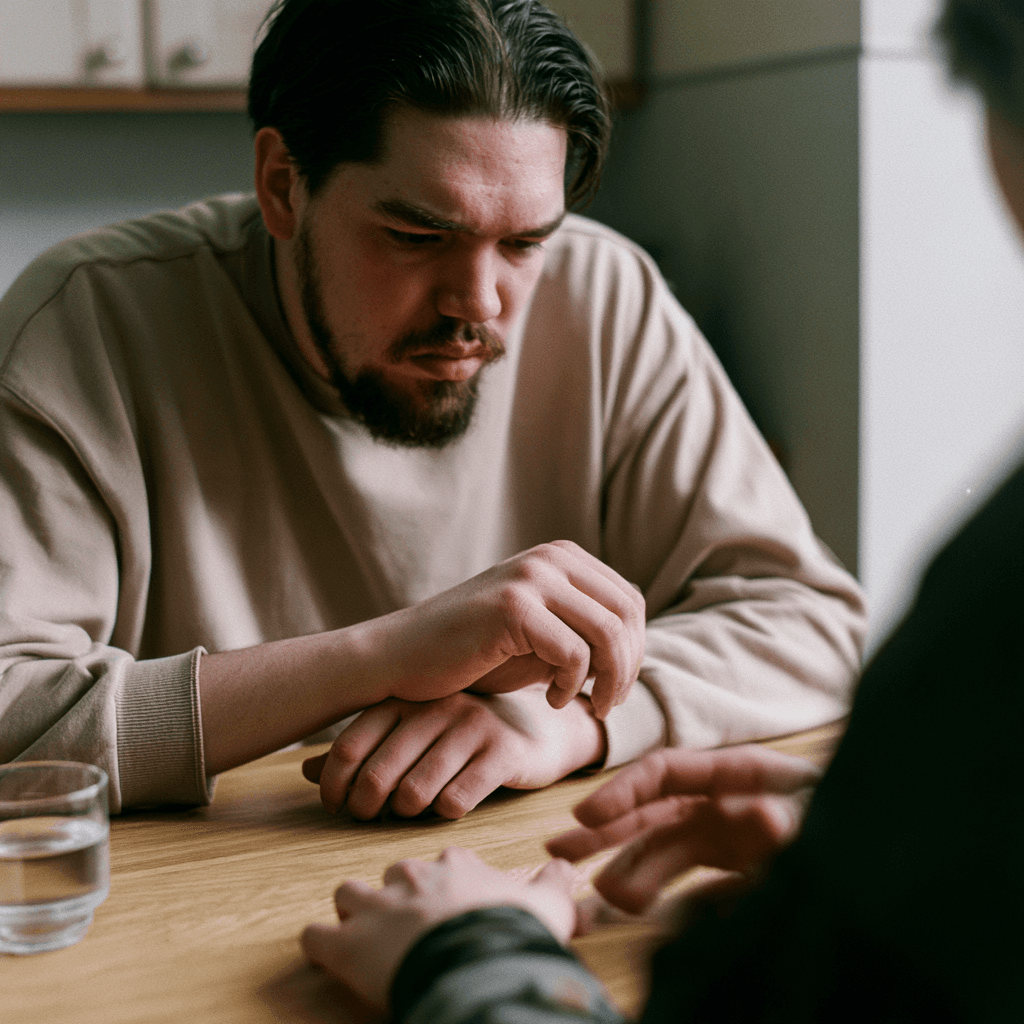
Shutdown under load: the voice flattens mid-conflict and the answers shrink. That's flooding rather than indifference. The exit is a stated return time, not a better argument.
Over-functioning: he carries everything, asks for nothing. The tell is that you can't name the last thing he needed help with. One real request a week starts to undo it.
No vocabulary: the feeling registers in the jaw and chest but never reaches a word. Body sensation first, label later — that route belongs to the work of naming emotions as a man.
Irritation as the exit: hurt arrives dressed as impatience or criticism. The tell is that the anger is disproportionate to the trigger.
Warm deflection: he's curious, funny, asks about your day, and discloses nothing. It's the hardest one to spot, because it looks so much like attentiveness.
Running two shapes at once is normal, often one at home and a different one at work, which is why emotional unavailability rarely has a single cause.
Before you pick a shape, check whether you're looking at depletion or a pattern. Depletion has a start date you can point to — a job change, a new baby, a stretch of broken sleep — and it eases when the load does, so a protected week of rest and low demands tells you more than another conversation. A long-running pattern shows up the same way across contexts and across good periods: he withdraws in conflict when he's rested, on holiday, and after a promotion.
How to be emotionally available without performing it
Start with the three-second exhale before you answer anything that stings. It works less as a technique than as a gap, long enough for your jaw to unclench and for the first defensive sentence to die in your throat. Most men skip it because three seconds of silence feels like losing.
Then swap the reflex. Instead of "that's not fair," ask what made her feel that way. You're not conceding the point. You're gathering information you don't have yet, which is a different move entirely.
The one that changes conversations fastest is naming your own state out loud. "I'm defensive right now and I don't want to be" lands better than a calm voice hiding the same thing. It also breaks the performance problem: you can't fake a state you've just declared.
Timing is what trips most of this up. If your chest is tight and your hearing has narrowed, none of it works, regulate first, talk second. Availability sits downstream of a nervous system that isn't scanning for threat. The nervous system regulation techniques article covers the specific practices that build that capacity offline.
Three practices, ranked by how little they ask of you:
The pause: three seconds of exhale before responding. Start here.
The curious question: replaces the rebuttal, costs nothing but pride.
The stated state: hardest, most useful, and impossible to perform.
Common questions about emotional availability
Can an emotionally unavailable man actually change?
Change happens, but only when he drives it himself. Pressure from a partner buys compliance without building any capacity, which is why the shift usually comes from therapy or from repeated private practice he chose without being asked. The vulnerability in relationships article covers what that looks like in practice, the specific moves that register as availability rather than performance.
Is emotional unavailability the same as depression or burnout?
No — depression, burnout, and grief all flatten emotional range, so they can look identical from the outside while needing completely different help. Flatness paired with fatigue, appetite changes, or loss of interest is a clinician's question, not a journaling project.
Do emotional availability quizzes tell you anything useful?
Scored quizzes work as self-reflection prompts, not assessments. The score matters less than noticing which questions you hesitated on or wanted to argue with.
Can a quiet or introverted man still be emotionally reachable?
Reachability has nothing to do with word count. A man who says little but stays in the room when someone is upset, and answers honestly when asked directly, is more available than a fluent talker who redirects every hard conversation.
Does emotional unavailability always come from childhood?
Homes where feelings were ignored, mocked, or unsafe do teach suppression early, and how early relationships shape the way men love explains a lot of that origin. It isn't the only route though, and understanding the cause changes nothing on its own; practice is what builds the capacity.
JOURNAL
The Unspoken Man
The structured shadow work journal for men building toward the behaviors this article describes, finding what's actually there before trying to say it.